
PARENT BRIEF | ISSUE #3
Porn, the Brain, & Identity
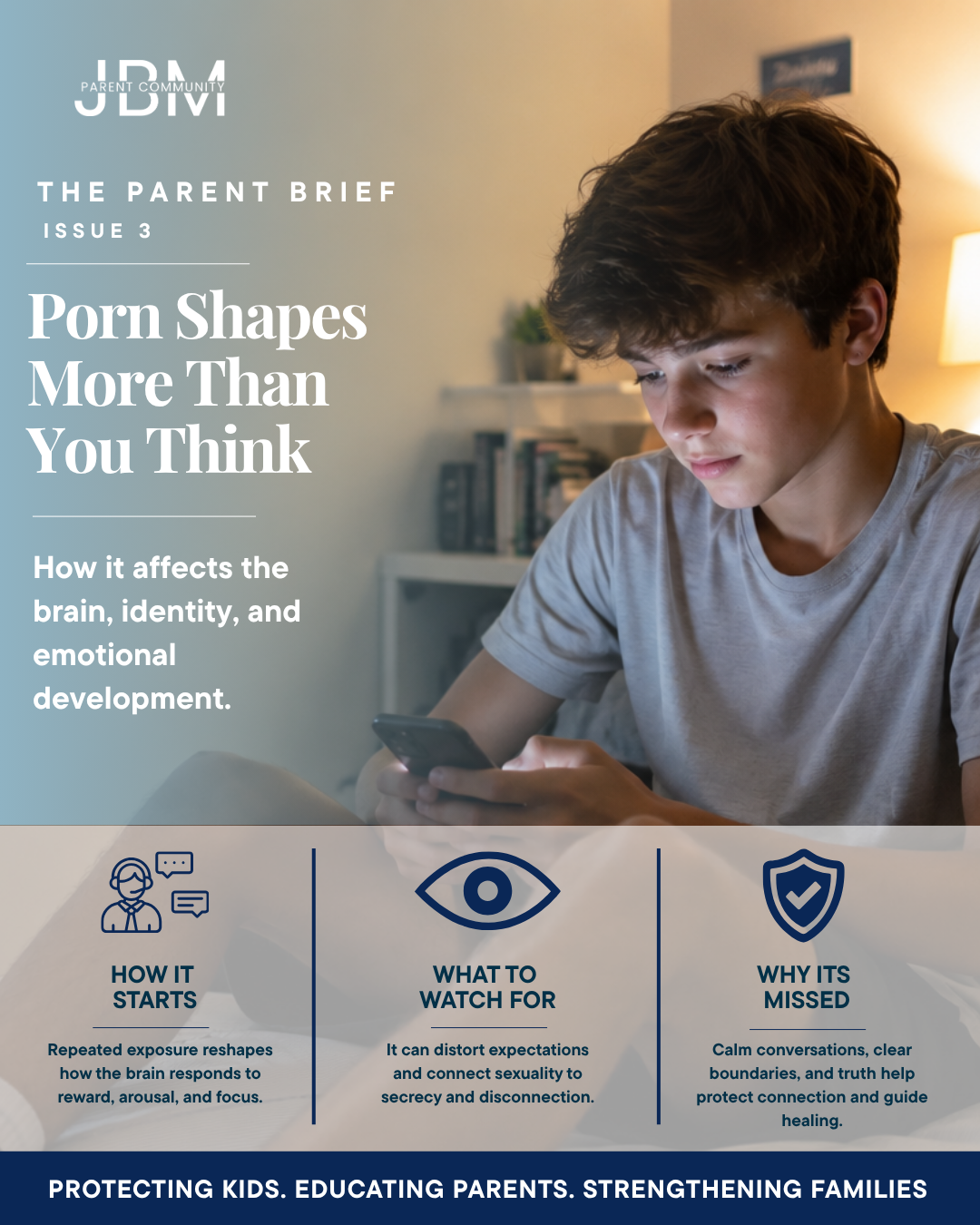
Pornography shapes more than what a child sees. It can shape what they begin to expect.
Pornography today isn't only a moral or cultural concern. For children and teens whose brains are still developing, repeated exposure can influence expectations around intimacy, relationships, body image, and self-worth.
During adolescence, the brain is building pathways around what it repeatedly sees and experiences. That makes understanding exposure—not simply reacting to it—important for parents.
This Parent Brief is designed to help you understand what repeated exposure can do and give you practical ways to respond with clarity, calm, and truth.
This isn't about panic. It's about understanding what's happening so you can lead the conversation.
A CLOSER LOOK
UNDERSTANDING THE ISSUE
What Repeated Exposure Can Shape
01 — THE DEVELOPING BRAIN
Repeated exposure can reinforce patterns around arousal, reward, and expectations while a child's brain is still developing.
02 — EXPECTATIONS
Pornography can present distorted versions of intimacy, bodies, consent, and relationships that children may begin to view as normal.
03 — IDENTITY & SELF-WORTH
What children repeatedly consume can influence how they view themselves, other people, and what they believe is expected of them.
04 — SECRECY & SHAME
Fear of punishment or embarrassment can push pornography use underground, making honest conversation harder.
05 — YOUR RESPONSE MATTERS
Calm, age-appropriate conversations and healthy boundaries can protect connection while helping your child understand what they're seeing.

A REMINDER FOR EVERY PARENT
Exposure is not the end of your child's story.
A child encountering pornography does not mean you have failed as a parent.
And it does not mean their identity, relationships, or future have already been determined.
Brains can change. Patterns can change. Children can heal.
The goal isn't to respond with shame. It's to create an environment where your child can tell you what they've seen, ask questions, and learn what healthy relationships and intimacy actually look like.
Your presence matters more than panic ever will.
PRACTICAL TOOLS FOR PARENTS
FEATURED RESOURCES
Porn, the Brain, & Identity
This guide helps parents understand how pornography can affect the developing brain, quietly shape identity and expectations, and influence the way children begin to understand connection, intimacy, and self-worth.
SHARE THIS RESOURCE
Know a parent who needs this conversation?
Parents need practical language for difficult conversations.
Share this Parent Brief with another parent who may be navigating pornography exposure, questions about online content, or simply wants to prepare before something happens.
Prepared conversations are easier than panicked ones.
With you,
The JBM Parent Community