

PARENT BRIEF | ISSUE #2
Sextortion: A Parent Response Plan Rooted in Peace
Sextortion moves fast—but panic doesn't have to lead the response.
Sextortion often begins on familiar apps, games, or private messages. Someone builds trust, obtains an image or personal information, and then uses fear, shame, or threats to keep a child silent.
What makes these situations especially dangerous is the speed. A child can go from feeling safe to feeling trapped in a matter of minutes.
This Parent Brief helps parents understand how sextortion works, recognize the tactics used to create fear and isolation, and know how to respond if a child comes to them.
The goal isn't fear. It's making sure your child knows that when something goes wrong, they can come to you.
Understanding
the Threat
Sextortion doesn't always begin with an obvious threat. Sometimes, it begins with someone pretending to care.
A child receives a message from someone who seems friendly, attractive, or close to their age. The conversation feels normal. They may share interests, exchange compliments, or begin building what feels like a genuine connection.
But the person on the other side may be using a fake identity, stolen photographs, or carefully planned manipulation.
Once an intimate image is obtained—or the offender claims to have one—the conversation can change quickly.
Threats follow. Pay money. Send more images. Do what they say, or they'll expose everything.
This is exploitation, not a mistake a child deserves to be punished for

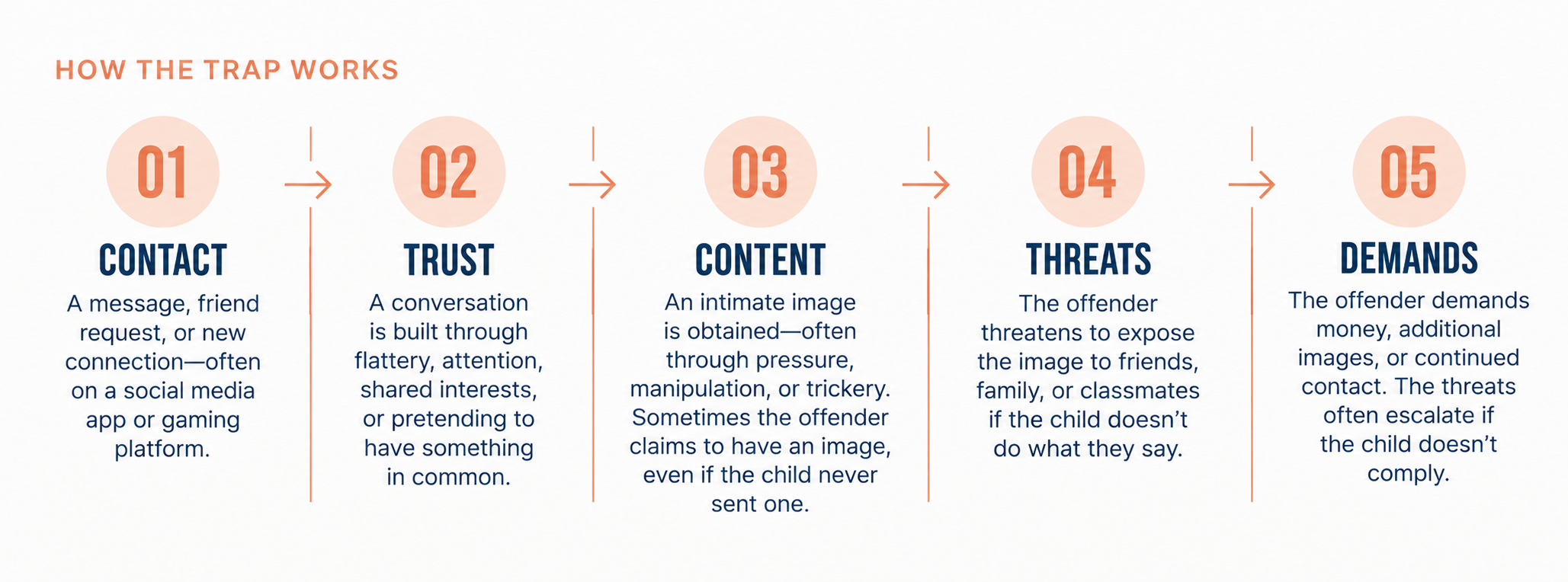
Not every case follows this exact sequence. Some offenders skip the relationship-building entirely, using stolen images, fabricated content, or immediate threats.
And while financial sextortion often involves demands for money, other offenders use threats to pressure children into sending additional sexual content or continuing contact.
THE BIGGER POINT
The offender creates the threat. The child is not responsible for the exploitation.
What looks like a child's bad decision may actually be a carefully constructed trap designed to make asking for help feel impossible.
WHY KIDS DON'T ALWAYS ASK FOR HELP
The very thing a child needs most—help—can become the thing they're most afraid to ask for.
When a child is being sextorted, the threats are only part of the problem. Fear, shame, and panic can make an already frightening situation feel impossible to escape.
They may believe their parents will be angry. That they'll lose their phone, get in trouble, or disappoint everyone they love.
Offenders know how to exploit those fears. They create urgency, demand secrecy, and convince children that telling someone will only make things worse.
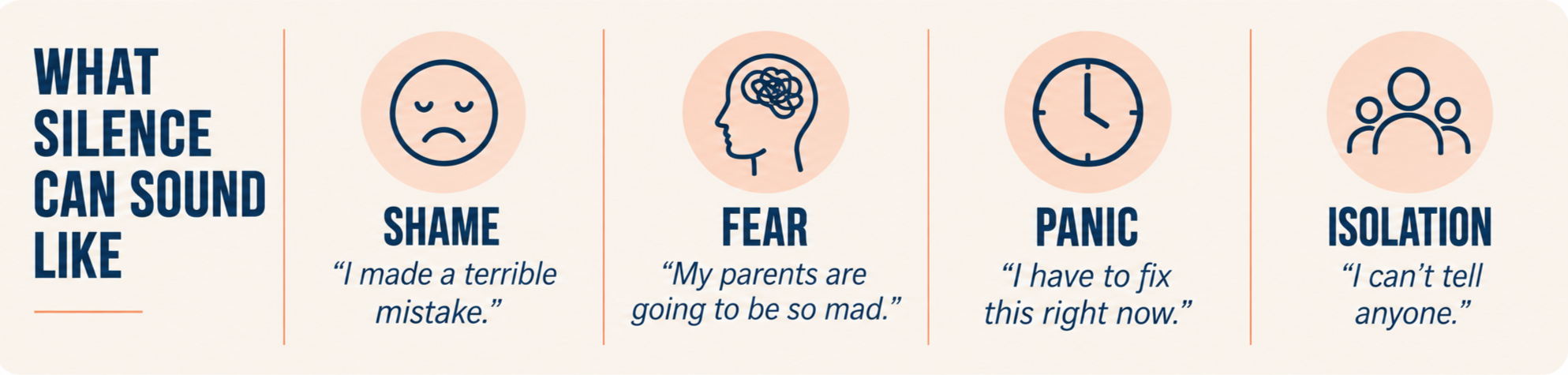
For some children, the emotional pressure becomes overwhelming. They may withdraw, stop sleeping, avoid school, or become unusually anxious about their phones.
In severe cases, sextortion has been associated with self-harm and suicide. That's why parents need to take both the threats and their child's emotional well-being seriously.
A child who stays silent isn't necessarily refusing help. They may believe asking for help will cost them everything.
Make It Safe to Tell You
“You are not in trouble. You are not alone.
We will get help together.”
Repeat it during everyday conversations about online safety. Children need to hear it before they're frightened, embarrassed, or unsure what to do.
And if they do come to you, your first response can reinforce everything you've taught them.
The goal is to make coming to you feel safer than keeping the secret.
OUR CHILD TELLS YOU.
NOW WHAT?
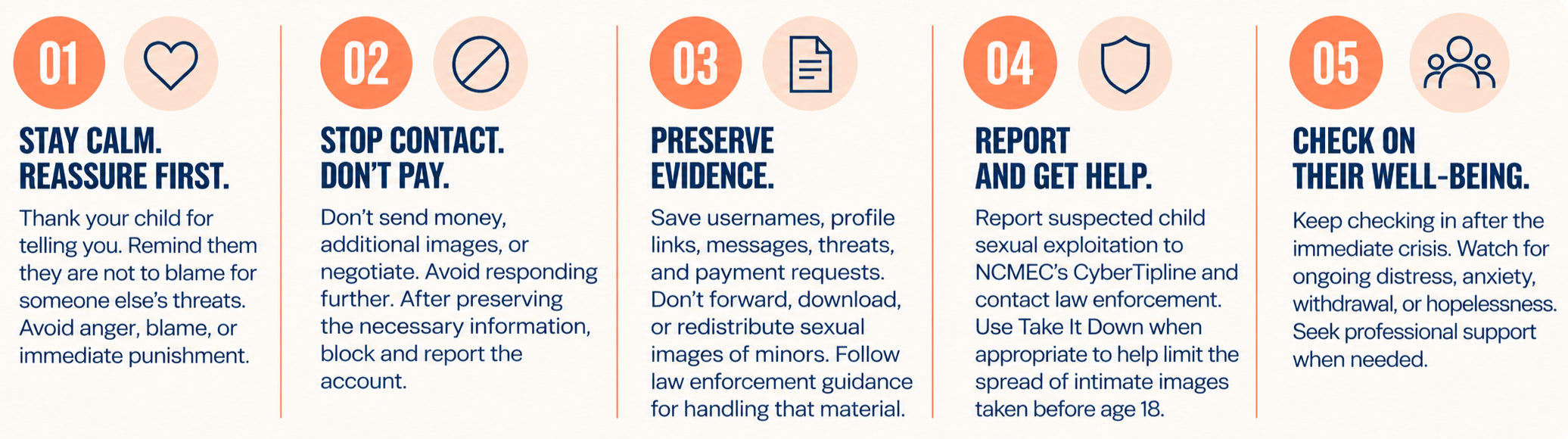
The first few minutes matter. Your child needs to know you're on their side before anything else.
If your child tells you someone is threatening them online, you may feel frightened, angry, or overwhelmed. That's understandable. But your response can either reinforce the fear that's keeping them silent or help them feel safe enough to accept help.
You don't need to have every answer immediately. Start by being the calm person your child needs. Then take action together.
The Crisis May End Before the Fear Does
Even after an account has been blocked or a report has been filed, your child may still worry that images will be shared, friends will find out, or the threats will return.
Keep checking in. Remind them that they can tell you if someone contacts them again, and make sure they have support beyond the initial conversation.
If your child expresses suicidal thoughts or appears in immediate danger, stay with them and seek emergency help. In the U.S., you can call or text 988 for crisis support.
Remember This:
Your child needs a protector,
not a prosecutor.
They need to know that whatever happened online, your love, protection, and willingness to help haven't changed.

Don't Wait for a Crisis to Have the Conversation
The best time to teach your child how to respond to sextortion is before someone tries to use fear against them.
Children need more than warnings about what not to share online. They need to recognize manipulation, know what to do when someone threatens them, and know exactly who to turn to for help.
Most importantly, they need to hear this promise before anything happens:
“You are not in trouble. You are not alone. We will get help together.”
Trusted Reporting & Support Resources
Take It Down — NCMEC
A free service designed to help stop or limit the online spread of intimate images taken before age 18.
NCMEC Get Help
Additional support and resources for children and families experiencing online exploitation.

SHARE THIS RESOURCE
Know a parent who needs this?
Share this Parent Brief with another parent in your community.
The more our children know they can come to a safe adult before fear takes over, the harder it becomes for someone to use shame, secrecy, or threats to control them.
Prepared conversations are easier than panicked ones.
With you,
The JBM Parent Community