

PARENT BRIEF | ISSUE #1
Grooming 2.0:
Discerning the Counterfeit
Grooming Often Looks Safe Before It Looks Dangerous
Grooming rarely begins with an obvious threat.
It often begins with something a child genuinely wants or needs: attention, friendship, encouragement, belonging, help, opportunity, or someone who seems to understand them.
Over time, that connection can be used to create greater access, emotional dependence, secrecy, or control.
That is why grooming can be difficult to recognize from the outside.
The question isn't only, “Is this person dangerous?”
Parents also need to ask:
“Is this relationship creating secrecy, dependency, unusual access, or influence over my child?

The Places Parents Aren’t Looking
Grooming rarely begins with an obvious threat.
It often starts with something every child wants: attention, encouragement, friendship, and a sense of belonging.
Someone notices their interests. Compliments their creativity. Offers help with homework. Shares their favorite music. Or becomes a familiar teammate in an online game.
None of those interactions automatically means something is wrong.
But someone with harmful intentions can use those ordinary moments to build trust, create emotional dependence, and gradually move conversations into more private spaces.
And here's what parents may overlook: Grooming doesn't always happen on a dating app, social media platform, or unfamiliar website.
It can begin in the digital spaces your child already uses for school, entertainment, and connecting with friends.
THE BIGGER PICTURE
The platform may look harmless.
The pattern of behavior is what matters.
Pay attention to who is building a relationship with your child, whether conversations are becoming secretive, and how your child feels about the interaction.
FIVE Unexpected Digital Pathways
Parents don't always worry about apps. Sometimes it's the everyday platforms they trust.
Children use technology to learn, create, listen to music, and connect with friends. But some of these same spaces can provide opportunities for someone to initiate private conversations and gradually build trust.
Here are five digital pathways parents may not think to check.

01 / SHARED DOCUMENTS
Google Docs & Slides
Shared files and comment threads can function like private conversations. A group-project invitation may create direct access that feels normal because it's connected to school.
What to watch: Unfamiliar collaborators, unexpected invitations, and conversations that move beyond schoolwork.


02 / MUSIC SHARING
Spotify Playlists
Collaborative playlists can become a subtle way to communicate through song titles, themes, and shared music.
What to watch: Unexpected collaborators or music-sharing relationships that become unusually personal or secretive.
03 / PHOTO SHARING
Shared Photo Albums
Shared iPhone and Google photo albums can create another channel for exchanging pictures and attention. Parents may monitor texts while overlooking shared-album activity.
What to watch: Unknown participants, unexpected photo requests, or pressure to share personal images.

04 / LEARNING PLATFORMS
Homework & Study Apps
Some educational platforms and class-based groups include messaging or collaboration features. Because they're associated with school, children and parents may assume every interaction is safe.
What to watch: Unknown contacts, off-topic private messages, and invitations to continue conversations elsewhere.

05 / ONLINE GAMING
Gaming Friend Requests
Shared interests, teamwork, rewards, and compliments can build familiarity. What begins as a game may move into ongoing private messages or off-platform contact.
What to watch: Requests to chat privately, move to another app, share personal information, or keep friendships secret.
WHAT PARENTS SHOULD REMEMBER
The app isn't always the warning sign.
The behavior is.
A new online friendship isn't automatically dangerous. But secrecy, pressure, isolation, and attempts to move conversations into hidden spaces deserve a closer look.
When Connection Becomes Control
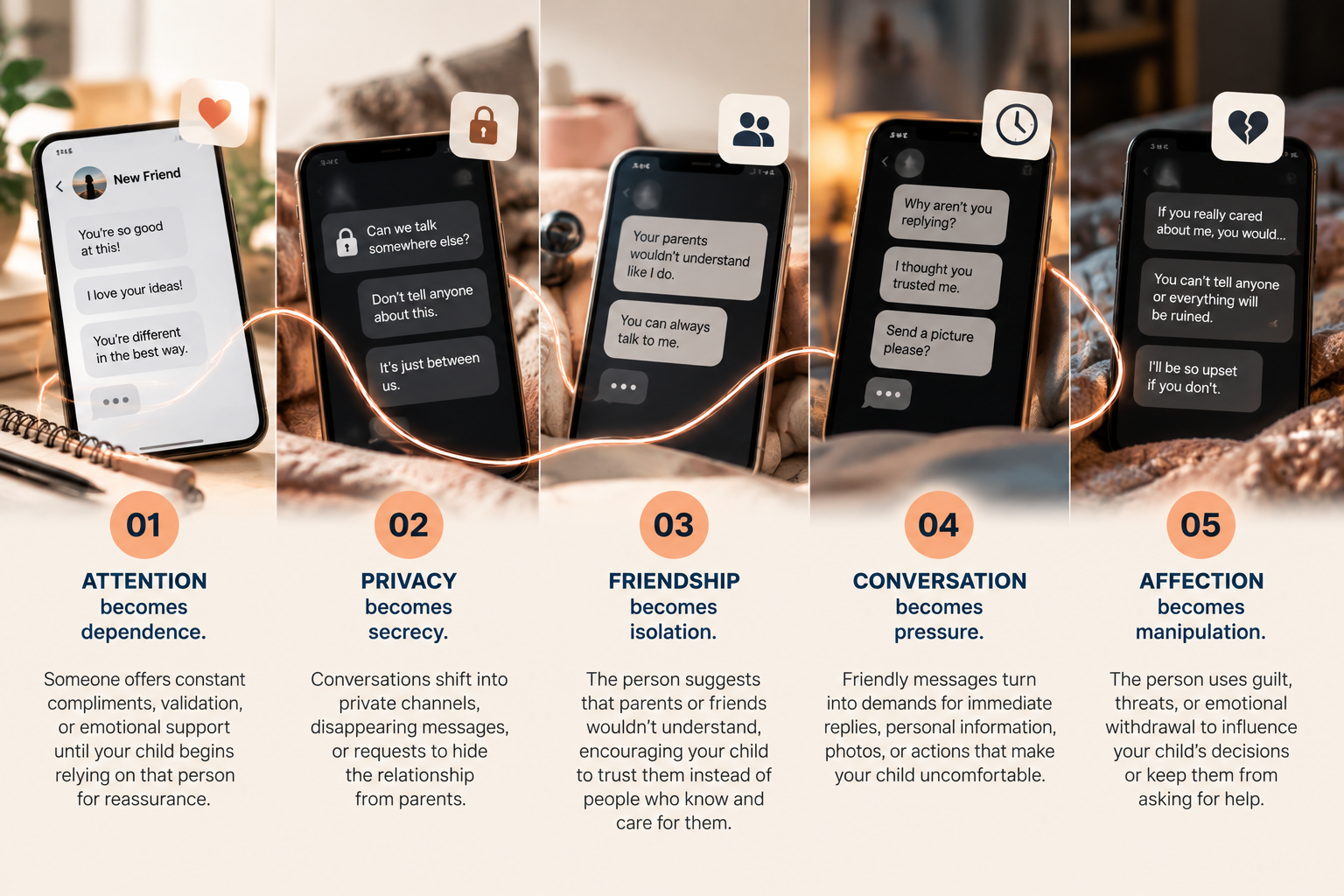
Not every online friendship is dangerous. But there is a difference between someone who wants to be your child's friend and someone who wants to gain control over them.
Grooming often develops gradually. What begins as encouragement, shared interests, or friendly conversation can shift into emotional dependence, secrecy, and pressure.
And because that attention may initially make a child feel valued or understood, they might not recognize when the relationship begins to change.
THE CONVERSATION THAT MATTERS
“Does this person respect your boundaries, or do you feel responsible for keeping them happy?”
A question like this can help your child think about how a relationship makes them feel, without immediately putting them on the defensive.
What Parents Can Do
Don't focus only on identifying suspicious accounts. Pay attention to changes in your child's behavior, the relationships they are developing, and whether they feel free to say no.
The goal isn't to make children afraid of connection. It's to help them recognize when connection is being used to control them.
Don't Wait for a Warning Sign to
Start the Conversation
The goal isn't to make children afraid of every online friendship. It's to help them recognize the difference between genuine connection and manipulation.
We can't monitor every conversation or interaction our children have online. But we can teach them to recognize pressure, question requests for secrecy, and trust their instincts when something doesn't feel right.
And we can make sure they know that coming to us will always be safer than keeping something hidden.
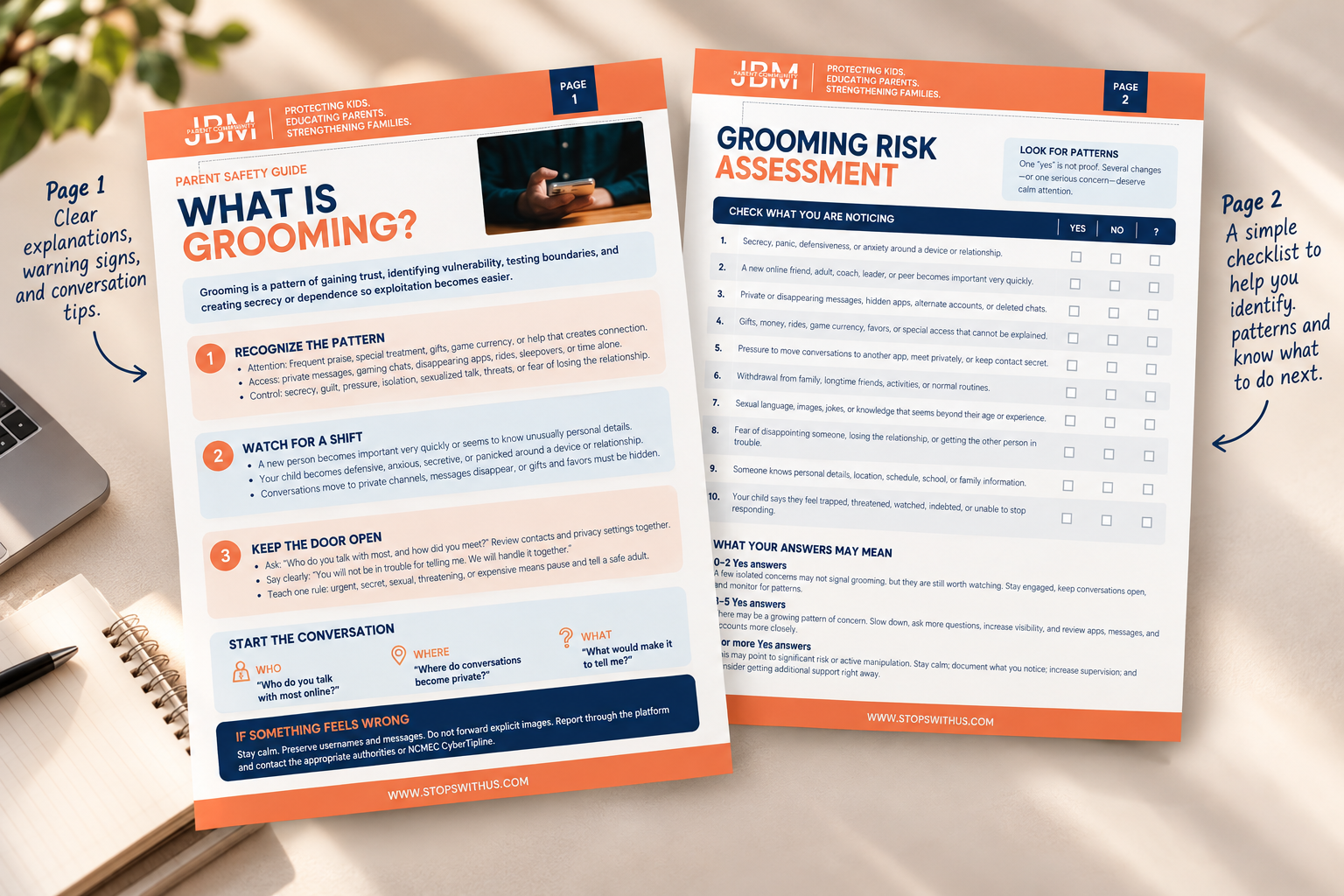
Featured Parent Resources
Grooming: Know the Signs Before It's Too Late
Understand how grooming begins, recognize warning signs, and identify concerning patterns with this practical parent guide and risk assessment.
A Conversation to Have This Week
Ask your child:
“Has anyone you've met online asked you to keep a conversation secret or move it somewhere more private?”
Listen without immediately reacting. Let your child know they can tell you about an uncomfortable interaction, even if they've already responded, shared something, or made a mistake.
Real care doesn't require secrecy.
Protecting children starts with connection, discernment, and the confidence to speak up when something doesn't feel right.
SHARE THIS RESOURCE
Share this Parent Brief with a parent, grandparent, educator, or trusted adult in your community.
Together, we can equip more families with the knowledge and practical tools they need to respond with wisdom, clarity, and confidence.