
THE NEW FACE OF CHILD TRAFFICKING
When most parents think about child trafficking, they picture a stranger, an abduction, or a child being forced into a vehicle.
But exploitation often begins much earlier.
Before the threats.
Before the control.
Before a parent realizes something is wrong.
It often begins with vulnerability—and someone who knows how to recognize and exploit it.
This issue will help you understand how traffickers gain access, which vulnerabilities they target, and what parents can do to build protection before manipulation begins.
PARENT BRIEF | ISSUE 9
A CLOSER LOOK
UNDERSTANDING THE ISSUE
TRAFFICKING OFTEN BEGINS WITH VULNERABILITY
Traffickers do not look only for “bad kids.” They look for children who may be easier to reach, influence, isolate, or emotionally manipulate.
A child may feel lonely, misunderstood, rejected, insecure, or disconnected at home. They may be craving acceptance, living through conflict, questioning their worth, or spending more time online looking for someone who understands.
None of these things makes a child weak. But they can make unhealthy attention feel especially meaningful.
Constant online access gives someone repeated opportunities to notice those needs, build trust, and become emotionally important. What begins as friendship, romance, mentorship, or support can slowly shift toward secrecy, dependence, isolation, and control.
This is not about blaming children or parents.
It is about recognizing vulnerability early and strengthening the relationships, confidence, and community that make manipulation harder.
WHAT PARENTS SHOULD WATCH FOR
LOOK FOR CHANGES AROUND ONE RELATIONSHIP
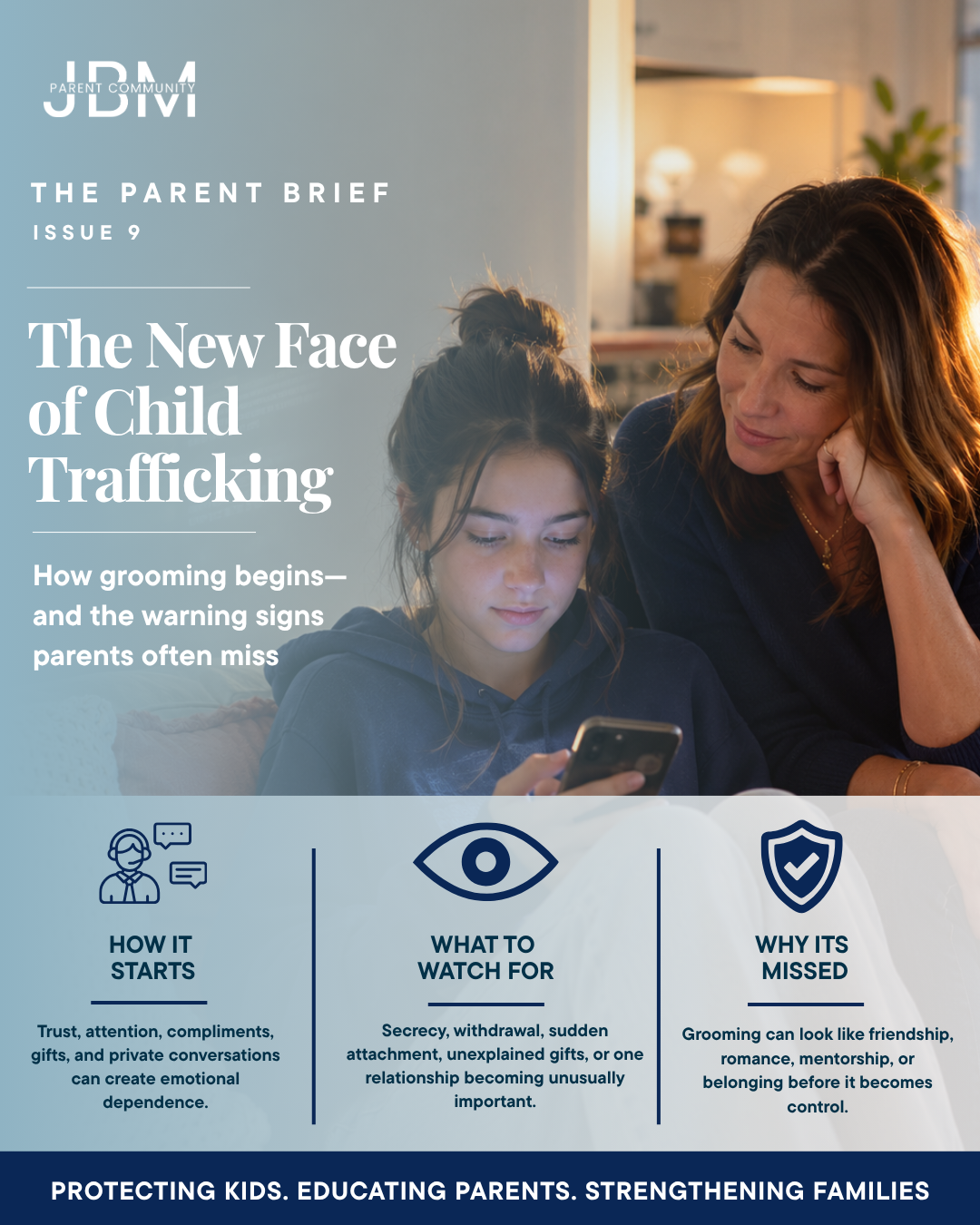
Grooming often becomes visible through patterns—not one isolated behavior. Pay attention when several changes begin happening together, especially around a new or increasingly important relationship.
01 — A NEW RELATIONSHIP BECOMES SECRETIVE
Your child avoids explaining who someone is, gives vague answers, hides messages, or becomes protective of a new friendship.
02 — PRIVATE COMMUNICATION INCREASES
Conversations move from public comments or group chats into direct messages, disappearing messages, private apps, or late-night communication.
03 — GIFTS, MONEY, OR FAVORS APPEAR
Your child receives unexplained gifts, game currency, rides, food, money, opportunities, or other forms of special treatment.
04 — FAMILY AND FRIENDSHIPS BEGIN TO SHIFT
Your child withdraws from trusted friends or family, becomes unusually defensive, or spends excessive time focused on one person.
05 — EMOTIONAL DEPENDENCE DEVELOPS
Your child begins relying on someone you do not know for validation, comfort, advice, identity, or a sense of belonging.

The question is not only, “Who is my child talking to?”
Ask, “What role is this person beginning to play in my child’s life?
TAKE ACTION
WHAT PARENTS CAN DO RIGHT NOW
BUILD CONNECTION
Create regular, low-pressure moments to talk. Children who feel safe and understood at home are more likely to speak up when something feels wrong.
BUILD CONFIDENCE
Help your child know their worth is not dependent on attention, approval, gifts, popularity, or a relationship.
BUILD AWARENESS
Teach that attention is not always equal to safety. Talk about secrecy, pressure, gifts, private communication, and relationships that become intense too quickly.
BUILD COMMUNITY
Make sure your child has several trusted adults and healthy relationships they can turn to for support, perspective, and protection.
ASK CALM QUESTIONS
Try: “Who makes you feel most understood right now?” or “Has anyone asked you to keep something secret from me?”

A REMINDER FOR EVERY PARENT
THE GOAL IS NOT FEAR—IT IS AWARENESS
One change alone may not mean danger.
But several changes happening together deserve a calm conversation and a closer look.
Stay present. Ask questions. Pay attention to the relationships becoming important in your child’s life.
Strong connection does not guarantee that nothing difficult will happen—but it makes secrecy, isolation, and manipulation harder to sustain..
PRACTICAL TOOLS FOR PARENTS
FEATURED RESOURCES
THE NEW FACE OF CHILD TRAFFICKING GUIDE
A visual guide to the vulnerabilities traffickers may look to exploit, the ways grooming relationships develop, and the protective factors parents can strengthen.
PARENT PREVENTION CHECKLIST
A practical checklist to help you identify where your child may need more support, stronger connection, or additional protection right now.
SHARE THIS RESOURCE
Know a Parent Who Needs This Conversation?
Share this Parent Brief with a parent, grandparent, educator, or trusted adult in your community.
Child trafficking rarely begins the way most people imagine. It often begins when vulnerability is met by someone willing to exploit it.
Together, we can help more families recognize concerning patterns earlier, strengthen protective relationships, and respond before attention becomes manipulation.
With you,
The Parent Community Team