
PARENT BRIEF | ISSUE #1
Grooming 2.0:
Discerning the Counterfeit
Grooming Often Looks Safe Before It Looks Dangerous
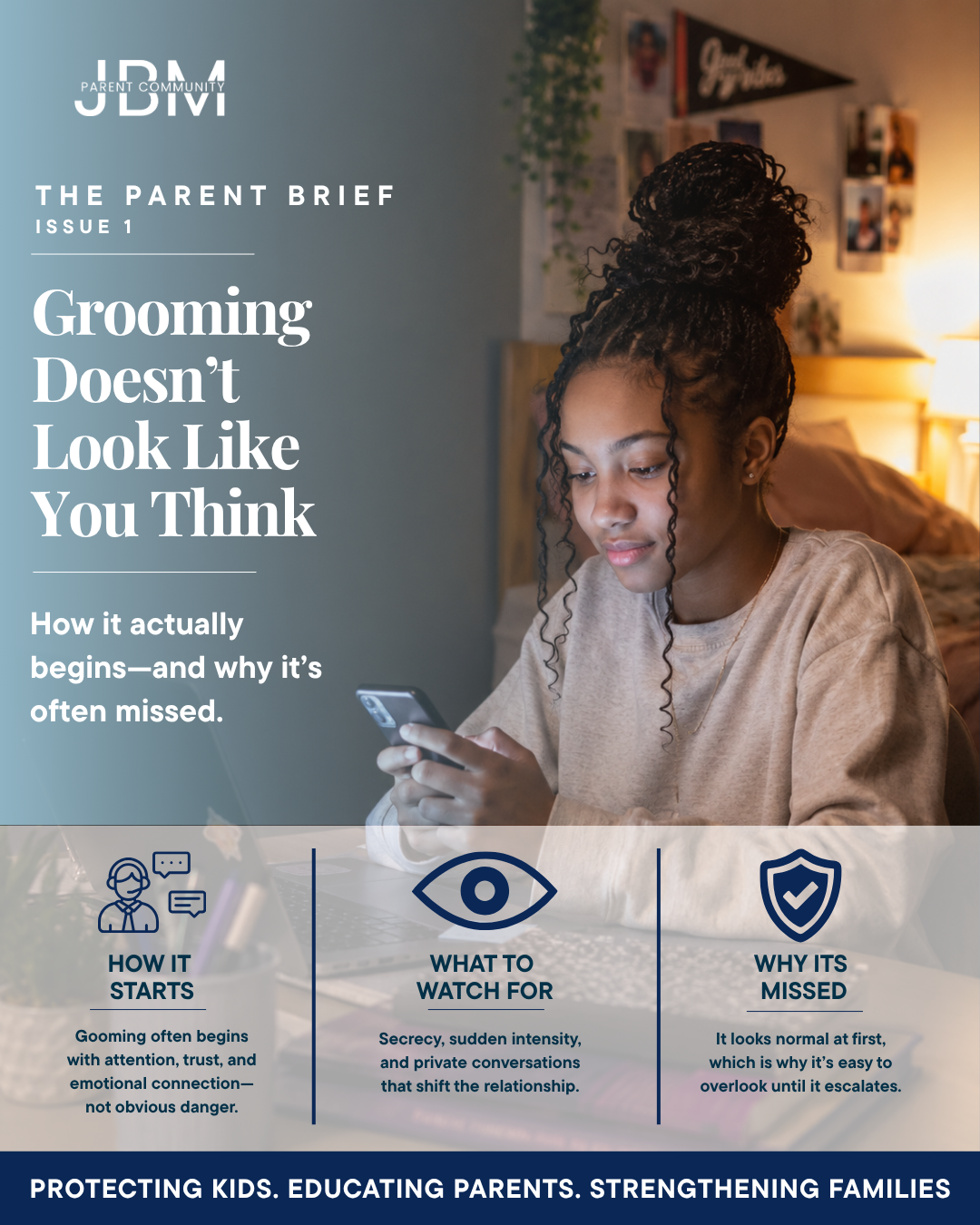
Grooming rarely begins with an obvious threat.
It often begins with something a child genuinely wants or needs: attention, friendship, encouragement, belonging, help, opportunity, or someone who seems to understand them.
Over time, that connection can be used to create greater access, emotional dependence, secrecy, or control.
That is why grooming can be difficult to recognize from the outside.
The question isn't only, “Is this person dangerous?”
Parents also need to ask:
“Is this relationship creating secrecy, dependency, unusual access, or influence over my child?”
WHAT PARENTS SHOULD WATCH FOR
Look for Patterns, Not Just One Sign
01 — UNUSUAL ATTENTION
An adult or older person gives your child excessive praise, gifts, favors, privileges, or one-on-one attention.
02 — PRIVATE ACCESS
Communication begins moving into private messages, disappearing chats, gaming conversations, or other spaces adults cannot easily see.
03 — SECRECY
Your child is encouraged to hide conversations, gifts, meetings, or details of the relationship.
04 — EMOTIONAL DEPENDENCE
The person positions themselves as the one who truly understands your child or creates an “us versus them” dynamic.
05 — BOUNDARIES BEGIN TO MOVE
Rules, physical boundaries, sexual topics, inappropriate jokes, images, or conversations are introduced gradually rather than all at once.
One behavior alone does not necessarily mean grooming.
Patterns, secrecy, increasing access, and changing boundaries deserve a closer look.

A REMINDER FOR EVERY PARENT
SAFE RELATIONSHIPS DON'T REQUIRE SECRECY
There is an important difference between privacy and secrecy.
Children deserve age-appropriate privacy.
But when someone tells a child:
“Don't tell your parents.”
“They wouldn't understand.”
“This is just between us.”
“You'll get in trouble if they find out.”
—that deserves attention.
Safe adults do not need secrecy to maintain a relationship with your child.
TAKE ACTION
WHAT PARENTS CAN DO RIGHT NOW
KNOW WHO HAS ACCESS
Pay attention to the adults, older teens, coaches, mentors, online friends, gaming contacts, and other people communicating with your child.
KEEP COMMUNICATION VISIBLE
Know where private conversations can happen and establish healthy expectations around messaging, gaming, and social media.
ASK ABOUT RELATIONSHIPS, NOT JUST APPS
Instead of only asking, “What app are you using?” ask, “Who do you talk to there?”
MAKE DISCLOSURE SAFE
Tell your child now that if anyone ever makes them uncomfortable, asks them to keep something secret, or crosses a boundary, they can come to you.
TRUST PATTERNS
You don't need proof of something terrible before asking more questions or increasing visibility.
Parents don't have to recognize every tactic. They need to stay close enough to notice when a relationship begins to change
PRACTICAL TOOLS FOR PARENTS
FEATURED RESOURCES
What Is Grooming?
This quick guide breaks down what grooming is, how it often begins, what to watch for, and what parents can do right now to stay engaged and alert.
Grooming Risk Assessment
This parent check helps you identify patterns that may point to grooming, manipulation, or an unsafe relationship.
It isn't designed to create panic. It's designed to help you slow down, look at the whole picture, and recognize when something deserves a closer look.
SHARE THIS RESOURCE
Share this Parent Brief with a parent, grandparent, educator, or trusted adult in your community.
Together, we can equip more families with the knowledge and practical tools they need to respond with wisdom, clarity, and confidence.