
PARENT BRIEF | ISSUE 9
THEY SPEAK YOUR
CHILD'S LANGUAGE
Your child sends you a message, and you recognize every word. Yet somehow, you still have absolutely no idea what they're saying.
Between the slang, emojis, memes, gaming references, and inside jokes, kids practically have their own language. And just when you think you've figured out what something means, they inform you that nobody says that anymore.
It's funny. It's also something parents need to understand.
Because the same language that helps kids connect with friends can also make an unfamiliar person seem trustworthy.
Someone your child meets online may know their favorite game, understand their humor, or use all the right phrases. That familiarity can create a sense of connection long before your child knows who is actually behind the screen.
And that's where an important conversation begins.
Knowing your child's language isn't the same as knowing your child. And speaking their language doesn't make someone safe.
MORE THAN A SLANG DICTIONARY
You can know what every word means and still miss the conversation.
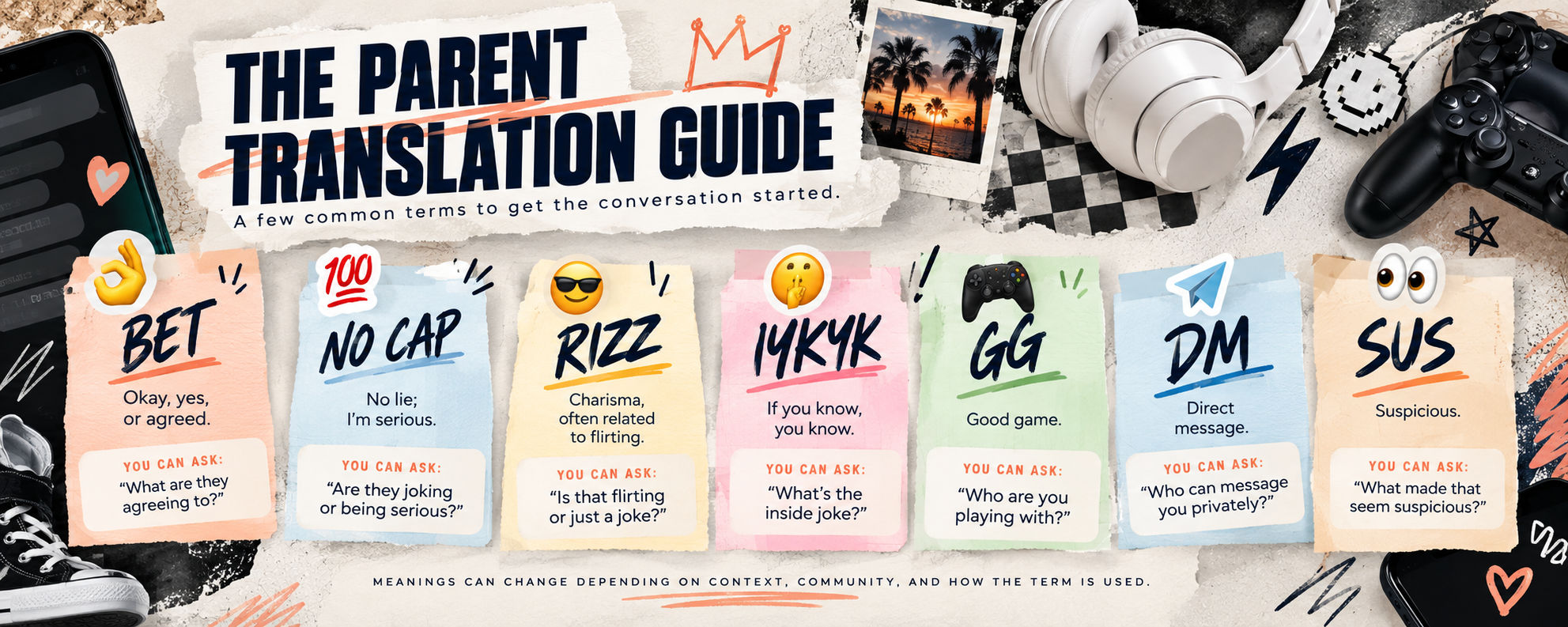
Between abbreviations, emojis, memes, GIFs, gaming terms, and inside jokes, kids have developed an entire way of communicating that parents don't always understand.
And just when you finally figure out what “rizz” means, they've moved on to something else.
But here's what matters: understanding the words is only part of understanding the conversation.
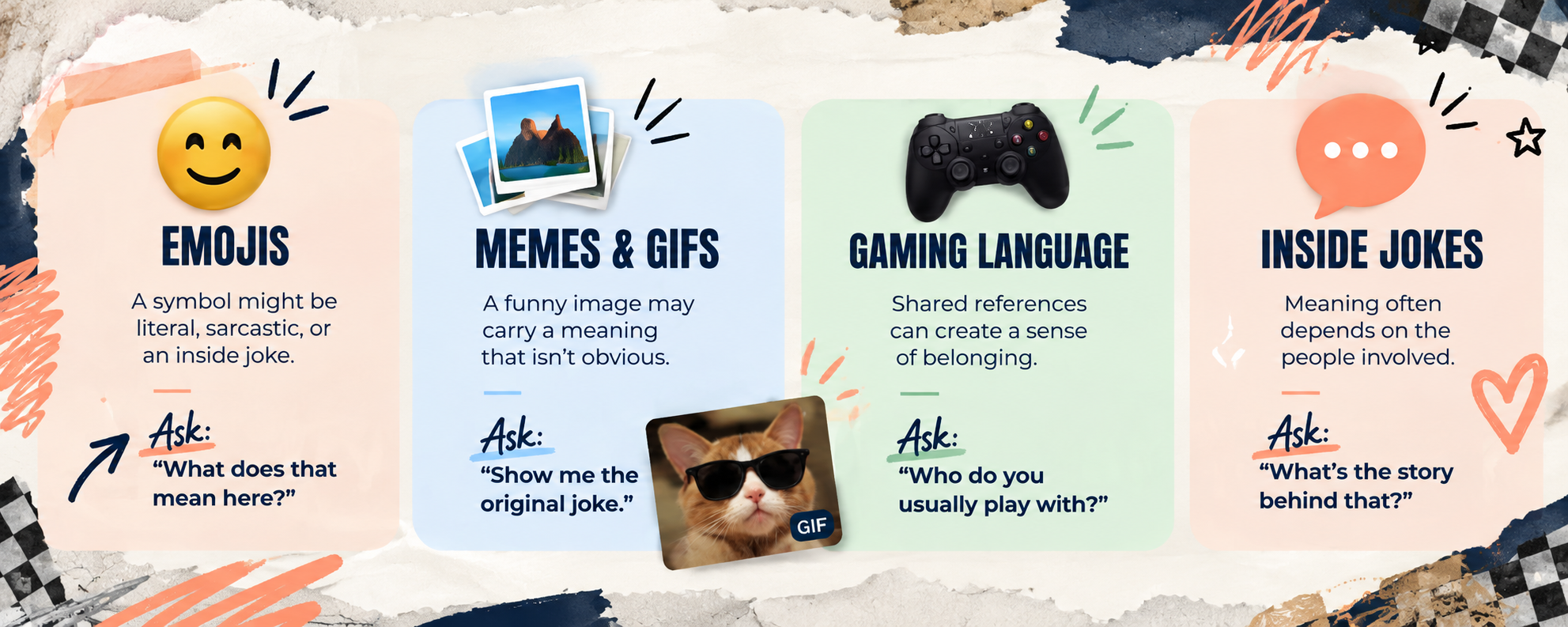
A single emoji can mean something completely different depending on who sends it, what came before it, or whether it's being used as a joke, an insult, or something more serious.
Instead of trying to memorize every new term, get curious about how your child uses them.
IT'S NOT JUST THE WORDS.
THE BIGGER POINT
Don't just ask what a message means. Ask what it's doing.
Is it connecting people? Making someone laugh? Embarrassing someone? Pressuring them? Excluding them?
Those questions will tell you far more than a slang dictionary ever could.
WHEN FAMILIAR
STARTS TO FEEL SAFE
“They get me” and “they are safe” are two different things.
Think about how quickly kids can connect online.
They meet someone in a game. They laugh at the same memes. They follow the same creators. They understand jokes that would make absolutely no sense to the rest of us.
Before long, your child might say, “They're actually really cool. We have so much in common.”
And maybe they do.
But having things in common doesn't tell your child who someone really is.
Someone can know all the right phrases, understand your child's interests, and still be dishonest about their age, identity, or intentions.
According to the DHS Know2Protect initiative, offenders may build trust through attention and support, sometimes pretending to be someone they're not.
The concern isn't that someone understands your child's humor. It's what happens after that connection is established.
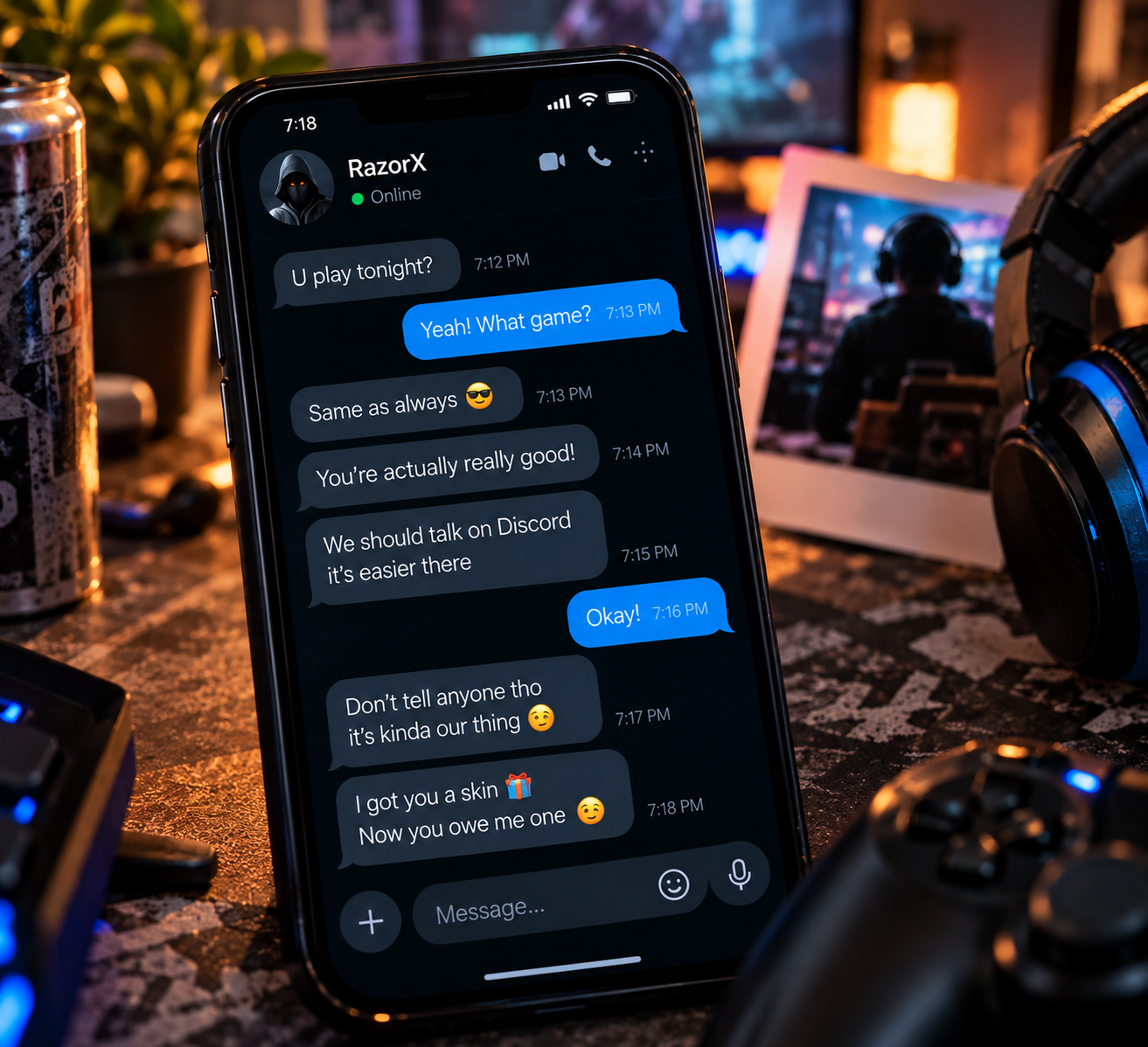
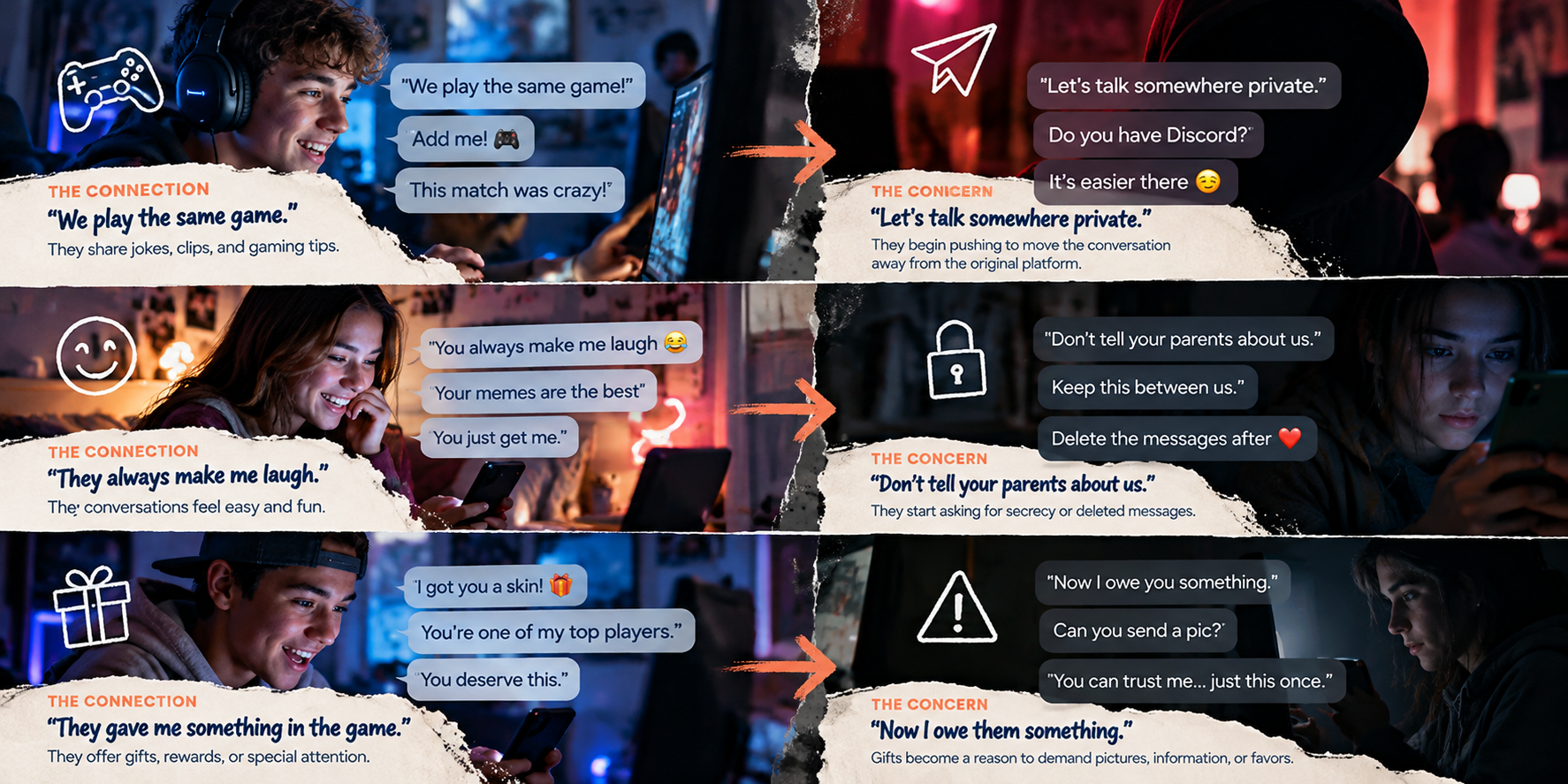
SAME INTERESTS. DIFFERENT INTENTIONS.
THE BOUNDARY TEST
“WHAT HAPPENS WHEN I SAY NO?”
Someone who respects your child will respect their boundaries.
Someone who responds with guilt, threats, pressure, or anger is showing your child something important about that relationship.

THE TAKEAWAY
Teach your child to pay more attention to how someone treats them than how much they have in common.
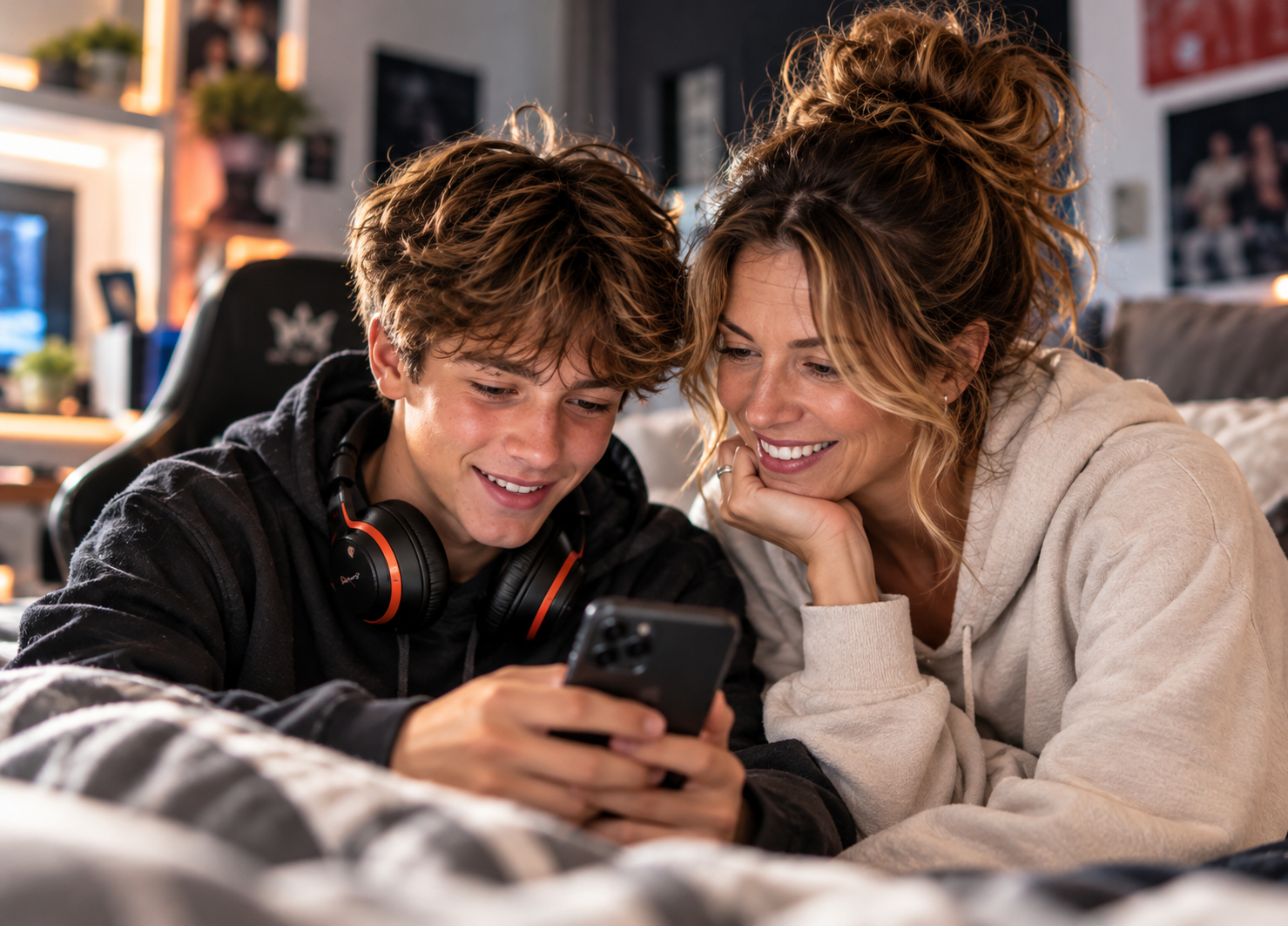
LET YOUR CHILD BE THE EXPERT
You don't have to understand every trend. You just have to be willing to learn.
Your child probably knows more about their digital world than you do. That's okay.
Instead of another lecture about online safety, invite them to show you around.
Ask them to explain a meme that makes absolutely no sense to you. Let them introduce you to their favorite creator. Watch them play a game. Find out what makes their group chats so funny.
You might be surprised by what you learn.
And somewhere between explaining why something is hilarious and telling you you're using a word incorrectly, your child gets something important:
A parent who is interested in their world, not just worried about it.
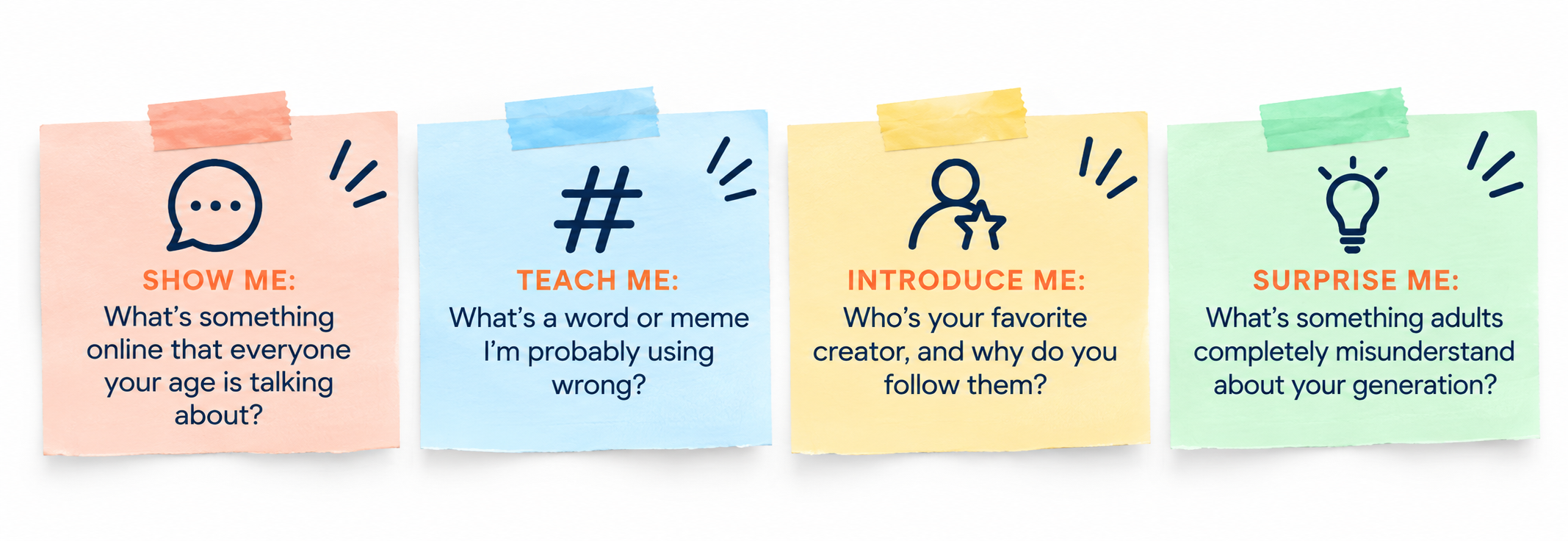
TRY THE 10-MINUTE ROLE REVERSAL
Give your child ten minutes to teach you something about their online world. No lectures. No correcting. Just genuine curiosity.
THE TAKEAWAY
You don't have to become fluent in your child's language.
You have to make sure they feel comfortable speaking to you.
THINK YOU KNOW THE DIGITAL WORLD?
LET'S PLAY.
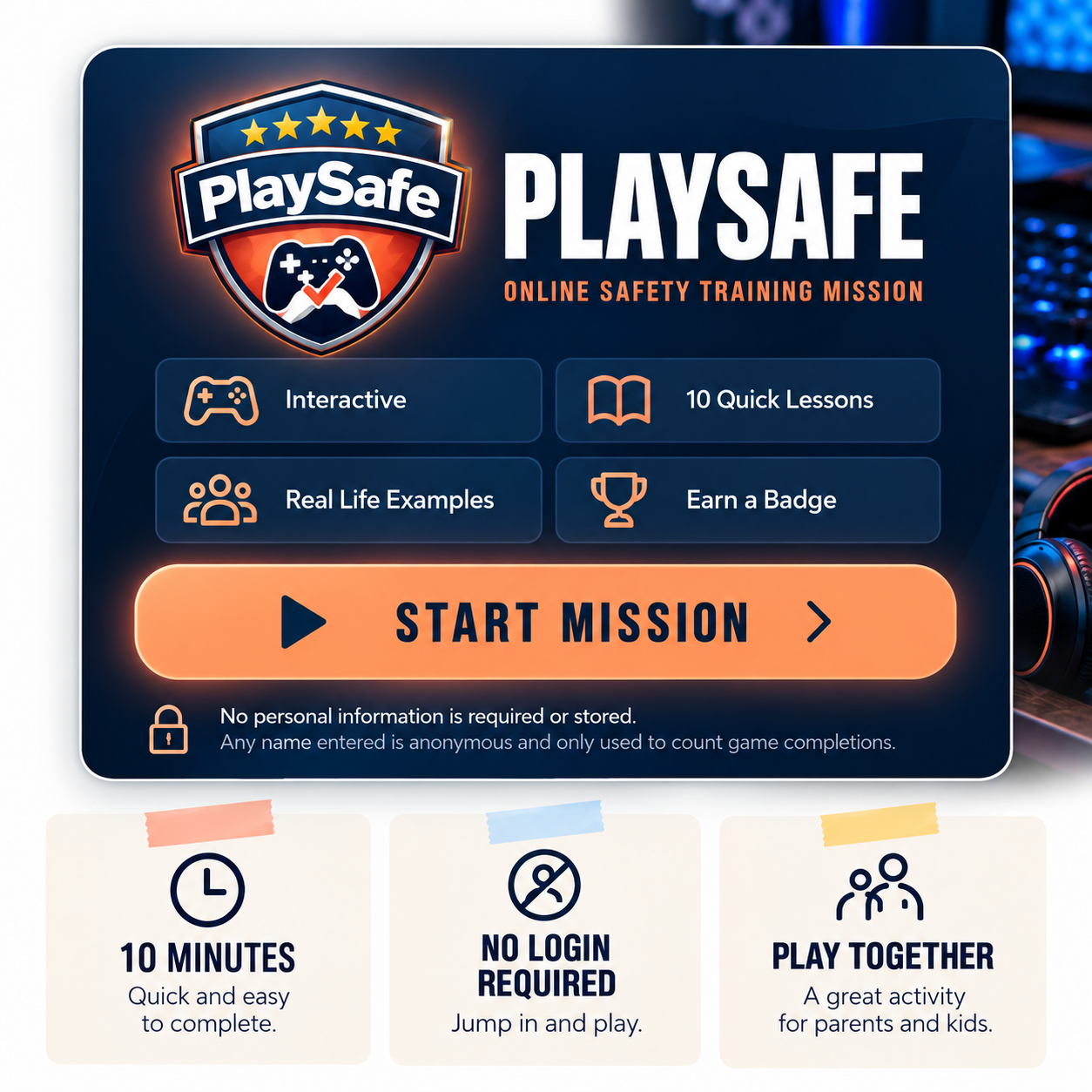
Put your online safety skills to the test.
You've learned a little of your child's language. Now it's time to see how well you can navigate their digital world.
PlaySafe is a free, interactive online safety game designed to help families think through real-world digital situations and make safer choices.
It takes about 10 minutes, requires no login, and gives parents and kids an opportunity to learn together.
Here's a challenge: Play it separately, compare your answers, and see who knows more. You might be surprised!
SHARE THIS RESOURCE
Know a parent who's still trying to figure out what half their child's messages mean? You're not alone!
Share this Parent Brief with a friend, family member, or someone raising kids in today's digital world.
We don't have to know every trend to stay connected to our kids. But we can help each other stay informed, involved, and prepared.
Pass it along. Better-informed parents make safer communities.