

TEEN GAMBLING STARTS EARLIER THAN YOU THINK
Most parents are not looking for gambling in the places it is showing up now.
Teen gambling does not always begin with a betting app or sportsbook. It can appear through sports culture, gaming, loot boxes, group chats, private servers, and casual conversations about “picks” and “wins.”
Over time, repeated exposure can normalize betting, financial risk, and instant rewards before parents realize what is happening.
This issue will help you recognize where gambling culture is reaching teens, what warning signs deserve attention, and how to respond early and calmly.
PARENT BRIEF | ISSUE 8
WHEN GAMBLING DOESN'T
LOOK LIKE GAMBLING
Most teens don't need a betting account to encounter gambling culture.
It can begin with sports picks, gaming rewards, loot boxes, or friends talking about easy money.
Over time, these experiences can make betting, chance, and financial risk feel like ordinary parts of entertainment.
FOUR PLACES PARENTS MAY OVERLOOK
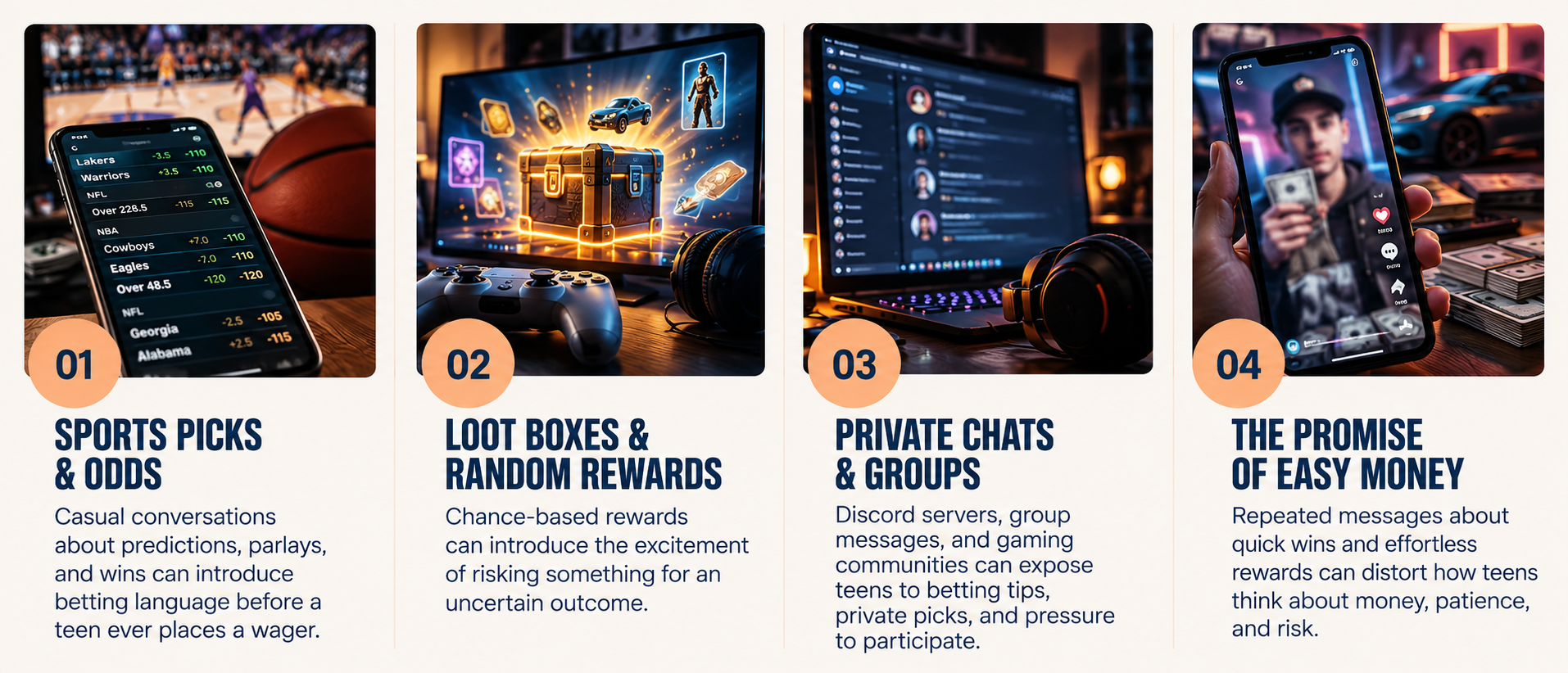
WHAT PARENTS NEED TO UNDERSTAND
THE FIRST BET ISN'T ALWAYS THE FIRST EXPOSURE.
By the time a teen encounters a betting app, the language and excitement surrounding gambling may already feel familiar.
WHAT GAMBLING CULTURE IS TEACHING TEENS
A teen doesn't have to place a bet to begin absorbing the thinking behind gambling.
When sports picks, instant rewards, and stories of big wins become everyday entertainment, they can influence how teens view money, risk, patience, and success.

RISK
WHEN BETTING FEELS NORMAL
Constant exposure to odds, picks, and wagering conversations can make financial risk seem like ordinary entertainment.

REWARD
WHEN WAITING FEELS LESS APPEALING
Quick wins and chance-based rewards may encourage the expectation of immediate results rather than patience and persistence.

BELONGING
WHEN WINNING BECOMES SOCIAL CURRENCY
Sharing picks, wins, and rewards can become a way to gain attention, impress friends, or feel included

MONEY
WHEN BIG WINS OVERSHADOW LOSSES
Stories of easy money can create unrealistic expectations about financial success while hiding the losses behind the highlights.
WHAT PARENTS MAY BE MISSING
THE FIRST BET ISN'T ALWAYS WHERE THE RISK BEGINS.
A teen may already be learning to chase rewards, associate winning with popularity, or underestimate financial consequences long before placing a wager.

WHEN BETTING SPACES
BECOME ACCESS POINTS
The danger isn't always the bet. Sometimes it's who gains access to your child through the spaces surrounding it.
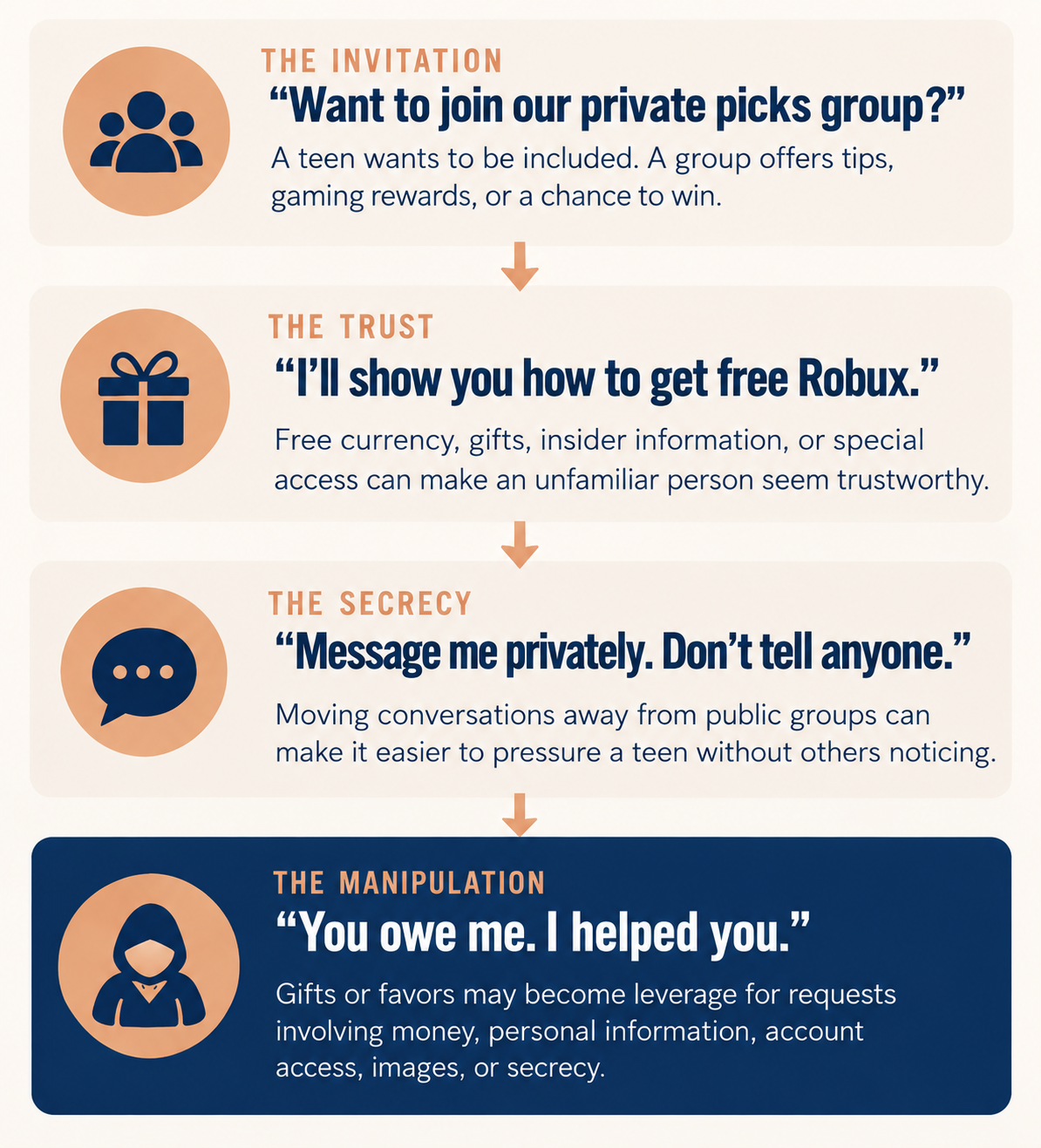
A teen joins a Discord server for sports picks. Someone offers free Robux, a rare Roblox item, or a tip on how to win. A new online friend promises to help them make money.
At first, it may feel like someone is simply being helpful.
But offers like these can also be used to build trust, move conversations into private spaces, and create opportunities for manipulation.
RED FLAGS PARENTS
SHOULD RECOGNIZE
Someone your child only knows online offers free Robux, gaming credits, rare items, or guaranteed wins.
A new contact encourages them to leave Roblox, a game chat, or a public Discord
server for private messaging.Someone requests account passwords, verification codes, payment information, or personal photos.
Your child is told to keep a conversation, gift, purchase, or transfer secret.
A person pressures your child to repay a favor, send money, or do something uncomfortable.
START THE CONVERSATION BEFORE THERE'S A PROBLEM
Rather than beginning with "Are you gambling?", try asking:
"What would you do if someone offered you free Robux or money to join a private group?"
"Do kids at school share sports picks, betting wins, or ways to earn money through games?"
"Has anyone online ever offered you something but asked you to keep it secret?"
These questions help parents understand what their children are actually encountering without immediately putting them on the defensive.
THE BIGGER POINT
BELONGING CAN OPEN THE DOOR. SECRECY CAN HIDE WHAT HAPPENS NEXT.
Not every gaming group or betting conversation is dangerous. But when someone uses rewards, promises, or friendship to gain private access to a child, parents need to recognize the warning signs.
WHAT PARENTS CAN DO RIGHT NOW
You don't have to understand every game, betting platform, or online trend to protect your child. But you do need to know where money, rewards, and private conversations intersect.
The goal isn't to monitor every move your child makes. It's to put practical safeguards in place, ask better questions, and make sure your child knows they can come to you when something doesn't feel right.
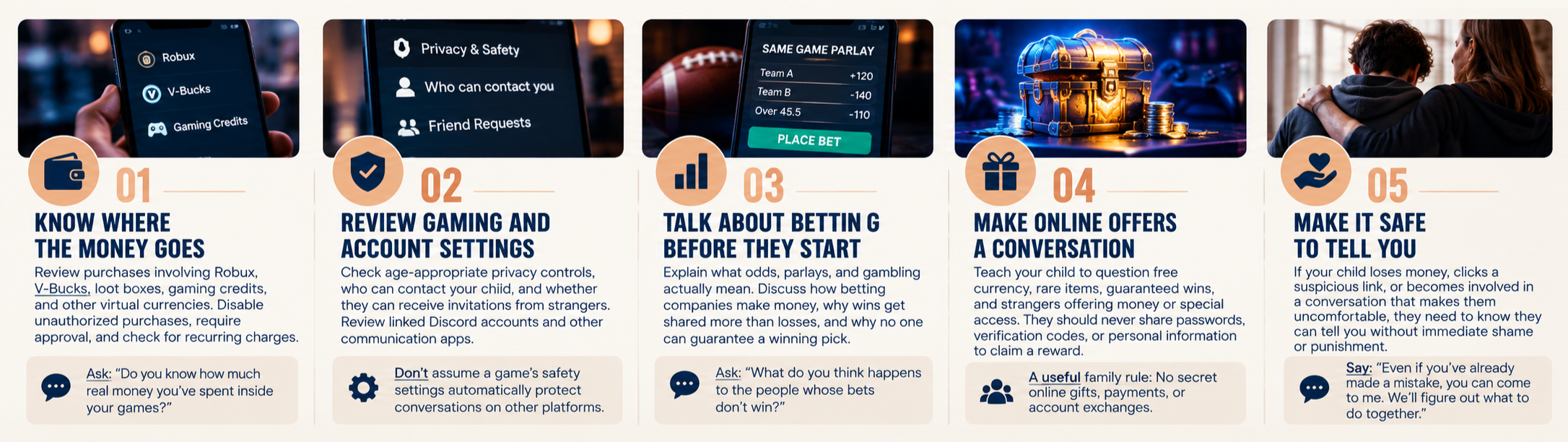
FIVE SAFEGUARDS WORTH PUTTING IN PLACE
ONE CONVERSATION TO HAVE TONIGHT
"IF SOMEONE ONLINE PROMISED YOU FREE MONEY, ROBUX, OR A GUARANTEED WIN, HOW WOULD YOU KNOW WHETHER TO TRUST THEM?"
You don't need a perfect answer from your child. You need an open conversation that helps them recognize risk before they're pressured to act.
IF SOMETHING HAS ALREADY HAPPENED
If your child has lost money, shared account details, or been pressured by someone online, respond calmly. Help them stop contact, preserve relevant messages, secure their accounts, and report suspicious activity through the platform. Contact your financial institution if money or payment information is involved.
If someone is threatening, exploiting, or sexually extorting your child, seek help promptly. The NCMEC CyberTipline accepts reports of suspected online child sexual exploitation.
The most important safeguard isn't an app or a setting. It's a child who knows what to watch for—and knows they can come to you.
KEEP THE CONVERSATION GOING
Gambling culture may reach your child long before they ever place a bet. Preparation starts with understanding what they're seeing, who they're talking to, and how money and rewards are influencing their choices.
You don't need to know every gaming platform or understand every betting term. You need to stay involved, set clear boundaries, and make sure your child knows they can come to you.
TAKE THESE TOOLS WITH YOU
PARENT COMMUNITY RESOURCES
TEEN GAMBLING & ONLINE SAFETY
Our companion resources help you recognize gambling-related influences, identify concerning online interactions, and start meaningful conversations with your child.
Inside:
What parents may not be seeing
Warning signs and access points
Questions to ask your teen
Practical family safeguards
ONE THING TO REMEMBER
YOUR CHILD DOESN'T NEED TO HAVE A GAMBLING PROBLEM FOR THIS CONVERSATION TO MATTER.
The earlier you talk about risk, rewards, money, and online relationships, the better prepared your child will be to recognize when something isn't right.
SHARE THIS RESOURCE
Know a Parent Who Needs This Conversation?
Share this Parent Brief with a parent, grandparent, educator, or trusted adult in your community.
The risk is not only the bet. It is the access, attention, incentives, and private relationships that can form around it.
Together, we can help more families recognize these hidden entry points and respond before trust becomes manipulation.
With you,
The Parent Community Team