

PARENT BRIEF | ISSUE 7
WHEN THE FEED STARTS PARENTING YOUR CHILD
What repeated content exposure is teaching your child—often without either of you realizing it.
YOUR CHILD ISN'T CHOOSING EVERYTHING THEY SEE
The feed isn't just showing your child what they follow. It's learning what keeps them watching.
Every pause, replay, like, search, and interaction can help shape what appears next.
A child watches one video. The platform recommends another. Then another. Before long, their feed may be filled with similar content—even when they never intentionally searched for it.
And not all of that content is harmless.
Sexualized images, extreme challenges, harmful messages, and distorted ideas about relationships or appearance can appear through recommendations.
The concern isn't just what your child searches for. It's what the algorithm keeps putting in front of them.
HOW THE CONTENT LOOP WORKS

WHY THIS MATTERS
Repeated exposure can make unfamiliar ideas feel increasingly ordinary. Children may begin encountering content about appearance, sexuality, relationships, risky challenges, or harmful behavior long before a parent realizes it's appearing in their feed.
Two children using the same app can have completely different experiences because their recommendations are personalized.
THE QUESTION TO ASK
“WHAT KEEPS SHOWING UP IN YOUR FEED?”
Don't just ask what your child is watching. Ask what keeps being recommended—even when they aren't looking for it.

WHEN REPETITION STARTS FEELING NORMAL
What children see repeatedly can begin to shape what they believe is normal.
A child doesn't have to search for harmful content to encounter it. When similar videos, messages, or images keep appearing, repeated exposure can gradually make unfamiliar or unhealthy ideas feel ordinary.
That may include sexualized content, dangerous challenges, unrealistic beauty standards, or distorted messages about relationships.
And because feeds are personalized, two children using the same app can have very different experiences.
The concern isn't just what appears once. It's what keeps coming back.
WHAT PROLONGED FEED TIME CAN DO

MAKE RISKY CONTENT FEEL FAMILIAR
Repeated exposure can make mature, extreme, or unhealthy content seem more ordinary than it is.
1

2
COMPETE FOR ATTENTION AND TIME
Endless recommendations can make it harder to stop scrolling, crowding out sleep, movement, and time with family.

REINFORCE THE SAME MESSAGES
When similar content appears again and again, children may begin accepting ideas or behaviors without questioning them
3
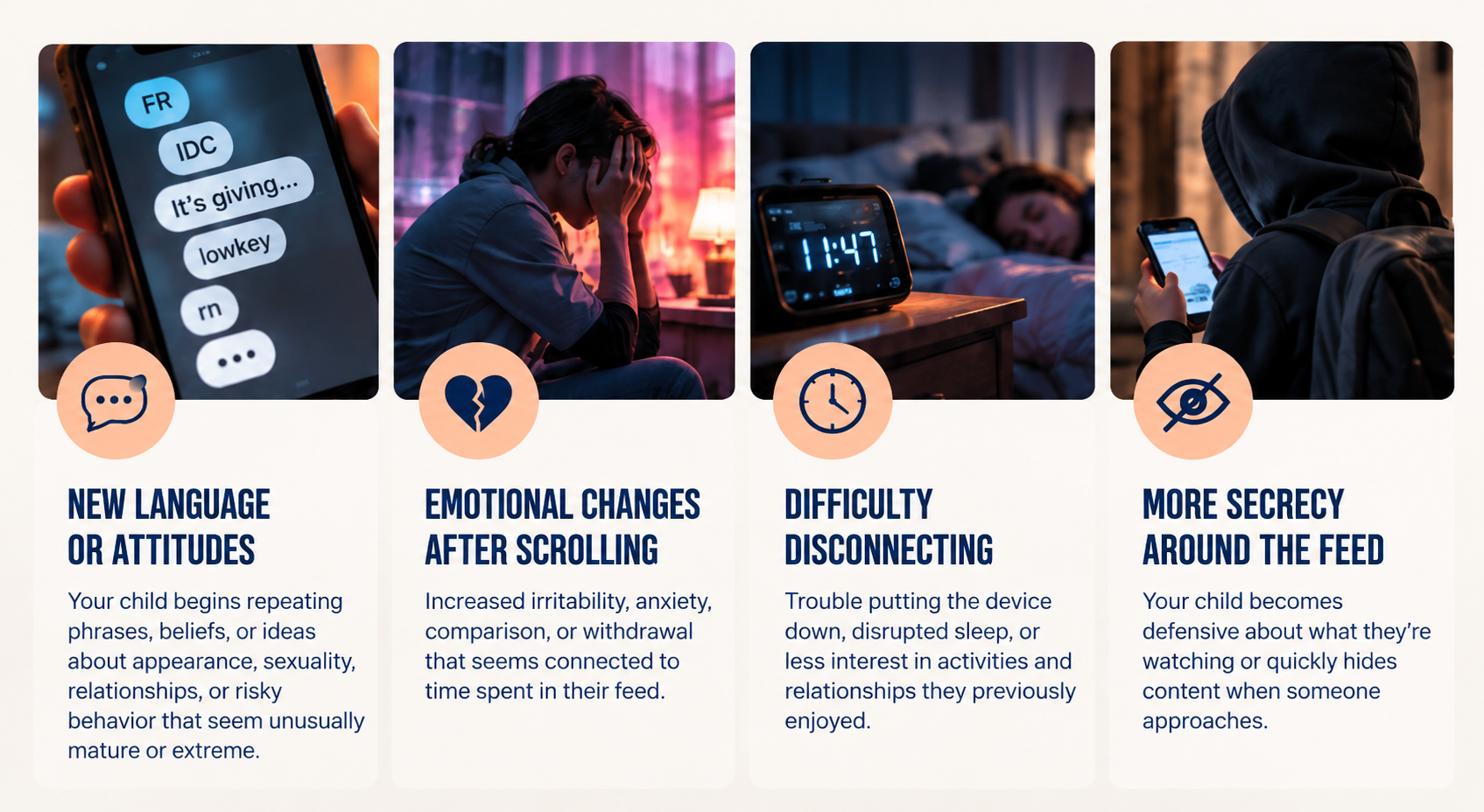
THE CHANGE PARENTS MAY NOTICE
Sometimes the effects show up away from the screen.
Your child may begin using language you haven't heard before, repeating unfamiliar beliefs, becoming more irritable after scrolling, or having difficulty stepping away from short-form videos.
These changes don't automatically mean harmful content is responsible. But they are reasons to get curious about what your child is seeing.

THE BIGGER PICTURE
REPETITION DOESN'T MAKE SOMETHING HEALTHY. IT CAN JUST MAKE IT FEEL NORMAL.
Help your child learn to question what keeps appearing, rather than assuming that popular or familiar content is trustworthy.
WHAT CHANGES OFF THE SCREEN
Sometimes the clearest signs of digital influence appear when the device is put away.
Children are constantly learning from what they watch. And when certain messages, behaviors, or trends appear repeatedly, that influence can begin showing up in everyday life.
A new attitude. Unfamiliar language. Strong reactions to being asked to stop scrolling.
None of these automatically means something harmful is happening. But they give parents an opportunity to look beyond screen time and pay attention to what their child is absorbing.
THE SHIFT WORTH NOTICING
GET CURIOUS BEFORE
YOU GET CONCERNED
A change in behavior is an invitation to pay attention, not proof that something is wrong.
Instead of immediately restricting the device, begin with a conversation.
TRY ASKING
“I've noticed you've been seeing a lot of new things online lately. What's been showing up in your feed?”
Listen for what your child finds funny, interesting, confusing, upsetting, or normal. Their answers may tell you more than their screen-time report.

THE BIGGER PICTURE
DON'T JUST WATCH THE SCREEN. PAY ATTENTION TO WHAT COMES HOME FROM IT.


DON'T JUST COUNT MINUTES.
LOOK AT THE FEED.
Screen time tells you how long your child was online. It doesn't tell you what they were seeing.
You don't need to know every trend. You need to understand what keeps showing up and how it may be affecting your child.
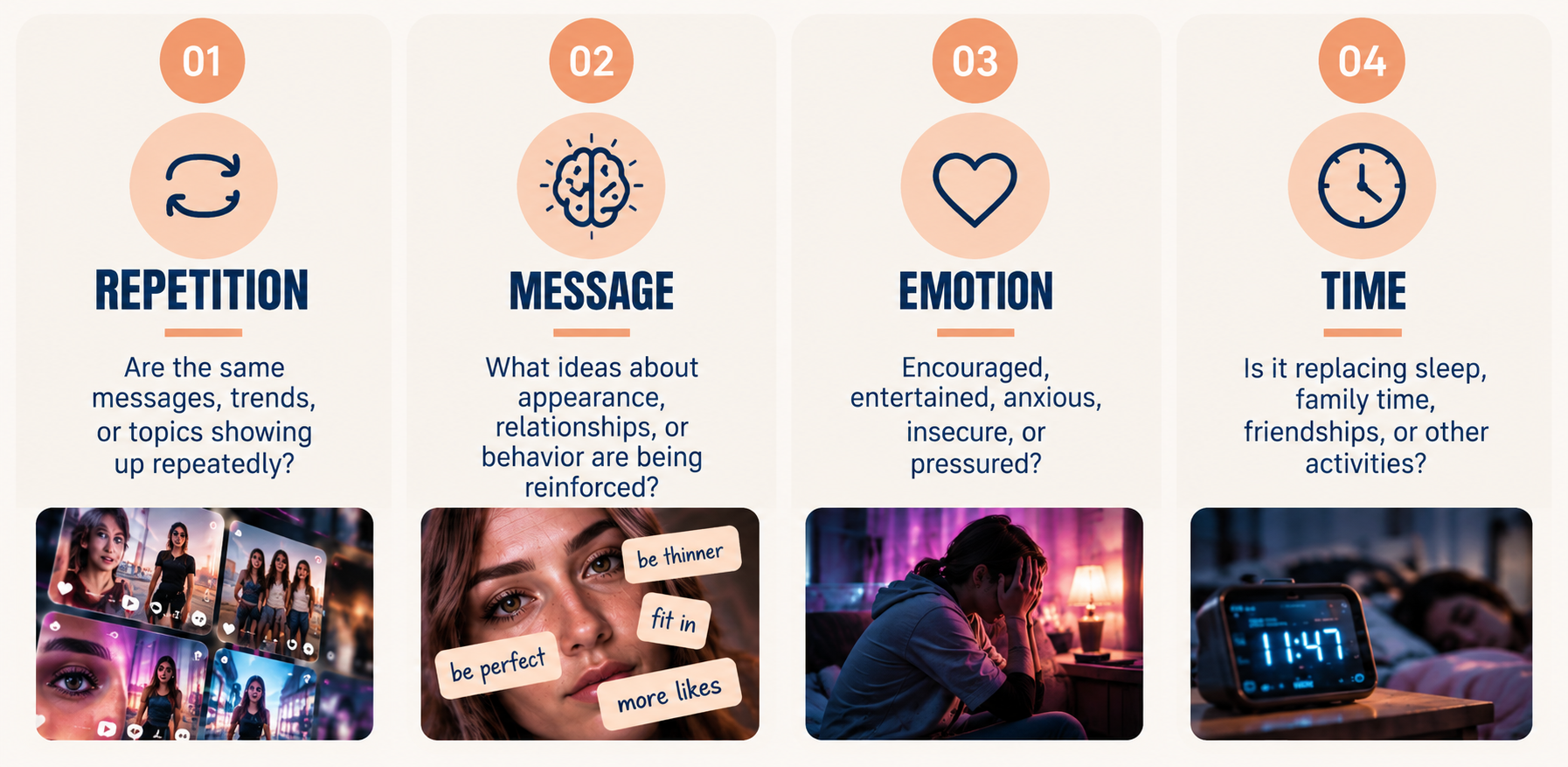
START WITH A FAMILY FEED CHECK
Sit with your child, scroll through their feed together, and ask:
BUILD HEALTHY BOUNDARIES
Review feeds together, use age-appropriate content controls, keep devices out of bedrooms at night, and make time for offline connection.
THE PARENT TAKEAWAY
DON'T JUST ASK HOW LONG THEY WERE ONLINE. ASK WHAT THEY SAW.
FREE PARENT DOWNLOAD
HELP YOUR CHILD LOOK BEYOND THE FEED
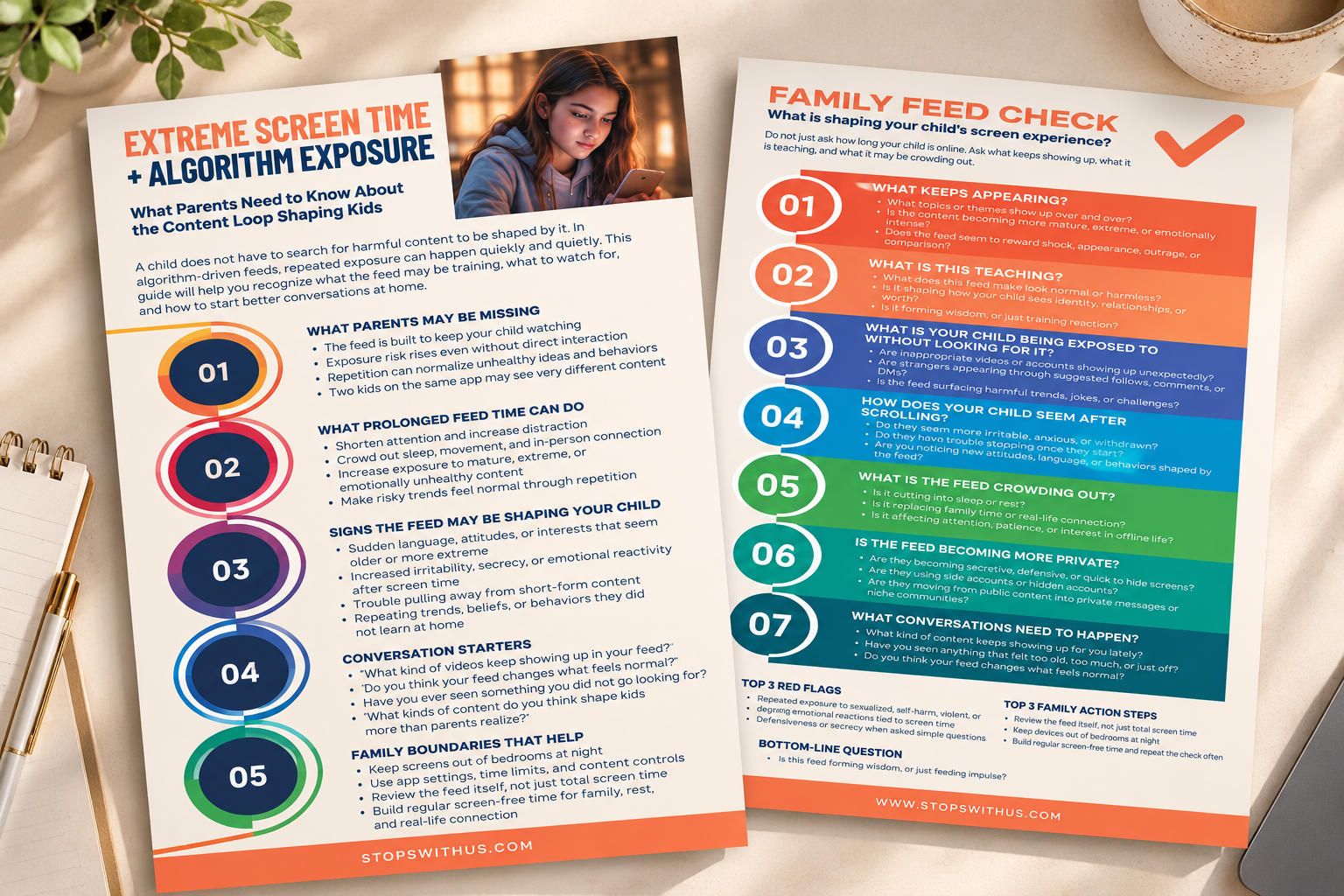
The guide helps parents understand how repeated content exposure can influence children, recognize warning signs, and build healthier digital boundaries.
The included Family Feed Check gives parents seven areas to review together, with conversation starters and practical action steps.
ONE THING TO DO THIS WEEK
Sit with your child and look at their feed together.
Ask: “What keeps showing up, and how does it make you feel?”
Listen before you react. You may learn something a screen-time report could never tell you.
THE FINAL REMINDER
BE ALERT AND OF SOBER MIND.
1 Peter 5:8
Awareness doesn't mean anxiety. It means being present, asking questions, and helping your child develop discernment in a world designed to keep their attention.
SHARE THIS RESOURCE
Know a Parent Who Needs This Conversation?
Most parents are paying attention to how much time their children spend online. But what children repeatedly see may matter just as much as how long they're watching.
Algorithms can quietly shape what kids believe is normal, often without parents realizing what's appearing in their feeds.
Share this Parent Brief with another family. A simple conversation today can help parents recognize unhealthy influences, ask better questions, and build stronger digital boundaries.