

THE CHAT
BEHIND THE GAME
The danger is often not the game itself. It's the relationships, access, and private conversations happening inside and around it.
For many kids and teens, gaming is more than entertainment. It's where they talk, connect, compete, and build friendships.
But behind the screen, a game can also open the door to private messages, unknown contacts, gifts, and conversations parents never see.
Someone may begin with a compliment, an offer to help, or an invitation to a private server. What starts as ordinary gameplay can gradually become something more personal.
Parents don't need to master every game. They need to understand who has access to their child.
PARENT BRIEF | ISSUE 6

GAMING IS SOCIAL NOW
It's more than a game. It's where kids talk, connect, compete, and build relationships.
For many children, gaming has become a social space. They aren't just playing alongside other people. They're communicating through headsets, exchanging messages, joining private servers, and building friendships with people they may never have met.
And those conversations don't always stay inside the game.
A friendship that begins on Roblox, Fortnite, or Minecraft can move to Discord, Snapchat, or another private messaging platform—sometimes without a parent ever realizing it.
The game may be where the connection begins. But private access is where the risk can grow.
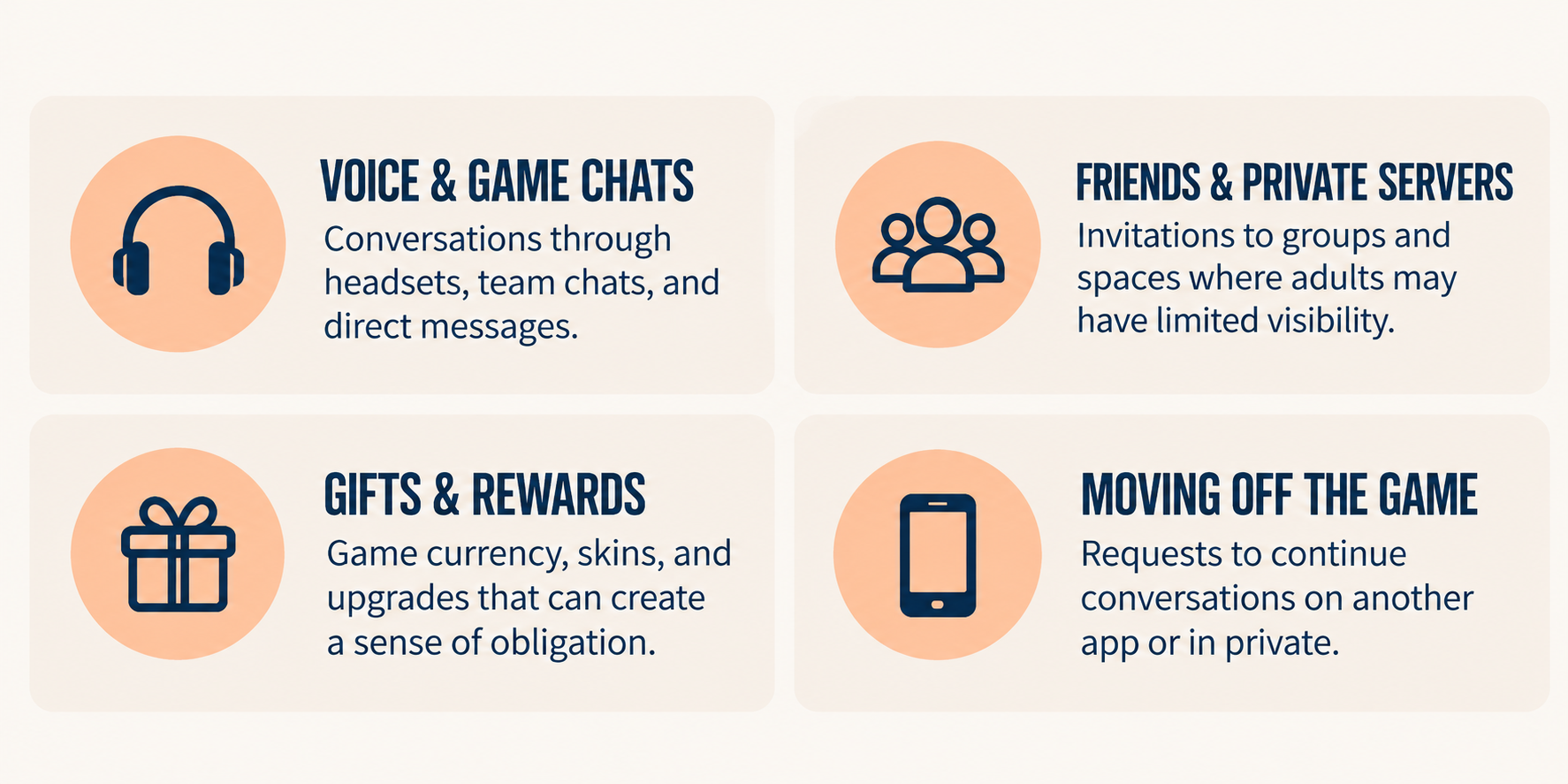
THE CONNECTIONS PARENTS MAY NOT SEE
Not every online friendship is dangerous. But when attention becomes secrecy, gifts become leverage, or someone pressures a child to move conversations out of sight, parents need to pay attention.
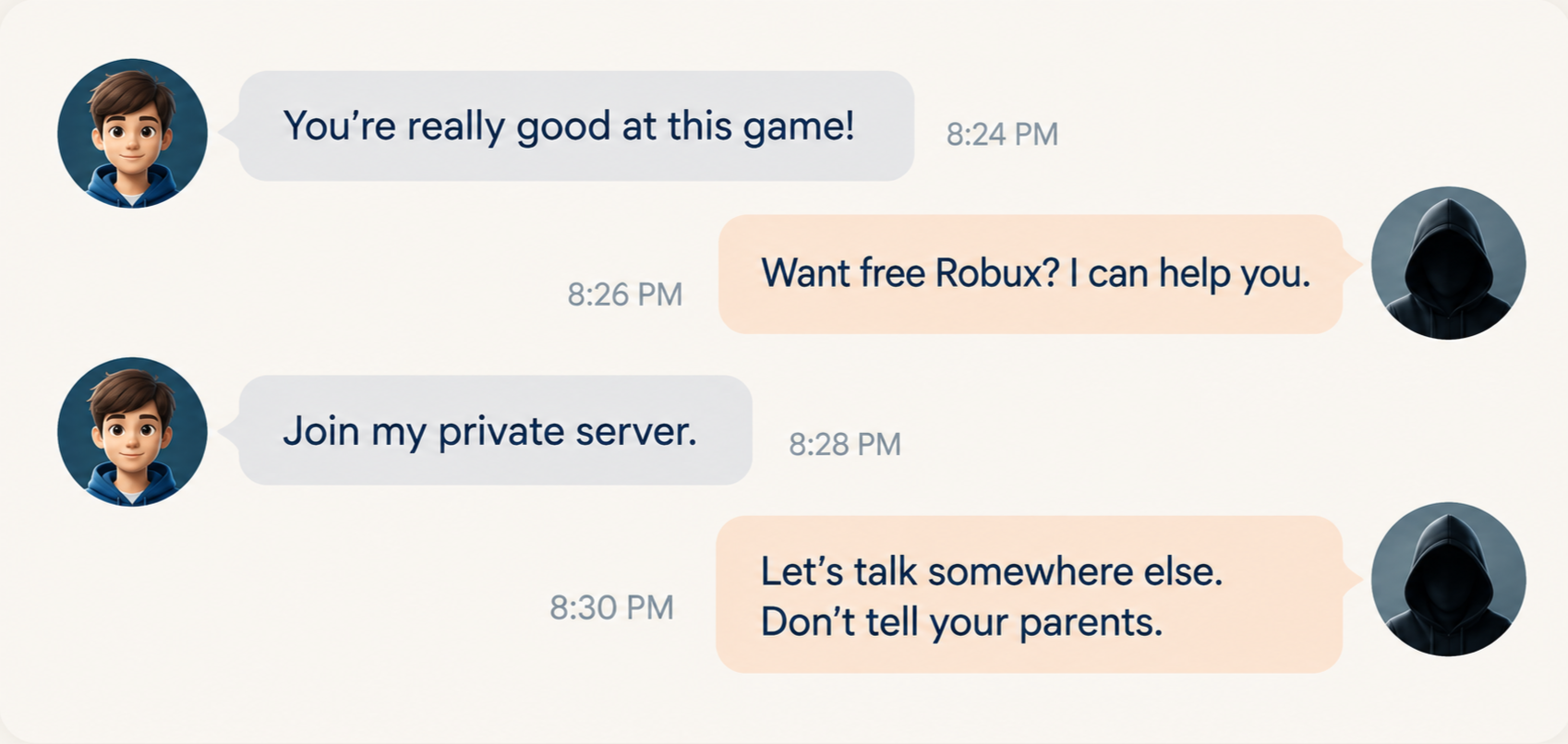
HOW AN ORDINARY CONVERSATION CAN CHANGE
It might begin with something as simple as:
THE BIGGER PICTURE
DON'T JUST ASK WHAT GAME THEY'RE PLAYING. ASK WHO THEY'RE PLAYING WITH.
Knowing who can contact your child matters just as much as knowing which platforms they use.
WHEN THE GAME BECOMES A DOORWAY
Online grooming doesn't always begin with a threat. Sometimes it begins with a compliment, a shared interest, or someone offering to help.
A child may think they've made a new friend. Someone who plays the same games, understands their interests, and always seems available.
But when that connection is used to build dependence, encourage secrecy, or introduce pressure, the relationship can become dangerous.
What parents need to recognize is how an ordinary interaction can gradually change.
THE PATTERN PARENTS NEED TO INTERRUPT
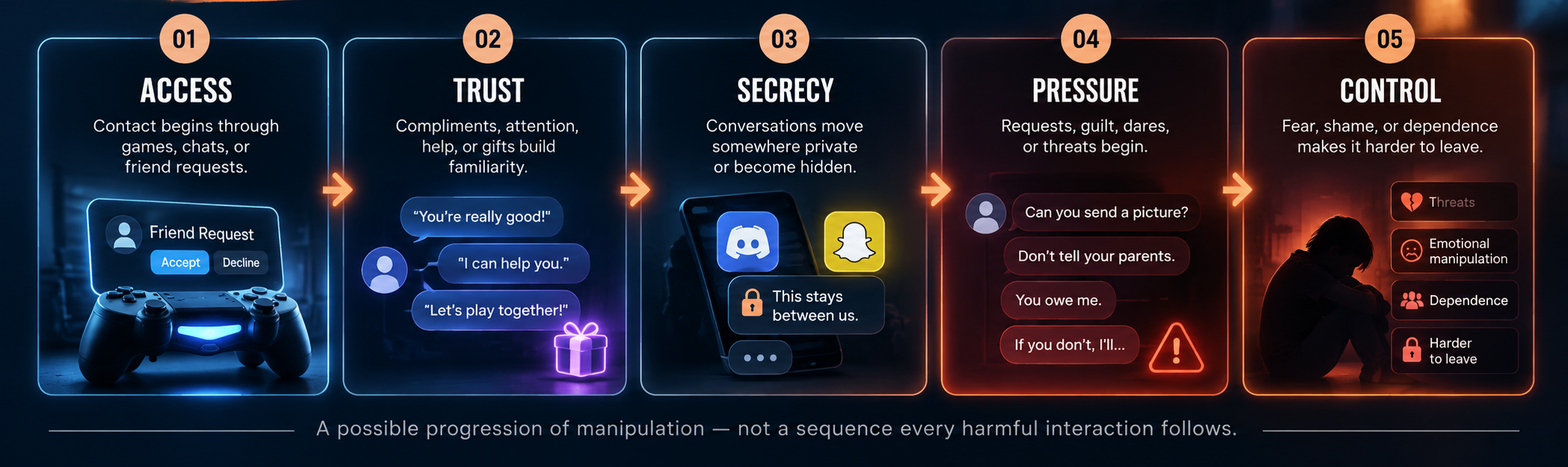
THE MOMENT PARENTS NEED TO NOTICE
The shift often happens when a child is asked to do something they wouldn't normally do—or keep something from the people who protect them.
That might sound like:
“Let's move to a different app.”
“This stays between us.”
“After everything I've given you, you owe me.”
“If you tell anyone, you'll regret it.”
These are examples of manipulation, not ordinary friendship.
Not every online interaction follows this pattern, and a child may experience pressure or threats without any gradual trust-building.
THE BIGGER PICTURE
THE GAME MAY OPEN THE DOOR. SECRECY AND PRESSURE ARE WHAT PARENTS NEED TO RECOGNIZE.
Teach your child that no online friendship, gift, or gaming achievement should ever require them to hide conversations, share private information, or ignore their boundaries
WHAT PARENTS MAY NOT SEE
Sometimes the biggest warning signs aren't happening on the screen. They're showing up in your child's behavior.
A new online friend. A sudden need for privacy. Gifts or game currency from someone you've never heard of.
Individually, these things may seem harmless. But when secrecy, pressure, and changes in behavior begin appearing together, parents need to pay attention.
The goal isn't to assume something is wrong. It's to recognize when something has changed.
LOOK BEYOND THE SCREEN

UNEXPECTED GIFTS OR NEW ONLINE FRIENDS
Someone your child only knows online begins offering attention, Robux, V-Bucks, skins, upgrades, or gift cards.
MORE SECRECY AROUND CONVERSATIONS
Your child hides screens, deletes messages, uses another account, or becomes defensive when asked about online contacts.

CHANGES IN MOOD OR ROUTINE
Anxiety after gaming, disrupted sleep, withdrawal from family, or unusual distress about losing device access.

PRESSURE, THREATS, OR FEAR
Someone asks for pictures, demands secrecy, uses gifts to create obligation, or threatens consequences if your child refuses
ONE WARNING SIGN DOESN'T TELL THE WHOLE STORY
Children and teens naturally seek independence and privacy. Changes in mood, friendships, or device habits can have many explanations.
But repeated secrecy, unwanted contact, gifts with conditions, or threats deserve attention—especially when your child seems afraid to talk about what's happening.
Look for patterns. Ask questions. Keep the door open.
THE BIGGER PICTURE
THE WARNING SIGN ISN'T ALWAYS WHAT YOUR CHILD IS DOING. SOMETIMES IT'S WHAT SOMEONE ELSE IS ASKING THEM TO DO.
Pay attention to the people gaining access to your child—not just the amount of time your child spends online.
KNOW
MORE THAN
THE GAME
You don't have to understand every game your child plays. But you do need to understand who can reach them.
Parental controls are important, but they're only part of the picture. A game may have privacy settings, while a connected app, private server, or messaging feature creates another way for someone to make contact.
Start with the platforms your child uses most. Then focus on a few settings that make the biggest difference.

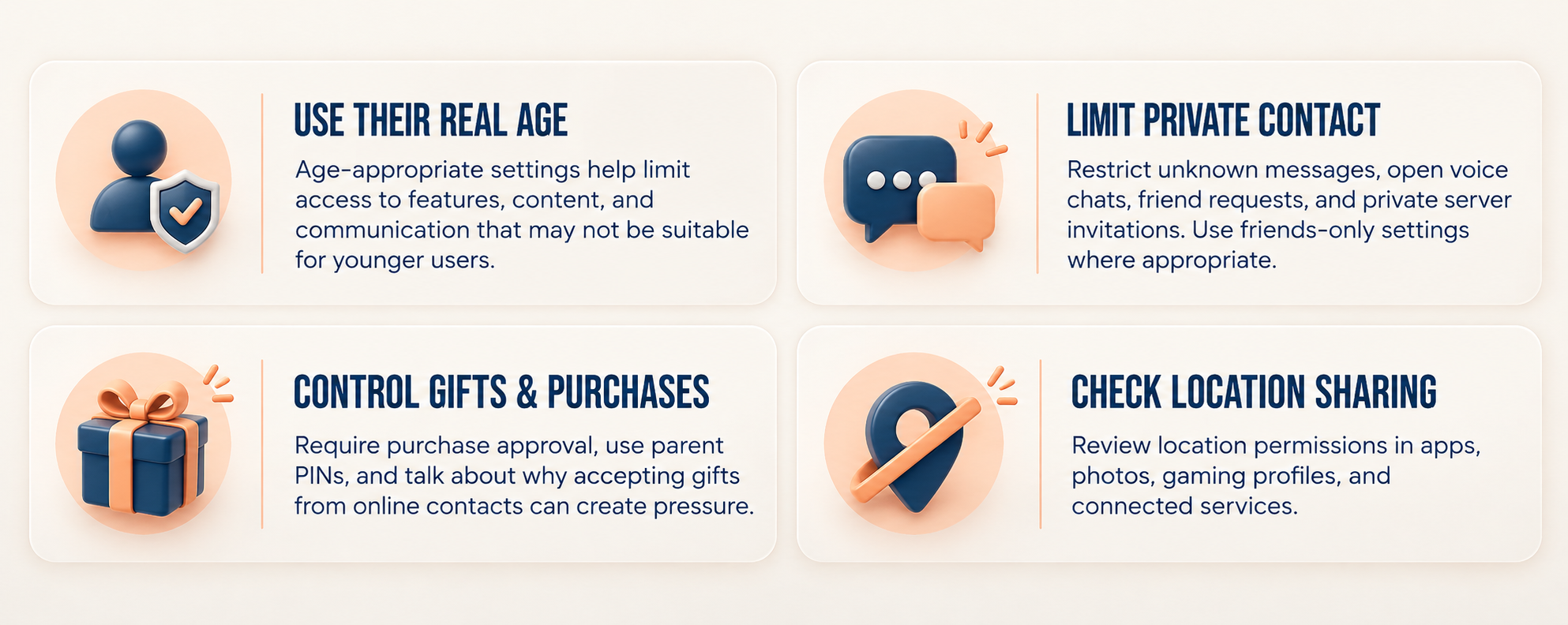
START WITH THESE SAFETY SETTINGS
MAKE DIGITAL SAFETY A MONTHLY HABIT
You check the locks on your doors. You maintain your car. Digital safety deserves regular attention, too.
Once a month, sit down with your child and review the basics together.
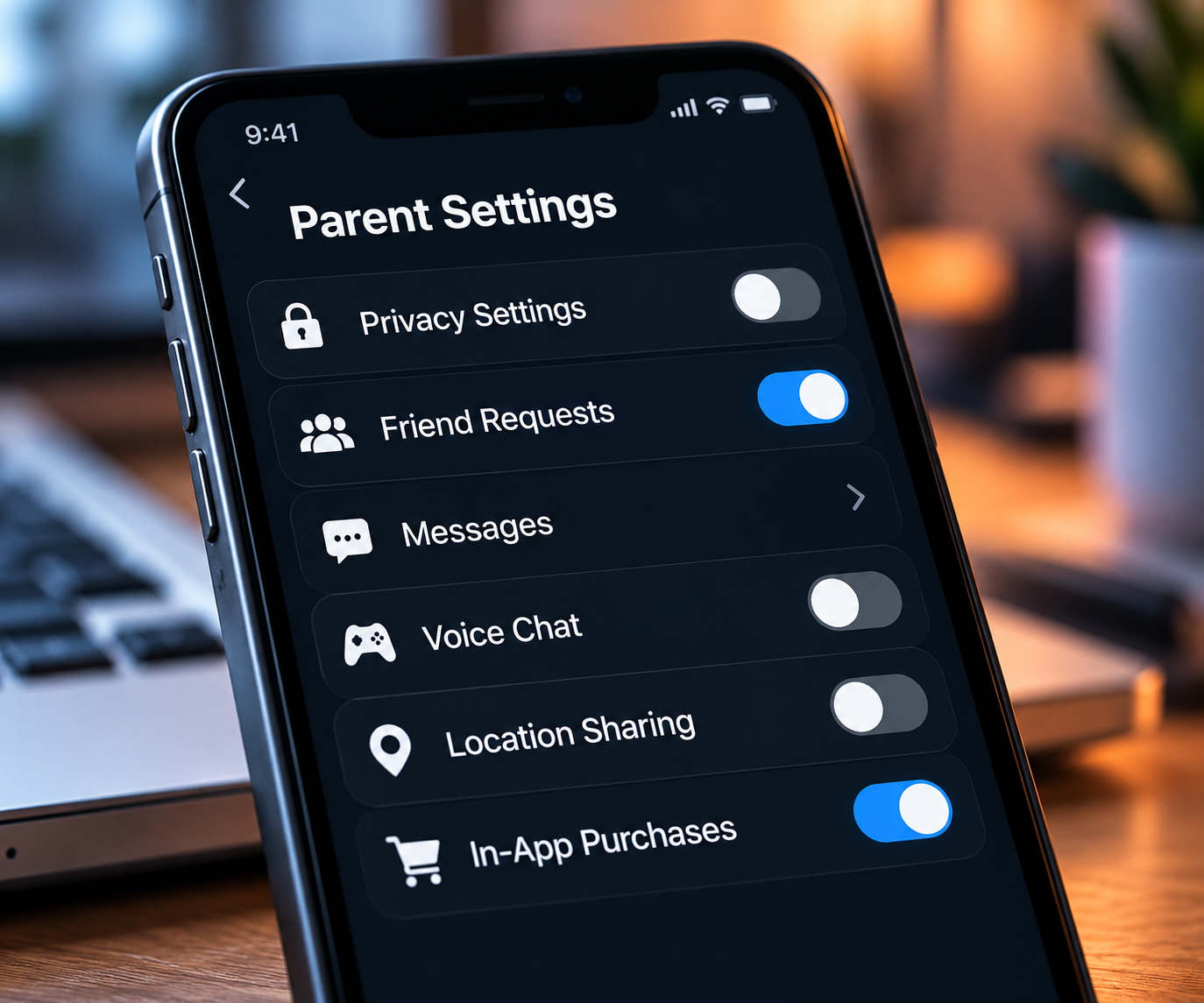
MONTHLY DIGITAL SAFETY CHECK
Use this quick checklist together.
Apps, games, and connected accounts
Friend lists, followers, and message requests
Private chats, group chats, and servers
Privacy, voice chat, and location settings
Purchases, game currency, and digital gifts
Requests to move conversations to another app
THE BIGGER PICTURE
YOU DON'T NEED TO KNOW EVERY PLATFORM. YOU NEED TO KNOW WHO HAS ACCESS.
A few intentional settings, reviewed regularly, can help reduce unwanted contact while keeping communication open at home.
TRY SAYING THIS
“This isn't because you're in trouble.
It's because online safety needs maintenance, just like locking the doors at night.”
BE THE PERSON THEY CAN TELL
The most important safety setting isn't on a device. It's the relationship you have with your child.
You can check privacy settings, review friend lists, and limit who can send messages. But you cannot prevent every uncomfortable or unsafe interaction.
What matters is that your child knows what to do when something happens—and that they can come to you without fear of shame or punishment.
Make sure they hear this before there's a problem:
IF SOMETHING HAPPENS
If your child tells you someone online has pressured, threatened, or exploited them, your first response matters.
Stay calm. Thank them for telling you. Reassure them that they are not alone.
Preserve relevant evidence without forwarding or downloading explicit images of minors. Don't confront the person or send money. Report suspected child sexual exploitation to the NCMEC CyberTipline and contact law enforcement if your child is in immediate danger.

FEATURED PARENT RESOURCE
DIGITAL & GAMING SAFETY
The Chat Behind the Game
A practical guide to help you understand private chats, gaming friendships, hidden access, warning signs, and the settings that help protect your child.
WATCH THE PREPARED PARENT PODCAST
DIGITAL & GAMING SAFETY: THE CHAT BEHIND THE GAME
THE FINAL REMINDER
NO IMAGE. NO MISTAKE. NO THREAT.
NO EMBARRASSMENT IS BIGGER THAN YOUR CHILD'S SAFETY.
Keep the door open. Make it easier to tell the truth than to keep a secret.
SHARE THIS RESOURCE
Know a Parent Who Needs This Conversation?
Many parents are watching for strangers.
Far fewer realize that unhealthy influence can develop through friendships, peer groups, romantic relationships, and people a child already trusts.
Share this Parent Brief and help another family recognize vulnerability earlier—before secrecy takes root.
With you,
The JBM Parent Community