

PARENT BRIEF | ISSUE 3
PORN, THE BRAIN, & IDENTITY
Pornography shapes more than what a child sees. It can shape what they begin to expect.
Pornography today isn't only a moral or cultural concern. For children and teens whose brains are still developing, repeated exposure can influence expectations around intimacy, relationships, body image, and self-worth.
During adolescence, the brain is building pathways around what it repeatedly sees and experiences. That makes understanding exposure—not simply reacting to it—important for parents.
This Parent Brief is designed to help you understand what repeated exposure can do and give you practical ways to respond with clarity, calm, and truth.
This isn't about panic. It's about understanding what's happening so you can lead the conversation.
HOW EXPOSURE
HAPPENS
Porn Isn't Always Something Kids Go Looking For
Sometimes it finds them first.
Pornography exposure doesn't always begin with a child intentionally visiting an explicit website.
It can happen while scrolling social media, playing online games, following search suggestions, or interacting with AI tools. Sometimes it's an unexpected image. Other times, it's content shared by another person.
And because explicit material can appear in spaces children already use, parents may not realize how easily exposure can happen.
FIVE WAYS EXPLICIT CONTENT CAN REACH YOUR CHILD
SOCIAL PLATFORMS
Sexualized images, suggested posts, reels, and algorithm-driven recommendations.
GAMING CHATS
Private messages, shared links, and images sent through gaming communities.
SEARCH SUGGESTIONS
Innocent searches that can quickly lead to sexualized content through auto-complete suggestions and recommendations.
AI TOOLS
AI-generated images, chat features, and tools that may introduce sexual content in new ways.
HIDDEN DEVICE FEATURES
Private browsing, in-app browsers, disappearing messages, and alternate accounts can make content easier to access and harder to detect
THE BIGGER PICTURE
Exposure doesn't always mean intention.
A child may encounter something they never searched for, weren't prepared to see, and don't know how to talk about.
That's why prevention must include more than filters. It must include conversation.

WHAT REPEATED EXPOSURE CAN SHAPE
What Children See Can Shape What They Expect
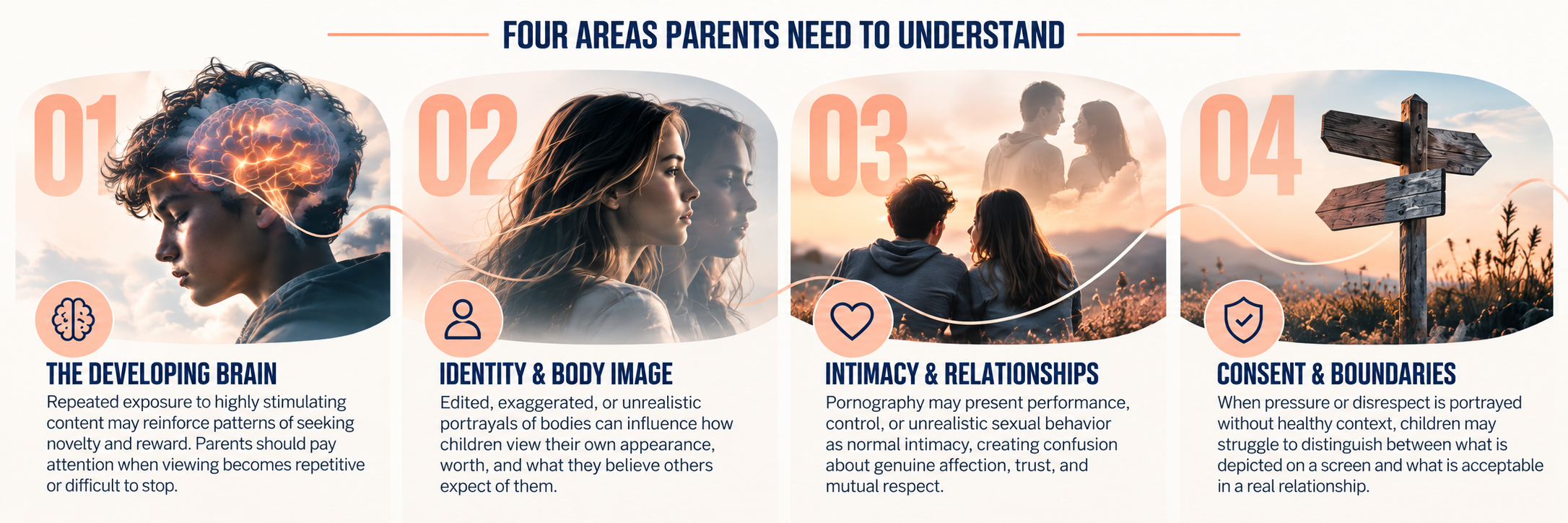
Pornography doesn't just present images. It can communicate messages about bodies, relationships, intimacy, and what is considered normal.
During childhood and adolescence, young people are still developing their understanding of themselves and others. Repeated exposure to explicit content may influence those expectations, especially when pornography becomes a source of information about sex or relationships.
The concern isn't simply what a child sees in one moment. It's what they may begin to believe over time.
THE MESSAGE PARENTS CAN REPLACE
Porn is not a teacher.
People are not products. Consent matters.
Real intimacy requires dignity, trust, responsibility, and respect.
REAL CONVERSATIONS
MAKE A DIFFERENCE
When children have accurate information and a trusted adult to talk to, they are better equipped to navigate what they see online.
WHEN EXPOSURE BECOMES A PATTERN
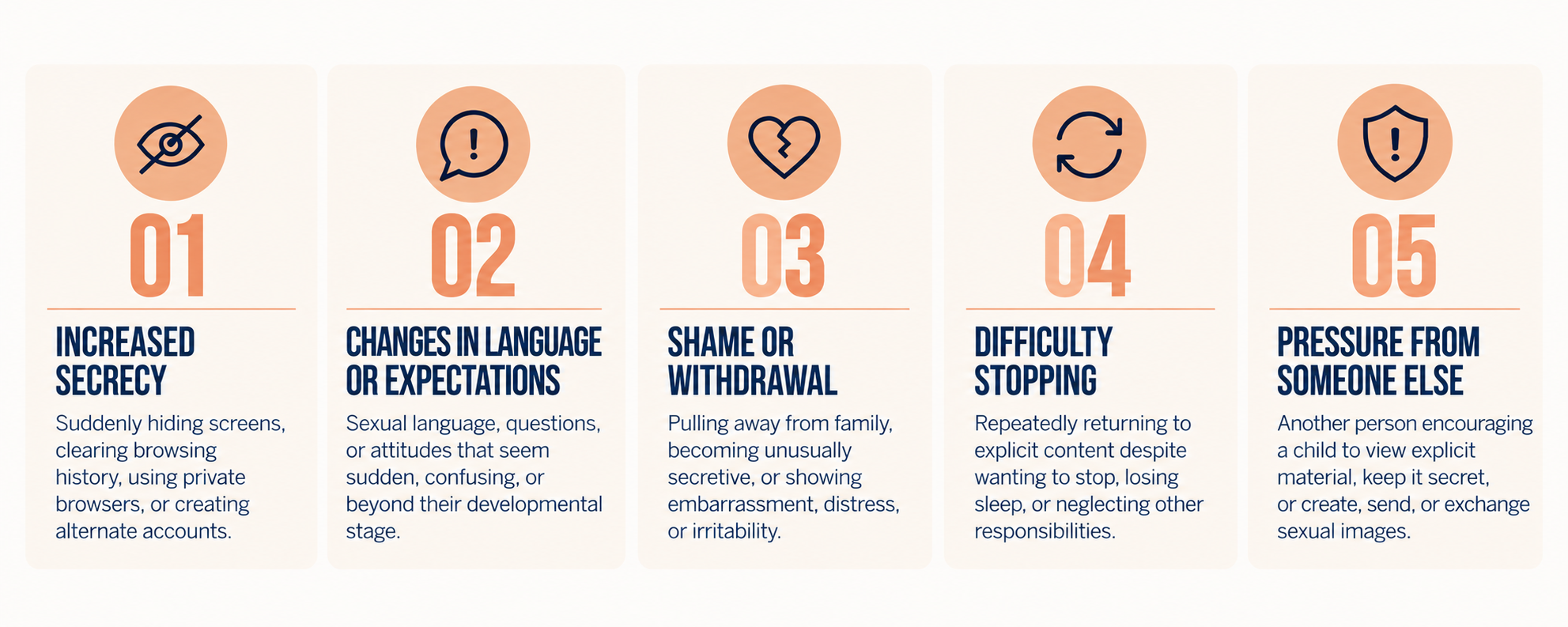
Watch for Changes, Not Just Screen Time
One unexpected encounter doesn't tell the whole story. What matters is what happens next.
Children respond to explicit content differently. Some may feel confused or embarrassed. Others may become curious, seek it out again, or struggle to talk about what they've seen.
Parents don't need to assume the worst. But they do need to recognize when a child's behavior may be signaling something deeper.
A CONVERSATION WORTH HAVING
“Have you ever seen something online that made you uncomfortable, confused, or curious—but you weren't sure you could tell me?”
Your response matters as much as their answer. Stay calm, listen first, and make it clear that they can come to you without shame.
YOUR FIRST REACTION MATTERS MORE THAN
YOU THINK
Your child tells you they've seen pornography.
You might feel shocked. Angry. Worried. You might want to take the phone away immediately.
But before you decide what to do about the device, think about what your child needs from you.
They need to know that telling you the truth was the right decision.
When children expect punishment or humiliation, they may hide what happens next. When they feel safe asking questions, parents have an opportunity to guide them through what they've encountered.

WHAT TO SAY FIRST
“Thank you for telling me. You're not in trouble for coming to me. Can we talk about what happened?”
Then listen. Find out how they encountered it, whether someone else was involved, and how they're feeling. Address safety concerns, review appropriate boundaries, and keep the conversation going.
You don't have to have every answer. You just have to keep the door open.
PORN IS NOT A TEACHER.
YOU ARE.
If pornography is shaping what children believe about bodies, relationships, and intimacy, parents need to be part of the conversation.
You don't have to know everything about technology or have the perfect words. What matters is that your child hears the truth from someone who loves them.
Talk about dignity. Talk about respect. Talk about the difference between what appears on a screen and what healthy relationships actually look like.
And remember, if your child has already been exposed, their story isn't over. There is room for understanding, healing, and healthier choices.
Your presence matters more than your panic ever will.
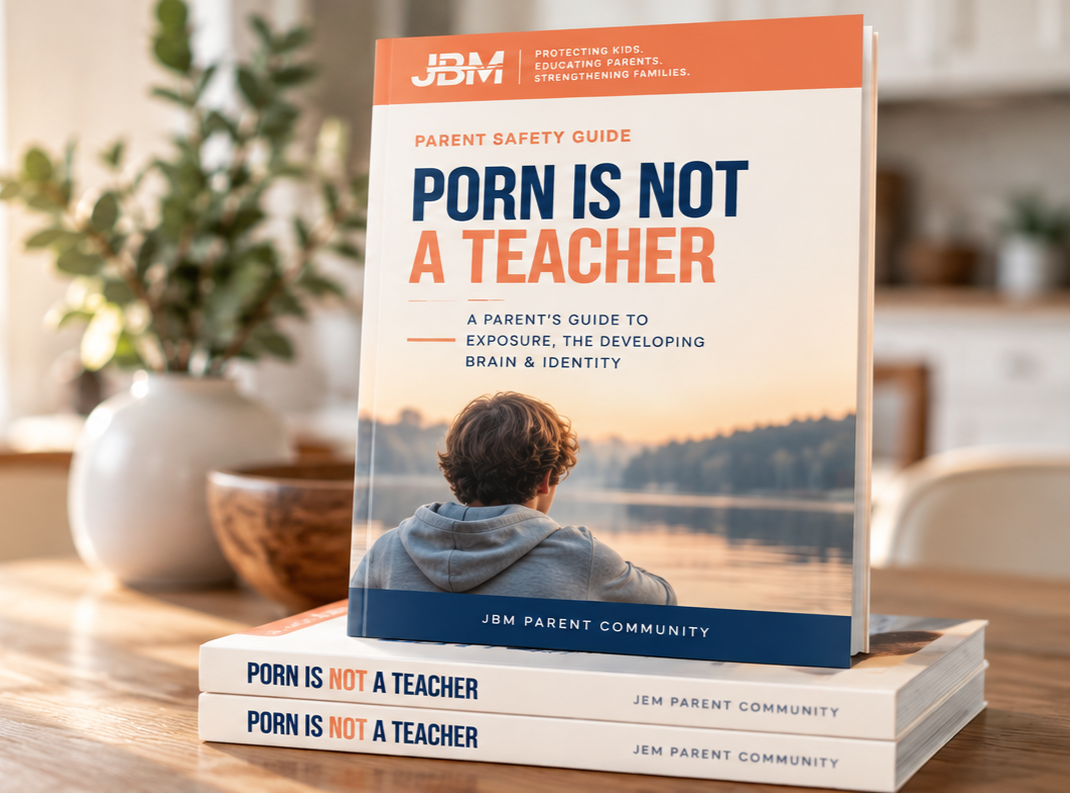
FEATURED PARENT RESOURCE
A Parent's Guide to Exposure, the Developing Brain & Identity
Understand how children encounter pornography, what repeated exposure may influence, and how to respond with practical safeguards and honest conversations.
ONE THING TO DO THIS WEEK
START THE CONVERSATION BEFORE YOUR CHILD NEEDS TO HAVE IT.
Ask your child: “If you ever saw something online that made you uncomfortable or confused, would you feel comfortable telling me?”
Then listen. Their answer may tell you where to begin.
SHARE THIS RESOURCE
Know a parent who needs this conversation?
Parents need practical language for difficult conversations.
Share this Parent Brief with another parent who may be navigating pornography exposure, questions about online content, or simply wants to prepare before something happens.
Prepared conversations are easier than panicked ones.
With you,
The JBM Parent Community