

PARENT BRIEF | ISSUE 17
ARE WE PROTECTING OUR CHILDREN—OR PREPARING THEM?
DOES YOUR CHILD FEEL NEEDED—OR JUST MANAGED?
We spend so much time preparing the world for our children. But are we preparing our children for the world?
WHEN HELPING BECOMES TAKING OVER
ARE WE GIVING SUPPORT—OR REMOVING THE OPPORTUNITY TO GROW?
Think about an ordinary week.
Your child forgets an assignment. Do you immediately contact the teacher?
They have a disagreement with a friend. Do you step in before they've had a chance to work through it?
Someone asks them a question. Do you answer for them?
They struggle with a responsibility. Do you take over because it's easier or faster?
Sometimes intervention is necessary. Children need adults who recognize when a situation exceeds their ability to handle it safely.
But not every uncomfortable situation is an emergency.
Not every disappointment requires a rescue.
A PARENT REFLECTION
Before stepping in, consider asking yourself:
Am I helping my child develop a skill, or am I removing the opportunity to learn it?
WHAT PARENTS NEED TO KNOW
YOUR CHILD NEEDS A VOICE—NOT JUST A SET OF RULES
Respect does not require silence, and obedience should never come at the expense of personal safety.
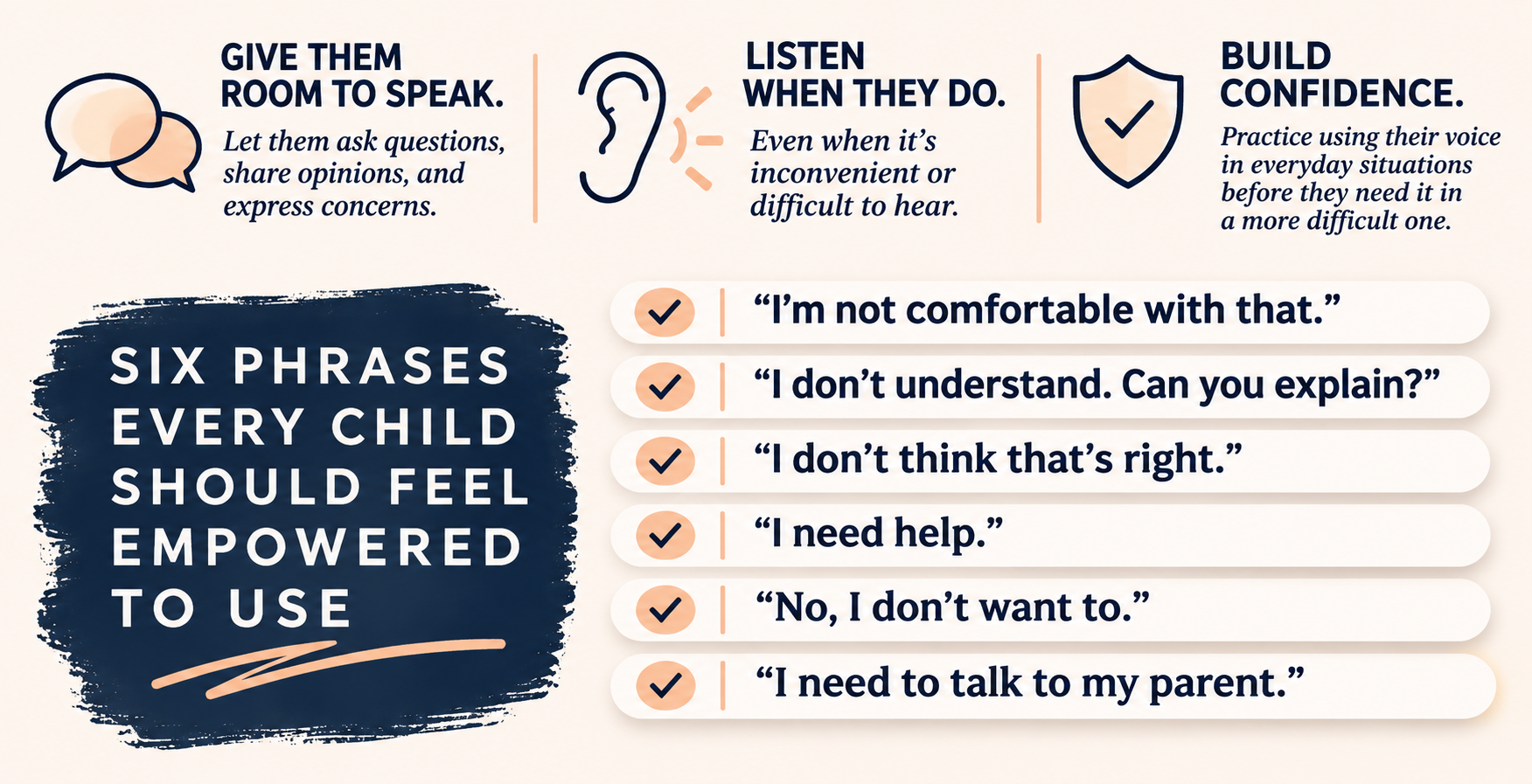
As parents, we teach our children to be respectful, listen to adults, and follow instructions. These are important lessons, but so is teaching them when to question, when to disagree, and when to say no.
We cannot expect our children to suddenly find their voice in an uncomfortable or unsafe situation if they have never been given opportunities to use it in everyday life.
Give your child room to express an opinion, ask questions, respectfully disagree, and communicate when something doesn't feel right.
And when they do, listen—even when what they have to say is inconvenient or difficult to hear.
STOP RESCUING. START COACHING.
Our children need to practice solving problems before they face situations we cannot solve for them.
When your child faces a manageable challenge, resist the urge to immediately fix it. Instead, guide them through the process of making a decision.
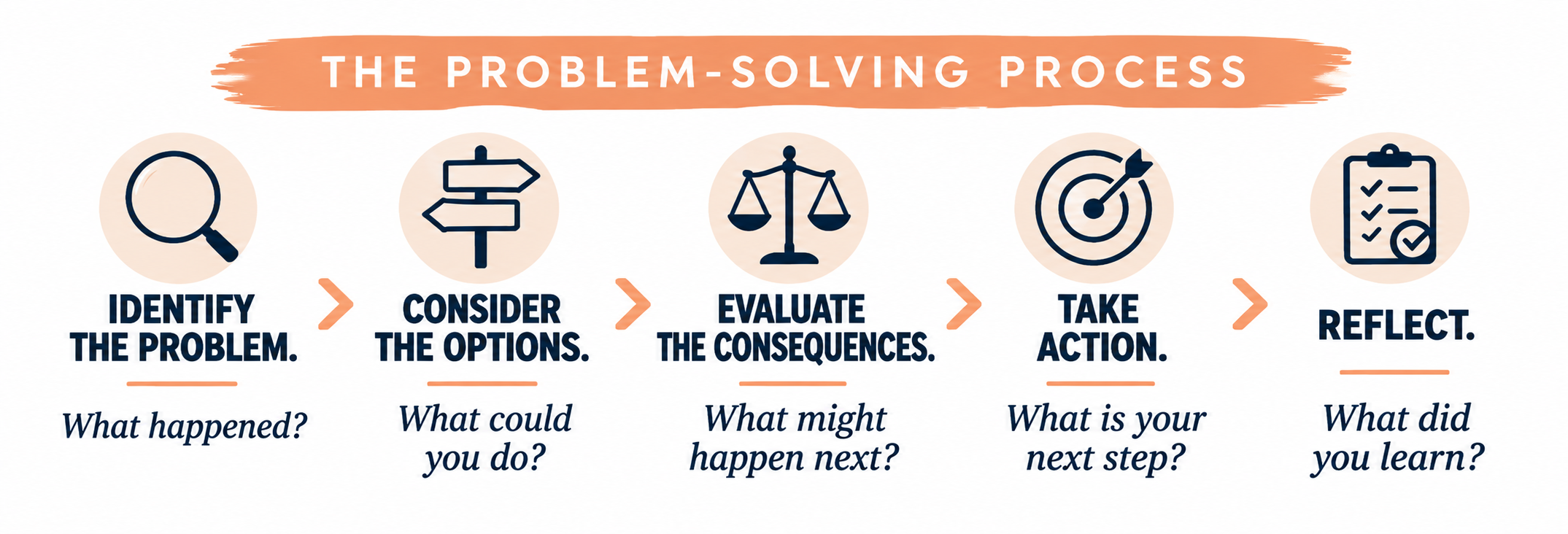
KNOW WHEN TO COACH AND WHEN TO INTERVENE.
A forgotten assignment, a manageable friendship disagreement, or an everyday frustration can be an opportunity for growth.
Bullying, threats, exploitation, unsafe behavior, and situations beyond a child's developmental abilities require adult support and intervention.
The goal is not to step back from parenting. It is to be intentional about when we step in.
BEING LOVED IS ESSENTIAL. FEELING NEEDED MATTERS, TOO.
Does your child know they're loved? Absolutely. But do they know they're capable, useful, and an important part of the family?
Children today can have full schedules, endless activities, and adults managing nearly every part of their lives—without many opportunities to contribute.
Being part of a family should mean more than having your needs met. It should also mean learning to recognize the needs of others and discovering how you can help.
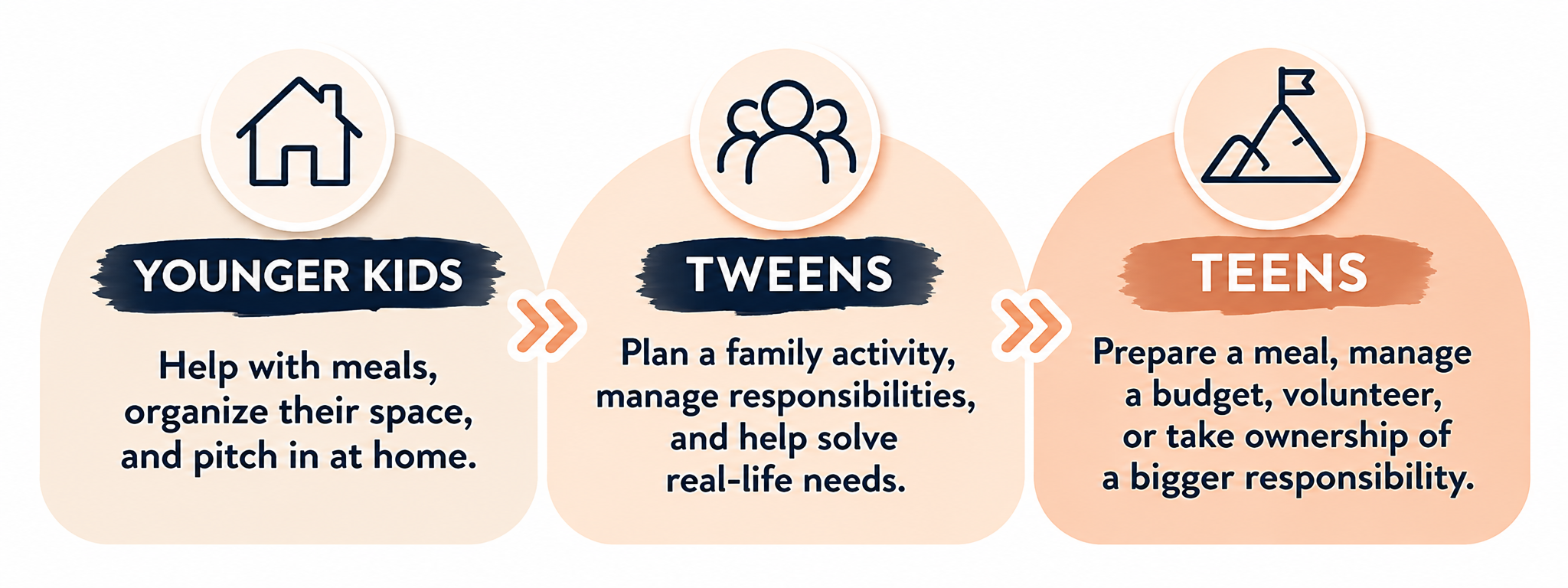
REMEMBER: THEIR WORTH IS NOT THEIR PRODUCTIVITY.
SOLD IN A STORE
DOES NOT MEAN SAFE.
The conversation should also include products sold at gas stations, vape shops, and online. Some are marketed as kratom or promoted for relaxation, focus, or pain relief.
Of particular concern are products containing concentrated 7-hydroxymitragynine, or 7-OH. This substance occurs naturally in trace amounts in kratom, but products with added or enhanced levels are potent opioid products. FDA warns that they can cause addiction, withdrawal, seizures, and other serious harm. They may be sold as tablets, gummies, drink mixes, or shots. www.fda.gov
Federal agencies are pursuing tighter controls on concentrated 7-OH products. These efforts are distinct from the tianeptine bills and should not be described as an enacted nationwide kratom ban. www.fda.gov
Our conversations cannot wait for legislation. Teach your child that a product’s availability—or a label calling it “natural”—does not establish safety. Make checking with you before buying or trying products promising to change how they feel a clear family expectation.

KNOW WHEN TO ACT
DON’T WAIT FOR THEM TO “SLEEP IT OFF.”
If someone cannot be awakened, is breathing slowly or not normally, or makes gurgling or unusual snoring sounds while unresponsive,
CALL 911 IMMEDIATELY!
If you are unsure whether it is an overdose, treat it as an emergency. www.cdc.gov
Make sure your child hears this clearly: call 911 first in an emergency, then call you. Fear of getting in trouble should never delay getting help.
THE CONVERSATION YOU START TODAY MATTERS.
We cannot make every decision for our children. We can give them clear boundaries, words to use under pressure, and confidence that they can come to us with the truth.
Start the conversation. Return to it as they grow. Remind them that their life is precious to God—and that asking for help is always worth doing.
Share this brief with a parent, grandparent, or caregiver. Help another family have the conversation before their child faces the decision.