

PARENT BRIEF | ISSUE 16
LOOKS LIKE MEDICINE.
THAT DOESN’T MAKE IT SAFE.
Counterfeit pills, online purchases, and the conversations parents need to have before their child is offered something.
THE CONVERSATION STARTS AT HOME
DON’T TAKE ANYTHING FROM STRANGERS” IS NOT ENOUGH.
A friend offers something to help them focus. A classmate says a pill will calm their nerves. Someone online promises it is the real thing.
When an offer comes from someone your child trusts, they may not think to question it. But knowing the person does not mean knowing what is inside the pill.
Drug traffickers use pill presses to make counterfeit pills that resemble prescription medications. Some contain fentanyl or other dangerous substances. The color, shape, and markings can look familiar while the contents are entirely different. www.dea.gov
Our children need more than a warning about strangers. They need clear guidance about accepting pills or unknown substances from anyone—including friends—and purchasing medication through social media or unverified websites.
These conversations can feel uncomfortable. Have them anyway. Give your child words to refuse, a way to leave, and confidence that they can call you if something goes wrong.
A TRUSTED FRIEND CANNOT GUARANTEE A PILL IS SAFE.
Talk before there is pressure. Make sure your child knows that asking for help—even after a mistake—is always the right decision.
WHAT PARENTS NEED TO KNOW
HOW A FAKE PILL BECOMES CONVINCING
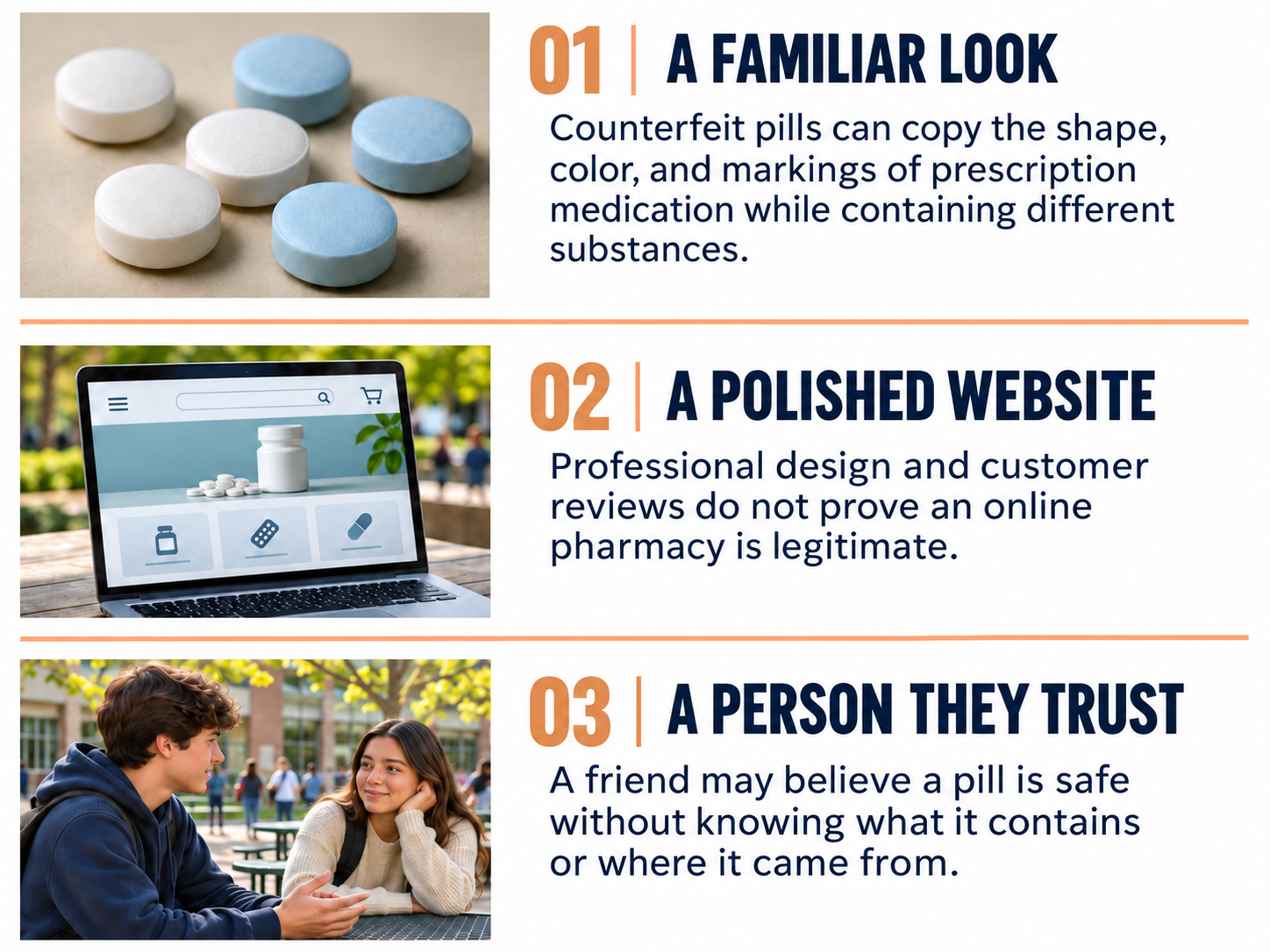
YOU CANNOT VERIFY A PILL BY ITS APPEARANCE.
Take prescription medicine only as prescribed for you and dispensed by a licensed pharmacy.
HAVE THE CONVERSATION
ASK BEFORE THEY’RE OFFERED.
You do not have to wait until you suspect something is wrong. Choose an ordinary moment—in the car, on a walk, or after dinner—and ask what your child is hearing and seeing.
Keep your tone calm. Give them room to answer without turning every response into a lecture.
Invite your child to sketch, talk, dictate, or write a starting idea before asking AI. An unfinished thought gives them something of their own to develop.
“Let’s hear your version first.”
PROTECT THE FIRST ATTEMPT
Ask for another solution, explanation or ending. Keep it playful, not like every activity is another assignment.
“What’s another way we could try this?”
EXPLORE ANOTHER POSSIBILITY
Build, cook, repair or invent together. Let your child notice what happened and choose what to change.
“What did that tell us?”
MAKE, TEST AND TRY AGAIN
“You tried a different material when the first one bent.” Show interest in the thinking behind the result.
NOTICE THEIR DECISIONS
KEEP NEEDED SUPPORTS IN PLACE
Dictation, reading supports, visual plans and smaller steps can help children express their own ideas. Keep accommodations available and adjust the challenge when your child is overwhelmed.
Leave meaningful choices in their hands.
OUR FAMILY AI CODE
A SHARED PLAN FOR HELP VS. REPLACEMENT
AI can support learning and creativity. These agreements help our family keep ideas, decisions, and understanding at the center of how we use it.
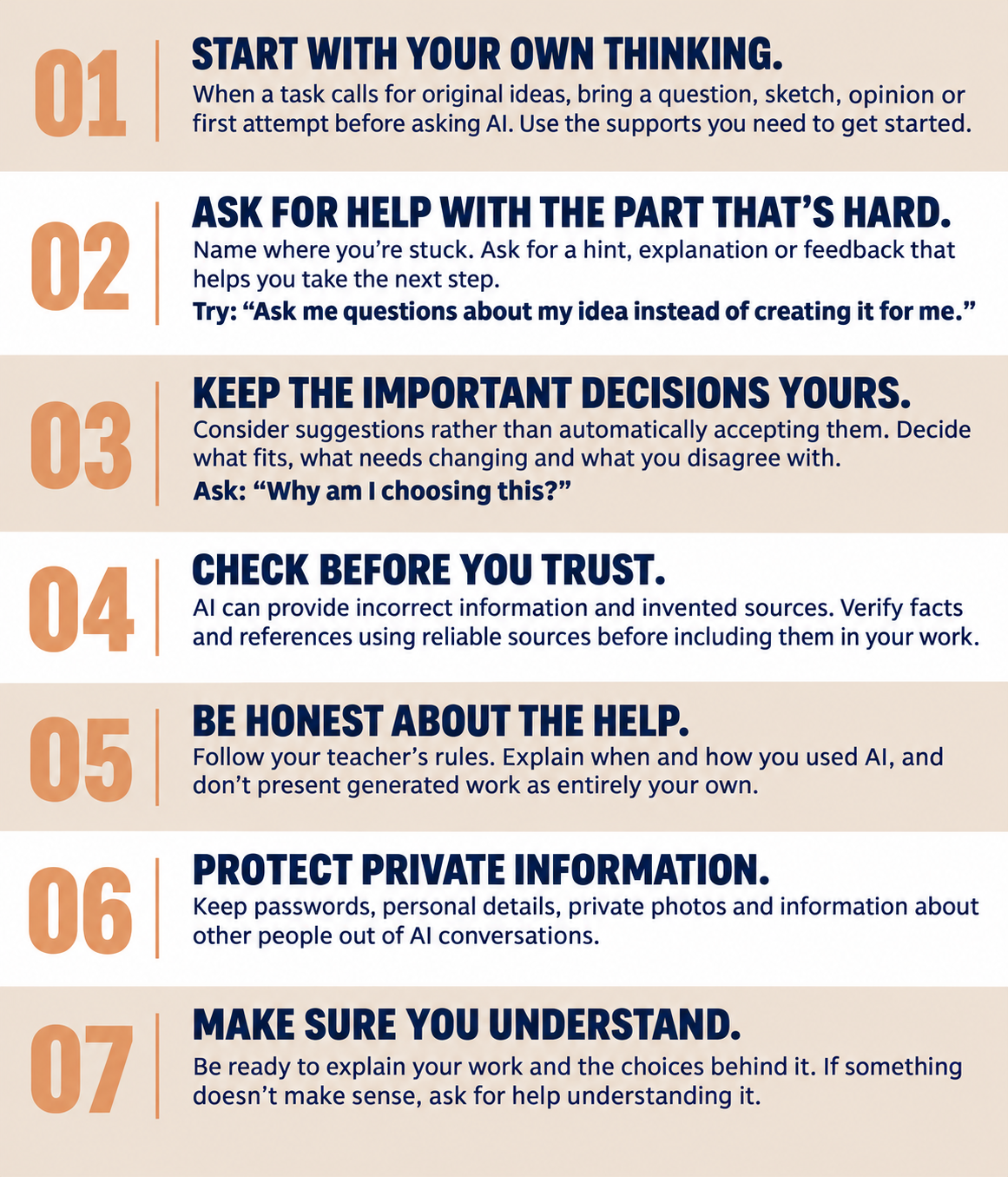
BEFORE YOU ASK AI
Pause and ask:
What am I supposed to learn or create?
What do I think so far?
Where do I need help?
What decisions will stay mine?
What should I be able to explain afterward?
THIS WEEK, ASK: “WHICH PART WAS YOUR IDEA?”
Choose one assignment or project and let your child walk you through their thinking. Notice a question they asked, a choice they made or something they changed.
Give their ideas room to grow.
HELP ANOTHER FAMILY START THE CONVERSATION
Share this Parent Brief with a parent, grandparent or educator. It offers a practical way to look beyond impressive work and ask who’s doing the thinking.
One conversation can give a child’s ideas more room to grow
With you,
The JBM Parent Community