

PARENT BRIEF | ISSUE 14
WHEN YOUR CHILD SEES SOMETHING DISTURBING ONLINE
We teach prevention, but rarely teach recovery.
We teach kids what not to click, who not to talk to, and what not to share.
But eventually, many kids will see something they wish they hadn't—violent, sexual, frightening, hateful, shocking, AI-generated, or simply something they weren't developmentally ready to see.
When that happens, does your child know what to do next?.
TEACH THE RECOVERY PLAN BEFORE THEY NEED IT

WHAT HAPPENS
AFTER THE SCREEN CLOSES?
The screen may be off, but what your child saw may still be on their mind.
A child may close a disturbing video, put down their phone, and seem completely fine. But later that night—or even days afterward—they may replay what they saw, feel frightened, or struggle to make sense of it.
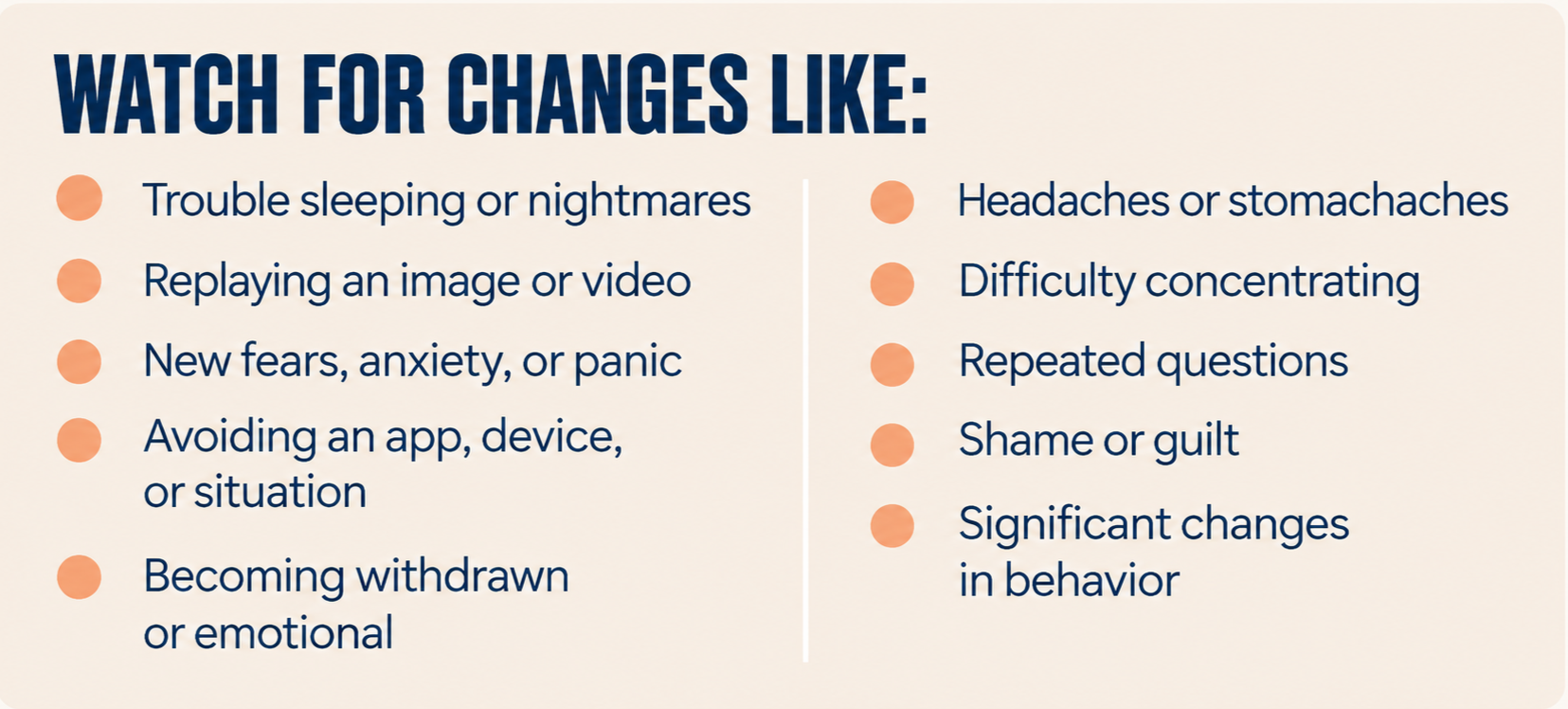
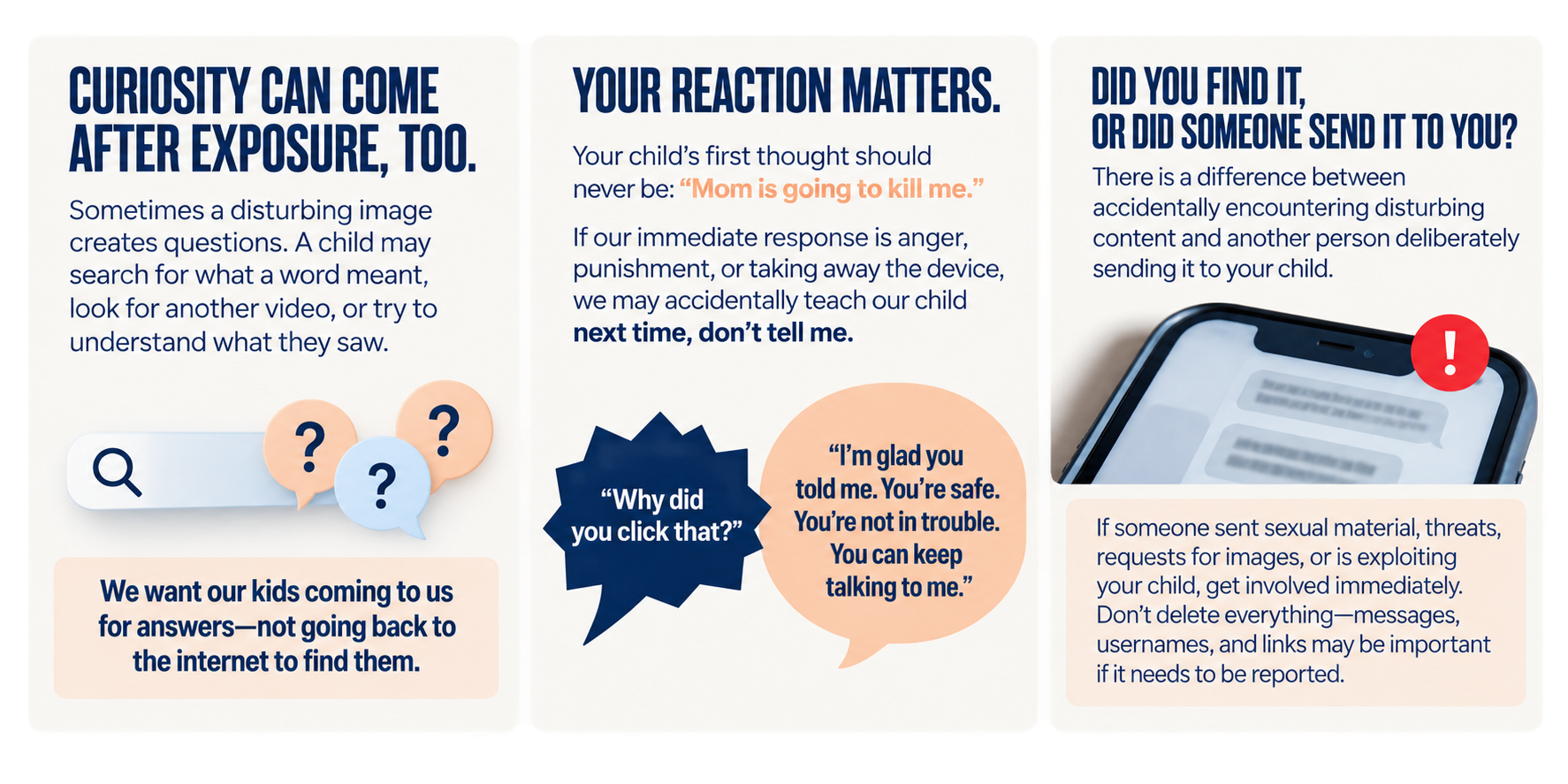
THREE THINGS PARENTS MAY OVERLOOK
FAKE DOESN'T ALWAYS MEAN HARMLESS
AI can create convincing images, voices, and videos. Even when content isn't real, it can still cause fear, humiliation, confusion, or harm.
“It's AI” doesn't mean “it doesn't matter.”
CHECK AGAIN LATER
One conversation may not be enough.
A few days later, ask:
“Has it popped back into your head at all?”
If distress continues or interferes with everyday life, consider talking with a qualified trauma specialist.

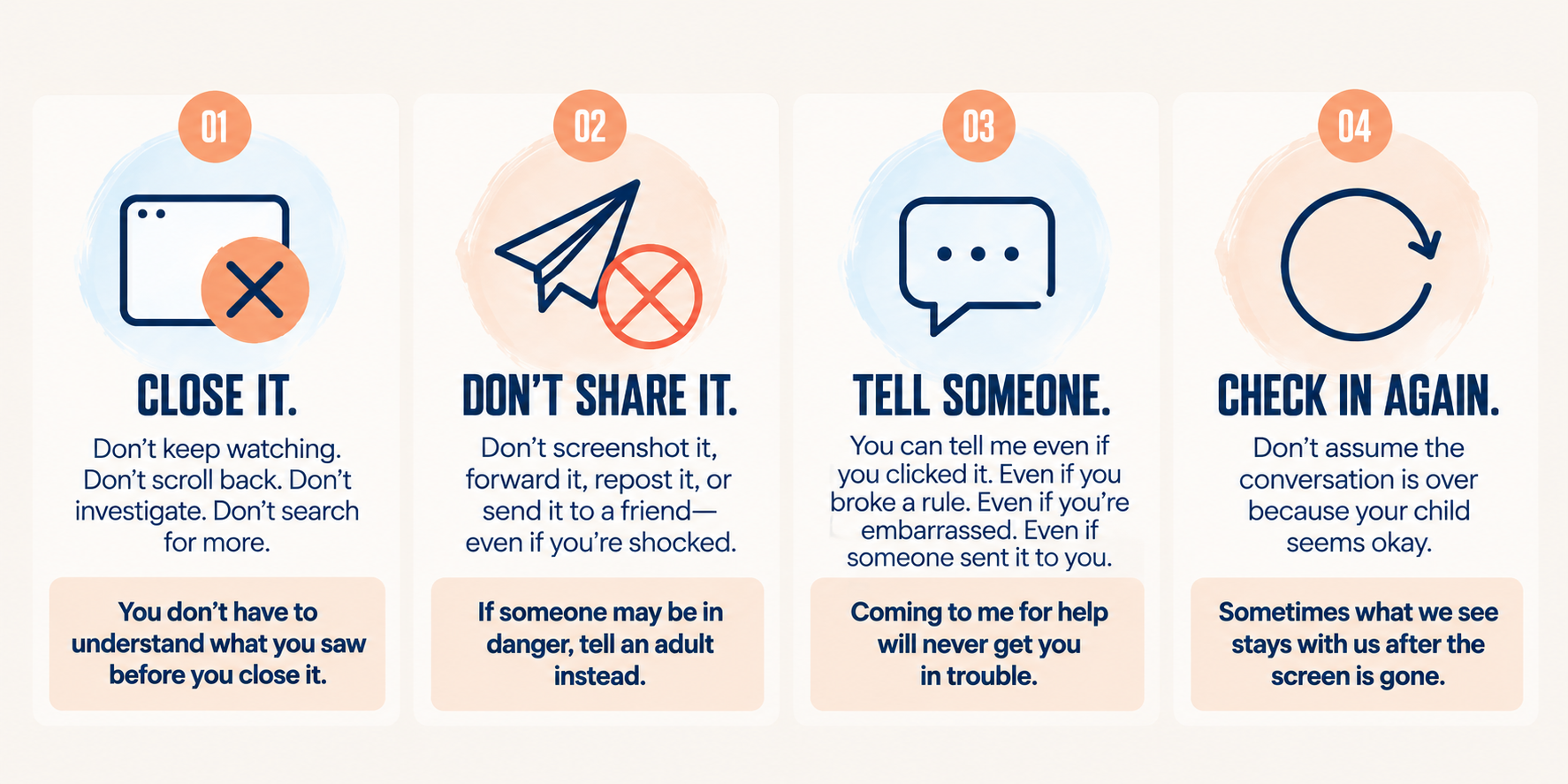
WHAT DO I DO NOW
A SIMPLE PLAN YOUR CHILD CAN REMEMBER.
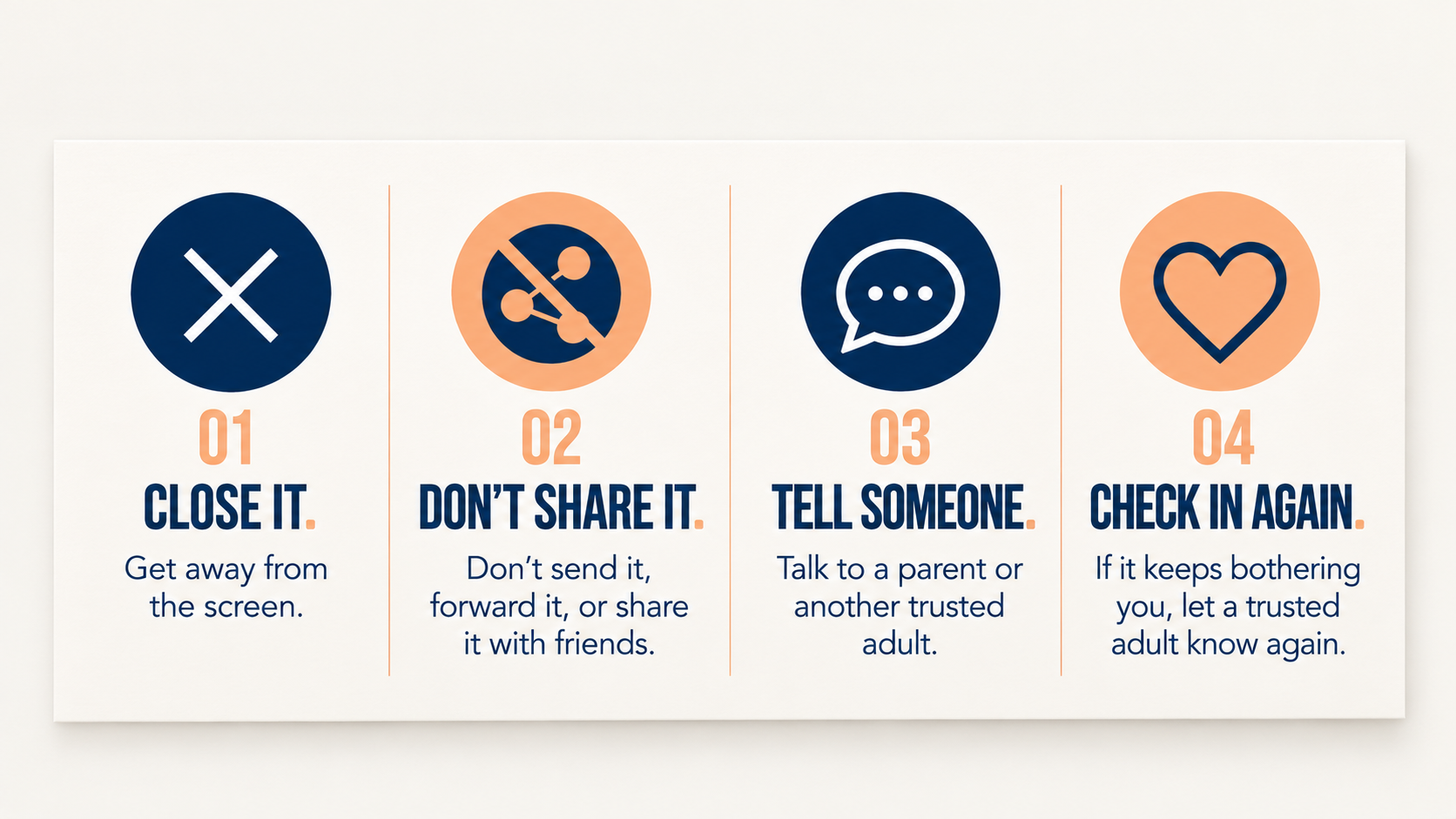
Kids may eventually see something online that is disturbing, confusing, or upsetting. Knowing what to do next can help them feel safer and more in control.
Use this simple four-step plan to talk with your child and practice it together:
Know another parent, grandparent, educator, or caregiver who could benefit from this information?
Share this Parent Brief with them. One simple conversation could help a child know what to do when they encounter something disturbing online.
Awareness is not fear. It is wisdom.
With you,
The JBM Parent Community