

PARENT BRIEF | ISSUE 12
BUILD A TALKING HOME
How to become the person your child comes to when something gets hard.
Your child is already having conversations about friendships, social media, relationships, mental health, sex, online safety, and things they see or hear from other kids.
The question is: Do they know they can have those conversations with you?
You don't need one big, perfectly planned “talk.” Trust is built through small conversations over time.
The big conversations are built in the small ones.
START SMALL
Some of the best opportunities to connect happen when you're doing something else.
Making dinner. Driving to practice. Folding laundry. Sitting at the kitchen counter.
Your child mentions something a friend said, a video they watched, or something that happened at school. It may seem like an ordinary comment, but it could be an opportunity to understand what's going on in their world.
Instead of moving past it, get curious.
Try asking:
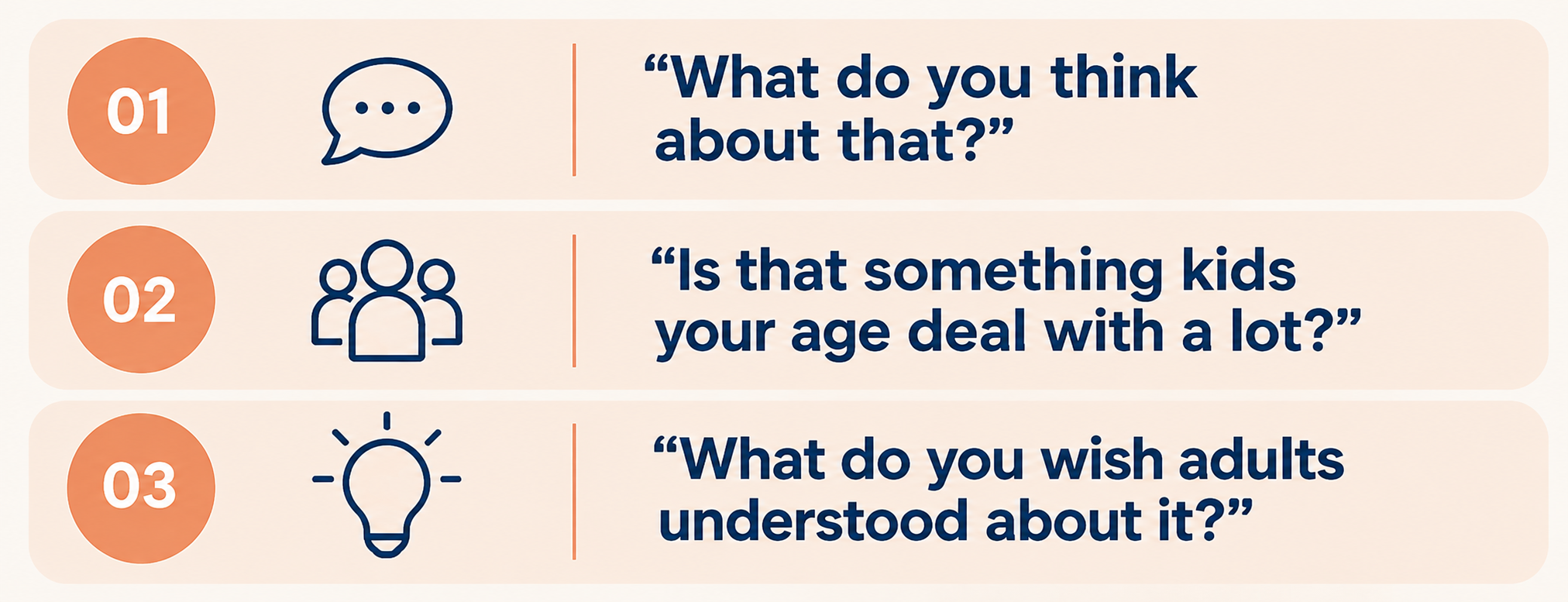
Then give them room to answer.
You don't have to turn every conversation into a lesson. Sometimes the most important thing you can do is show your child that you're interested in what they have to say.
The goal isn't to get them talking about everything today. It's to make it easier for them to talk to you tomorrow.

WHEN YOU DON’T
KNOW HOW TO START
You don't need the perfect response.
You just need a way to keep the conversation open.
Here are five ways to do that:
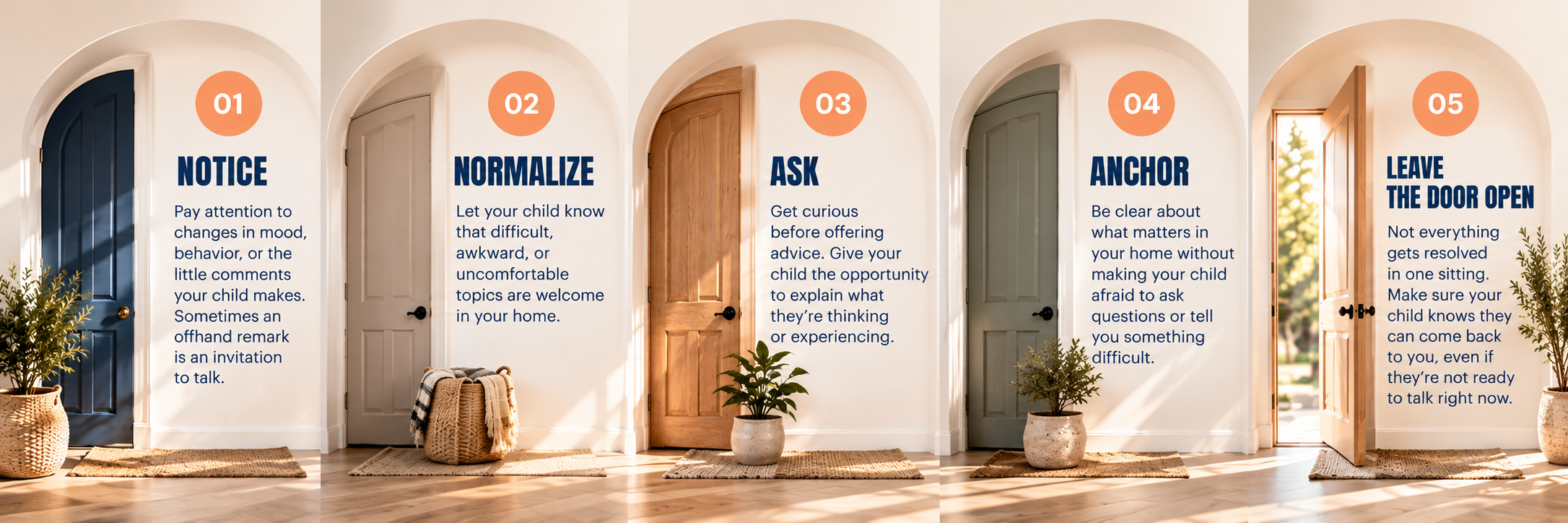
You don't have to finish every conversation. You just have to make the next one possible.
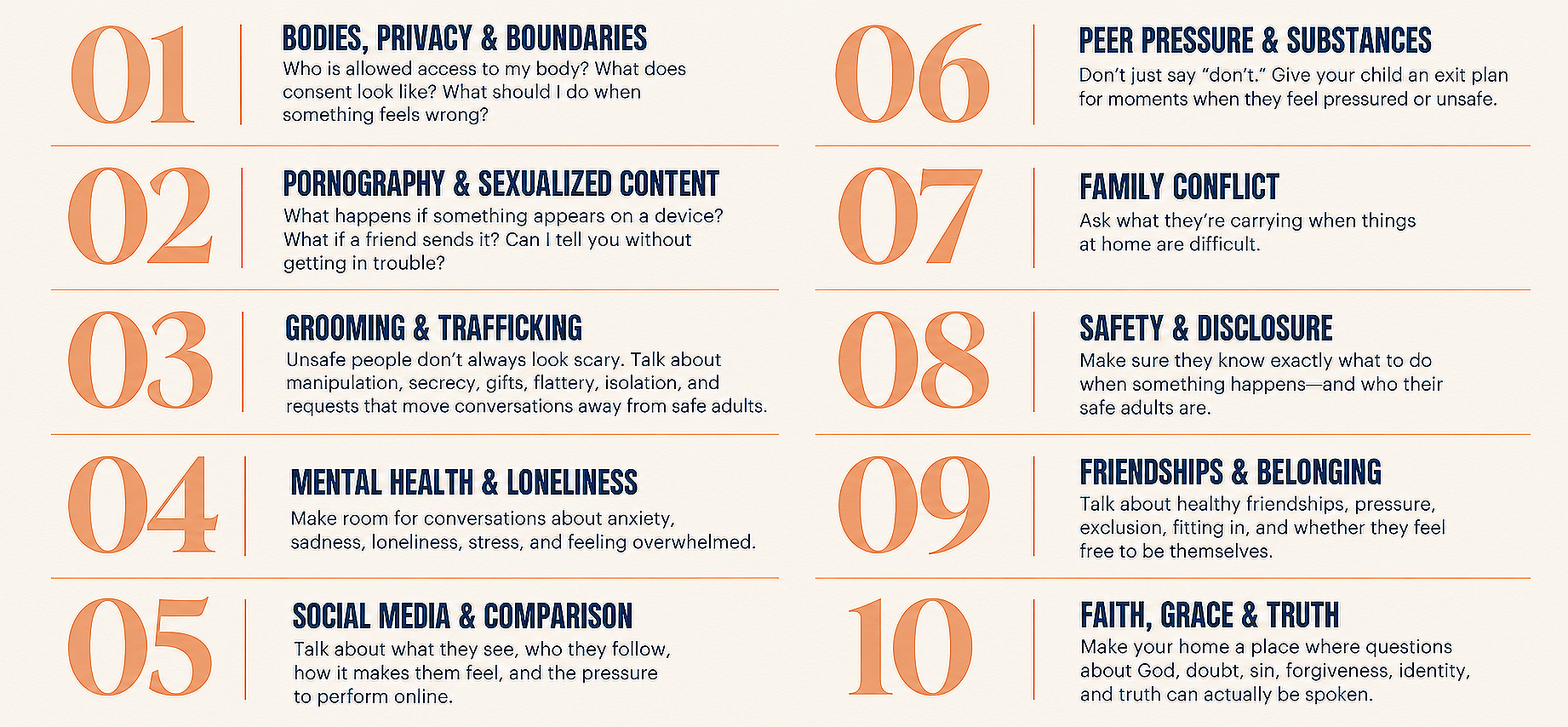
10 CONVERSATIONS WORTH HAVING
You don't have to tackle all ten this week.
But these are doors we want our children to know are open.

WHEN THEY FINALLY TELL YOU SOMETHING HARD
THE FIRST 30 SECONDS MATTER.
Your child may be watching your reaction before they hear your words.
Maybe they saw something online. Made a mistake. Someone crossed a boundary. Or they're scared and don't know what to do.
What happens in those first moments can influence whether they come to you the next time
YOUR FIRST REACTION MATTERS
TAKE THE CONVERSATION FURTHER
PARENT RESOURCE
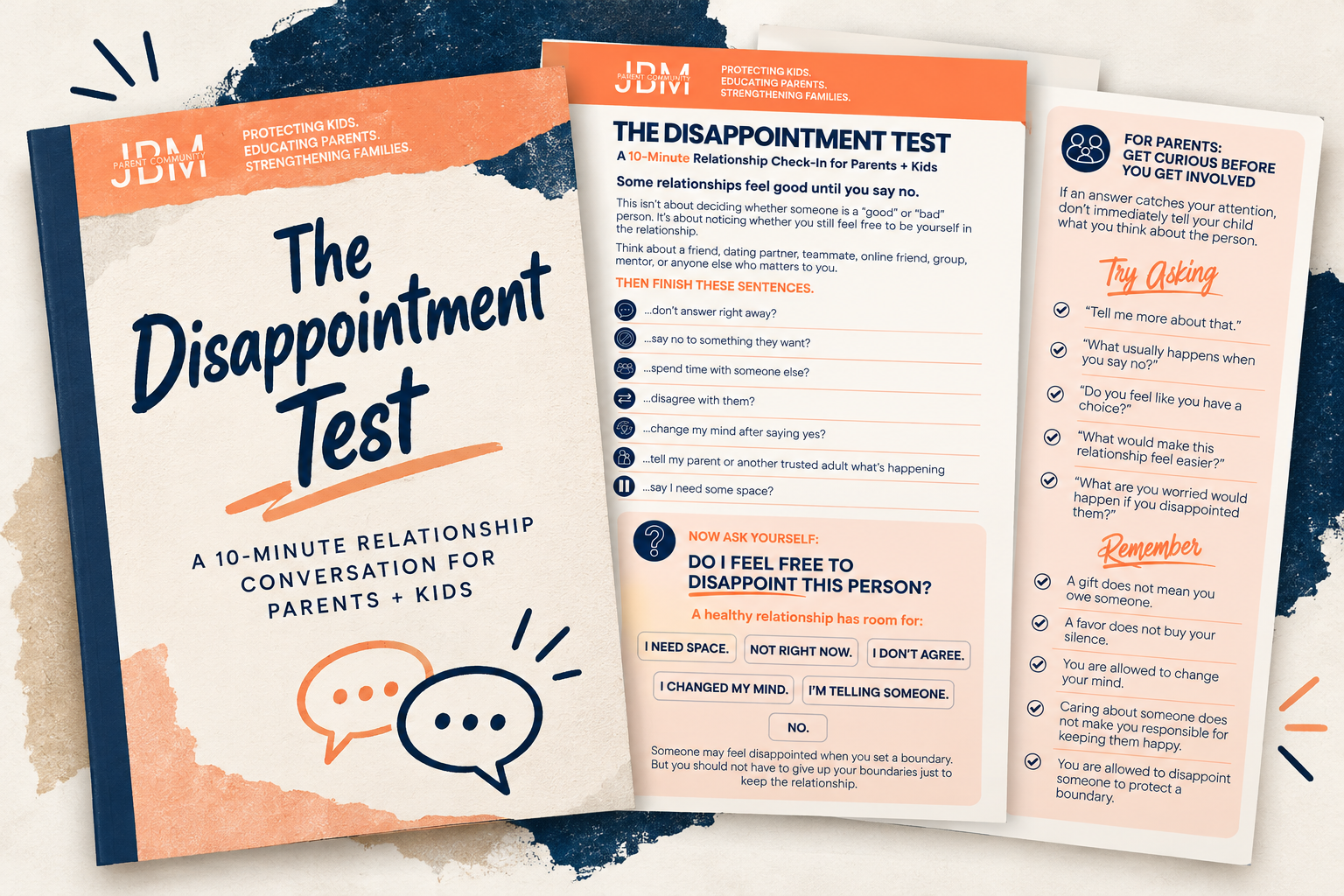
THE DISAPPOINTMENT TEST
10-Minute Relationship Conversation for Parents + Kids
Your child may know how to recognize a dangerous situation. But do they know how to recognize a relationship where they don't feel free to say no?
The Disappointment Test is a simple, guided conversation designed to help parents and kids recognize emotional pressure, talk about boundaries, and understand the difference between caring about someone and feeling responsible for keeping them happy.
No lectures. No complicated questions. Just ten minutes that could help your child see a relationship differently.
SHARE THIS RESOURCE
Know a Parent Who Needs This Conversation?
Share this Parent Brief with a parent, grandparent, educator, coach, youth leader, or trusted adult in your community.
With you,
The JBM Parent Community