

A PHOTO
THEY POSTED.
AN IMAGE
THEY NEVER CREATED.
Deepfakes & Kids:
When Fake Images Cause Real Harm.
PARENT BRIEF | ISSUE 10
A CHILD DOESN'T HAVE TO SEND THE IMAGE
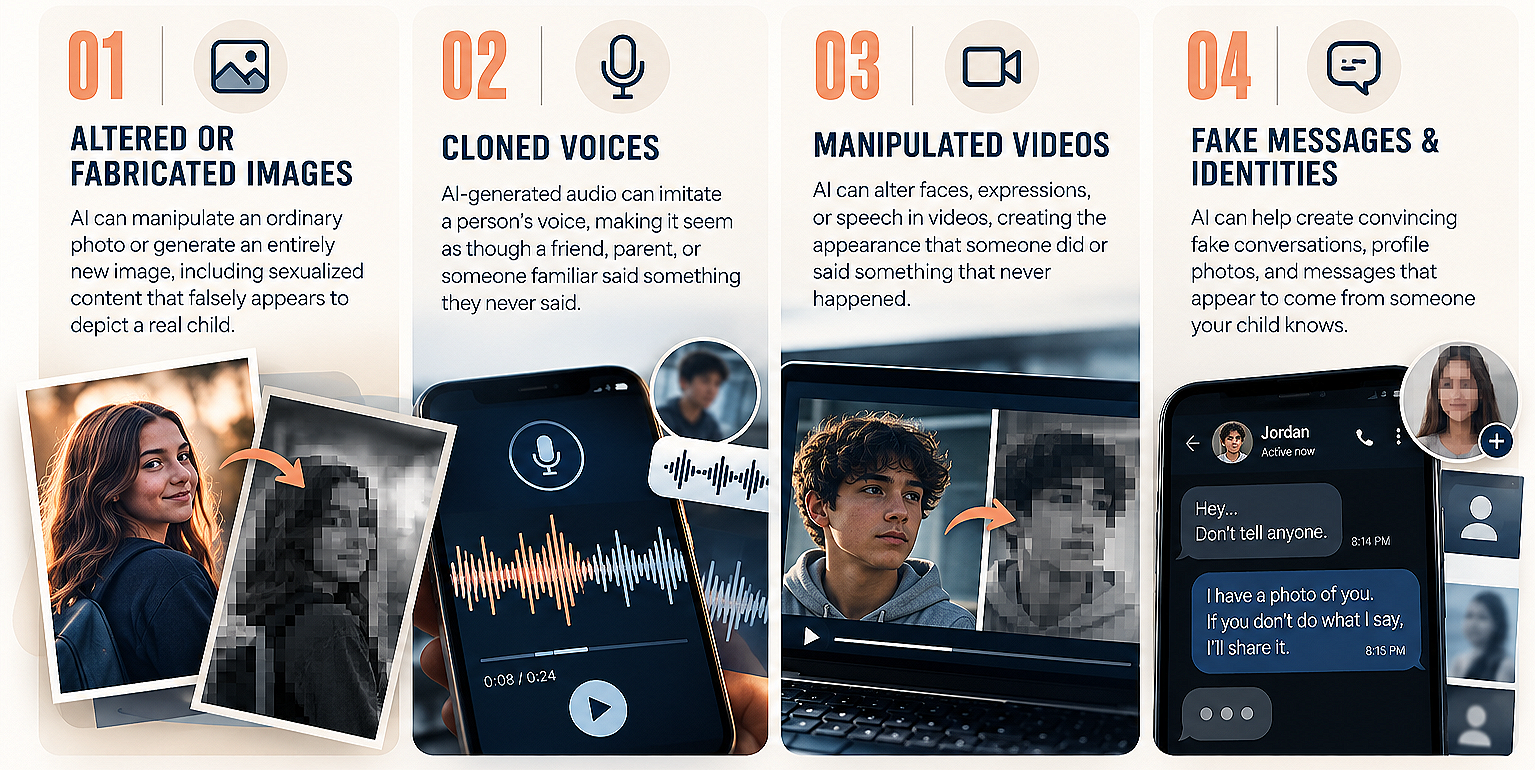
A deepfake is AI-created or AI-altered content that makes it appear someone said or did something they never did.
For children, the concern is increasingly personal.
An ordinary photo can be taken from social media, a school website, a sports team page, or a group chat and altered using AI. “Nudify” tools can create fake sexualized images from completely normal photos.
Those images can then be shared, posted, or used to threaten the child.
And it isn't always a stranger.
A classmate, teammate, former friend, dating partner, or someone in a group chat may already have access to the photos needed to create something harmful.
The image may be fake. The fear, humiliation, and pressure a child experiences are not.
FOUR WAYS AI CAN FABRICATE REALITY
WHY THIS MATTERS
Imagine a student receiving a screenshot that appears to show a classmate saying something cruel.
Or hearing an audio clip that sounds exactly like a friend.
Their first instinct may be to believe it.
But looking real is no longer reliable proof.
That doesn't mean every photo, video, or message should be treated as suspicious. It means children need to understand that convincing digital content can be fabricated—and that they can question what they're seeing before reacting or sharing it.
THE PARENT TAKEAWAY
SEEING ISN'T ALWAYS BELIEVING.
Teach your child to pause before believing, reacting to, or sharing surprising digital content. When something matters, verify it through another trusted source.
WHEN A FAKE IMAGE BECOMES
A REAL THREAT
The image may be fabricated. The consequences aren’t.
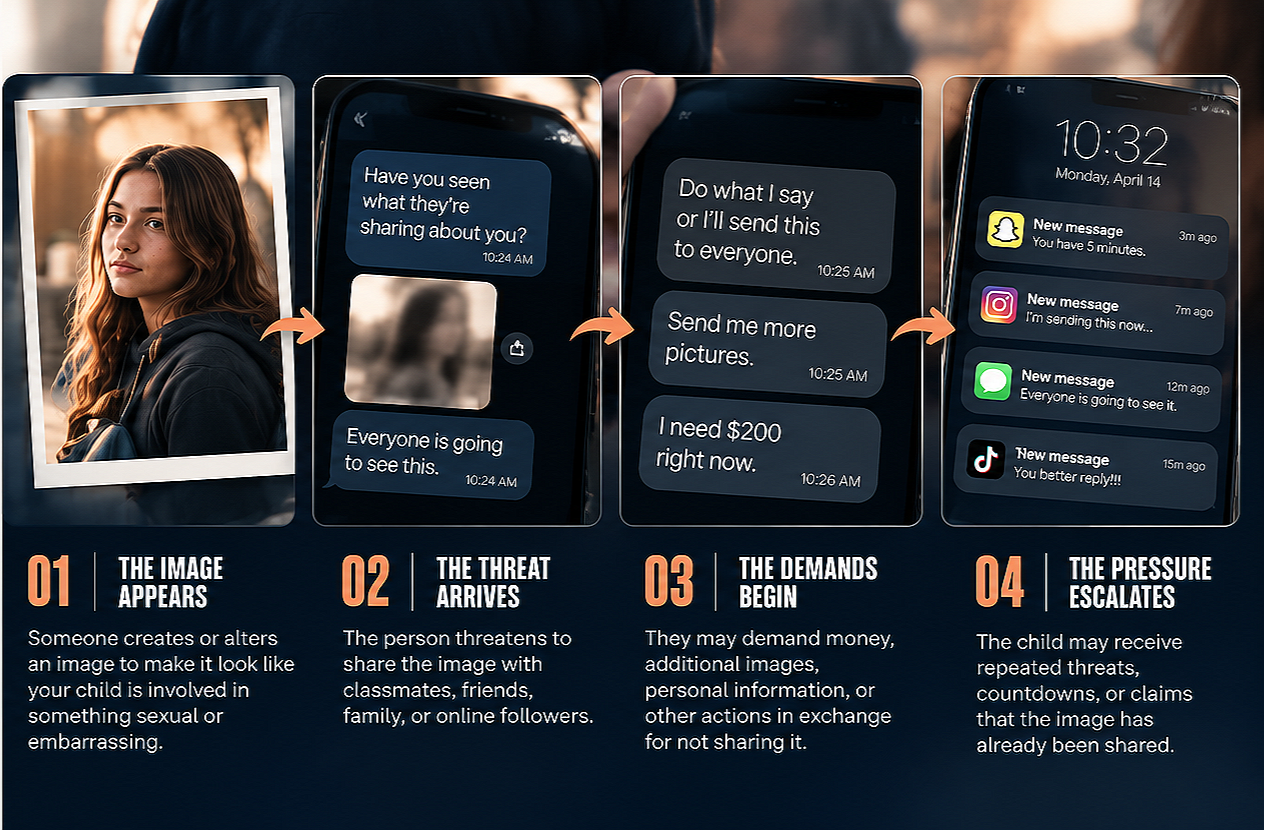
Imagine your child is sitting in class when their phone starts buzzing. A classmate sends a message:
“Have you seen what they’re sharing about you?”
Attached is an explicit image that appears to show your child. They’ve never taken that picture.
They’ve never sent anything like it. But their face is there, and the image looks convincing.
Now imagine another message arrives.
“Do what I say, or everyone at school sees it.”
Your child knows the image is fake. But they also know other people might believe it’s real.
HOW THE TRAP CAN UNFOLD
The question is not only, “Did my child send an image?”
Ask, “Could someone be using an image my child never created to pressure or control them?”
THIS HAS A NAME: SEXTORTION.
Sextortion happens when someone threatens to expose sexual images or information to pressure another person into doing something.
And the image doesn't have to be authentic for the threat to work.
The FBI has warned that criminals are using manipulated images and videos in sextortion schemes, including content created from photos people originally posted online.

WHAT PARENTS NEED TO UNDERSTAND:
Not every AI-generated image is created by a stranger.
A classmate, former friend, dating partner, or someone in a group chat may create or circulate fabricated content to embarrass or intimidate another child.
Sometimes the goal is humiliation. Other times, it's extortion.
Both can cause serious harm.
WHY KIDS MAY
STAY SILENT
Sometimes the fear of telling someone feels worse than the threat itself.
Imagine being 13, 15, or 17 and discovering that a sexual image with your face on it is circulating online.
You know it's fake. But will anyone believe you?
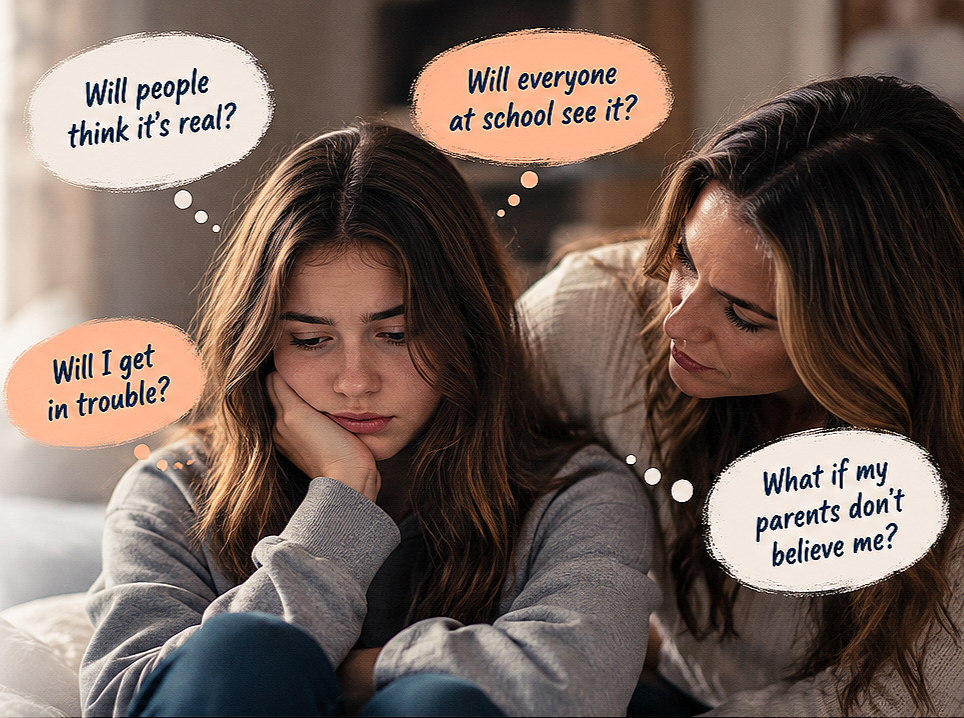
A child may immediately wonder:
Will people think it's real?
Will everyone at school see it?
Will I get in trouble?
What if my parents don't believe me?
Fear and embarrassment can keep a child silent, even when they've done absolutely nothing wrong.
And someone making threats may count on that silence.
The longer a child feels they have to handle it alone, the harder it can become to ask for help.


CHANGE THE CONVERSATION BEFORE THERE'S A CRISIS
Don't wait until something happens to explain deepfakes to your child.
Tell them:
“Someone can create something fake about you using AI. If that ever happens, I want you to come to me immediately. You won't be in trouble, and we will figure out what to do together.”
THE PARENT TAKEAWAY
Your child needs to know that asking for help will lead to support, not punishment.
Have that conversation now, before they ever need it.
WHAT TO DO IF YOUR CHILD IS TARGETED
Your first reaction matters. Your next steps matter even more.
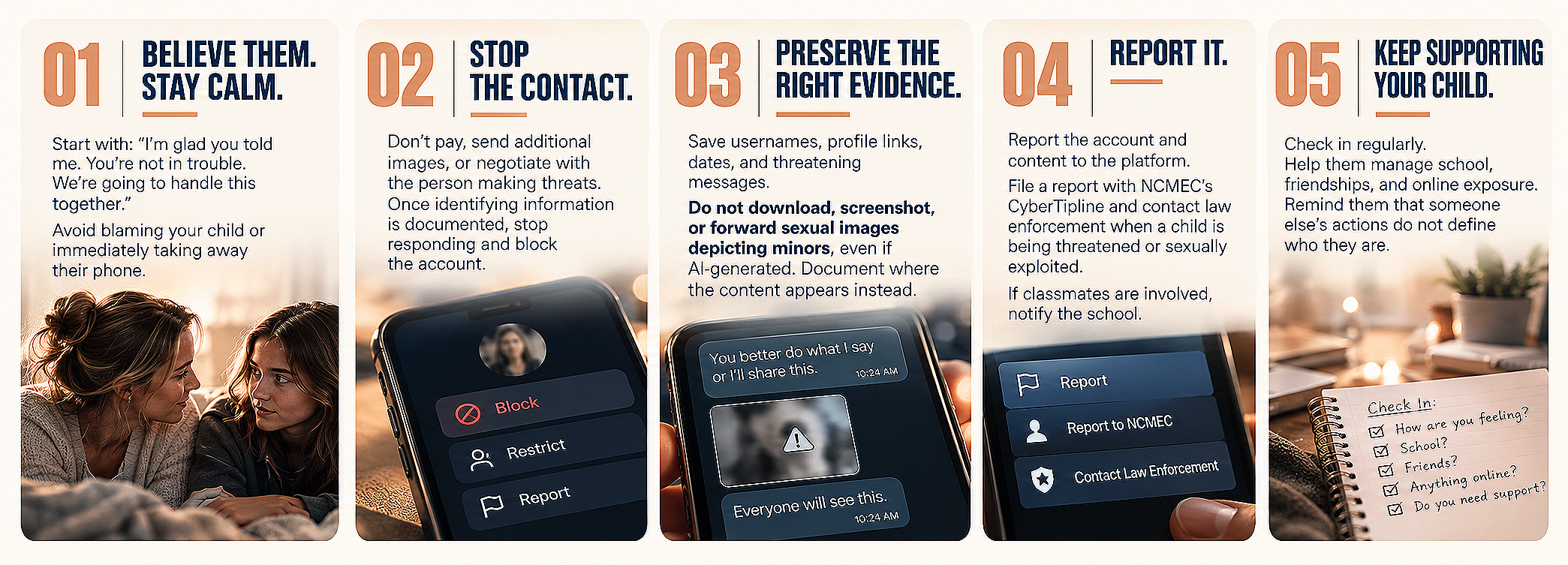
If someone creates a fake image of your child, threatens to share it, or uses it to demand something, your child needs you to respond calmly and take action.
You don't need to understand every AI tool to protect your child. You need to know what to do next.
5 STEPS PARENTS
SHOULD TAKE
TWO RESOURCES
WORTH SAVING
A free tool that can help limit the spread of nude or sexually explicit images involving someone under 18, including eligible AI-generated images.
Parent-friendly guidance on online exploitation, warning signs, reporting, and prevention
THE CONVERSATION
STARTS WITH YOU
You can't control everything your child encounters online. But you can make sure they know where to turn when something goes wrong.
AI-generated images, fake messages, and digital threats are changing what children may face online. The answer isn't to make them afraid of technology. It's to help them recognize manipulation, question what they see, and know when to ask for help.
Start with three simple questions:
“If someone created a fake image of you, what would you do?”
“How could you tell whether a photo, video, or message was real?”
“If someone threatened you online, who would you feel comfortable telling?”
Listen to their answers. Keep the conversation open. And remind them that they will never have to handle something like this alone.
PARENT RESOURCE
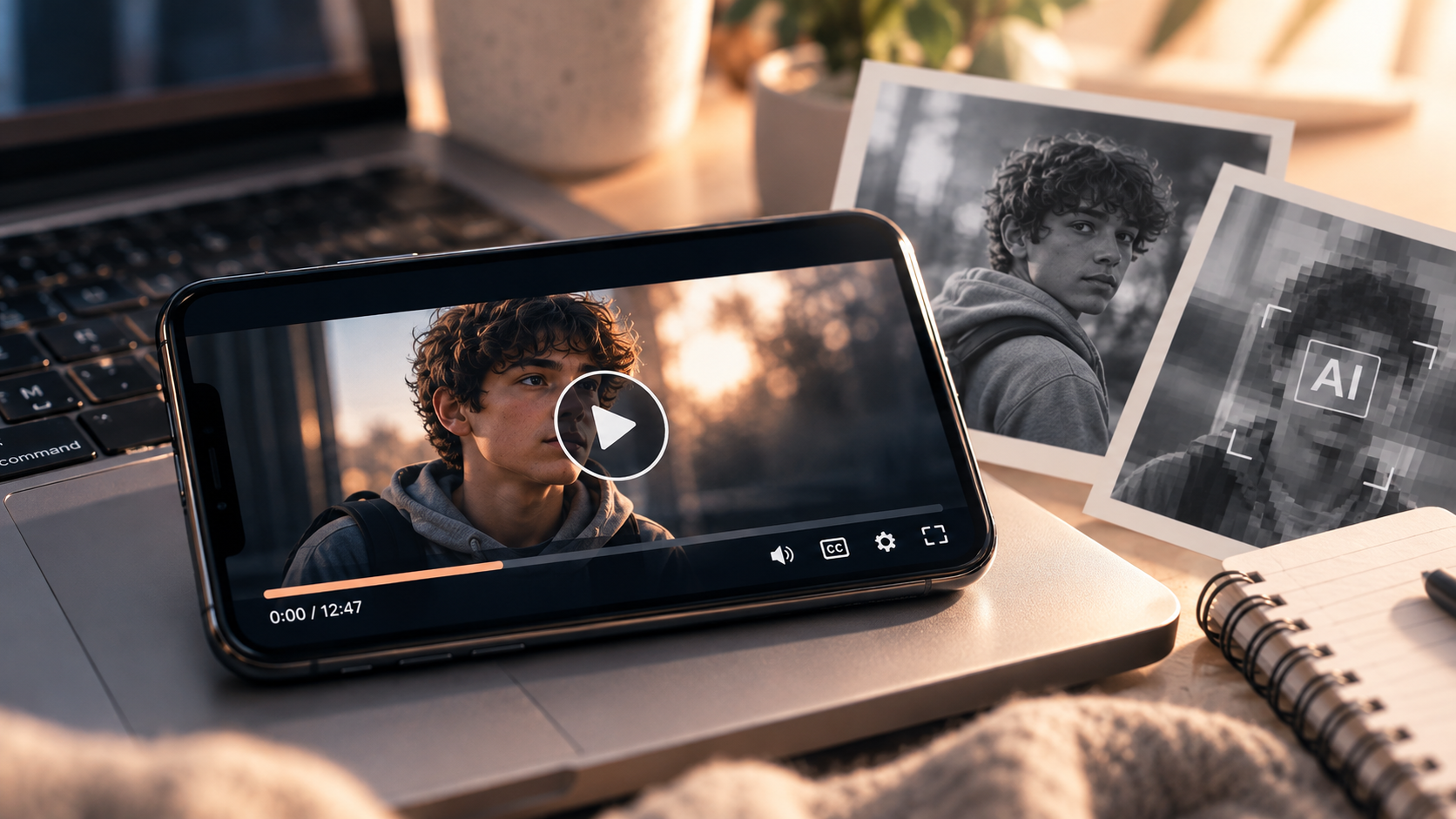
WATCH & LEARN
AI, Deepfakes & Online Pressure
Watch this video resource from The Prepared Parent and continue the conversation with your family.
SHARE THIS RESOURCE
Know a Parent Who Needs This Conversation?
Share this Parent Brief with a parent, grandparent, educator, coach, youth leader, or trusted adult in your community.
A child does not have to create or send an explicit image to become the target of one.
The more adults understand how AI-generated images can be used to shame, threaten, or control children, the better prepared we are to respond when a child asks for help.
Fake content can have real consequences. Preparation gives families a place to start.
With you,
The JBM Parent Community