
FEATURED ALERT
Sadistic Online Exploitation
What Parents Need to Know
Sadistic online exploitation is a severe form of online abuse where predators, peers, or online groups use manipulation, threats, blackmail, humiliation, and psychological pressure to control a child or teen.
This is not normal online drama. This is exploitation.
KEY TAKEAWAY’S
Sadistic online exploitation is a pattern of coercion and control, not one app or platform.
It often happens in networked online spaces where young people are already spending time.
Harm can escalate quickly when shame, secrecy, fear, threats, or group pressure are involved.
A young person may be both targeted and pressured to participate in harmful behavior.
A calm first response helps make you a safe place for your child.
Protection begins with honest, ongoing conversation.

What Is Sadistic Online Exploitation?
Sadistic online exploitation is a form of grooming, coercion, and control that targets minors online.
It can begin in ordinary digital spaces: a gaming chat, a private message, a group invite, a livestream, or an anonymous account. What may seem like a friendship, joke, challenge, or private conversation can become dangerous when fear, shame, threats, or blackmail are used to control a child.
This can include pressure to send images or videos, threats to expose private information, humiliation, intimidation, self-harm coercion, or demands that become more extreme over time.
What makes this especially dangerous is how quickly it can escalate. In some cases, harmful online groups use pressure, secrecy, and the desire to belong to pull young people deeper into situations they do not know how to escape.
The most important thing parents need to understand is this:
Exploitation thrives in secrecy. Protection begins with safe conversation.
Why Parents Need To Pay Attention
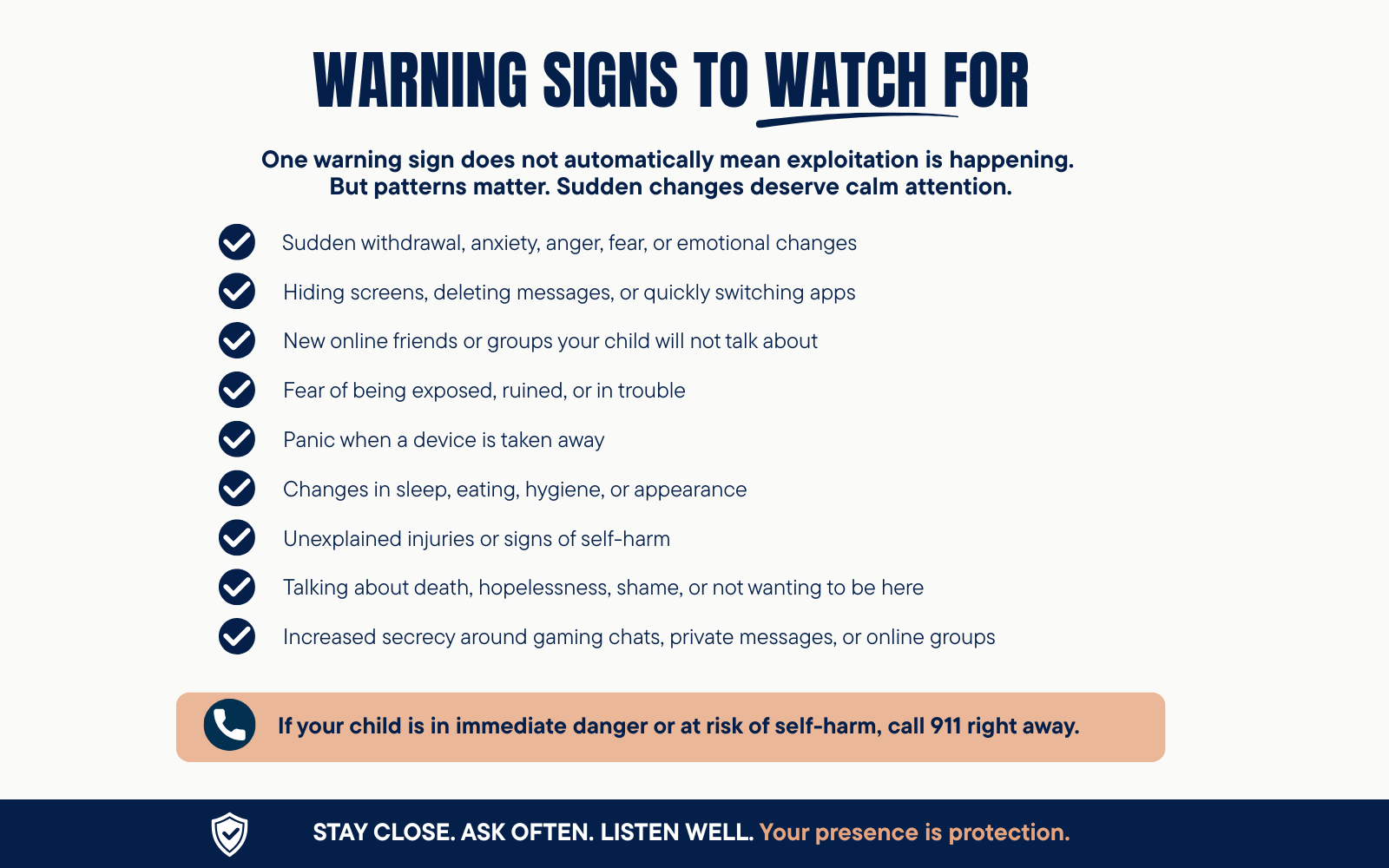
Many parents are watching the obvious places: phones, social media, and screen time.
But risk does not only live where parents expect it.
Children can be contacted through gaming platforms, private messages, group chats, anonymous accounts, livestreams, and online communities that may seem harmless at first.
Predators and harmful online groups often look for access, vulnerability, and secrecy. They may target children who feel lonely, anxious, curious, isolated, bullied, emotionally overwhelmed, or desperate to belong.
This does not mean every child online is being targeted.
It does mean parents need to know their child’s online world with the same care they would know their offline world.
The Conversation Matters More Than the Controls
Parental controls are helpful. Monitoring tools can be useful. Privacy settings matter.
But no setting replaces a child knowing they can come to you when something feels wrong.
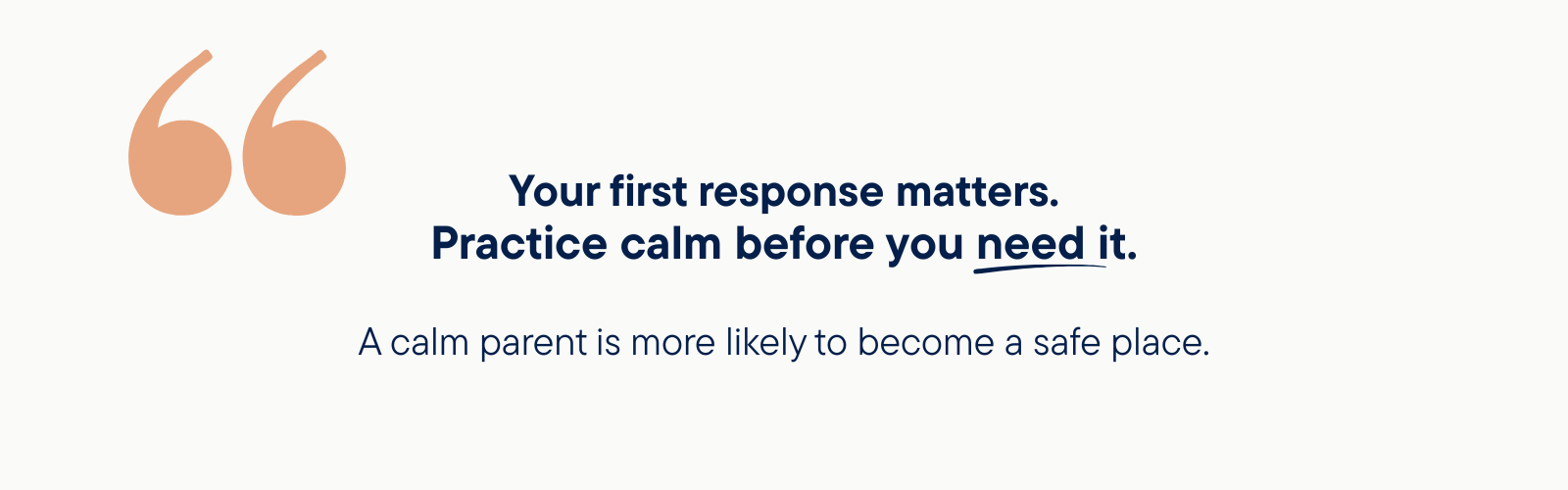
A child who believes they will be shamed, punished, or blamed may stay silent. A child who knows their parent will stay calm is more likely to ask for help before the situation escalates.
You do not have to be a tech expert.
You need to be curious, steady, and willing to ask questions without turning every conversation into a lecture.
What Parents Can Do Now
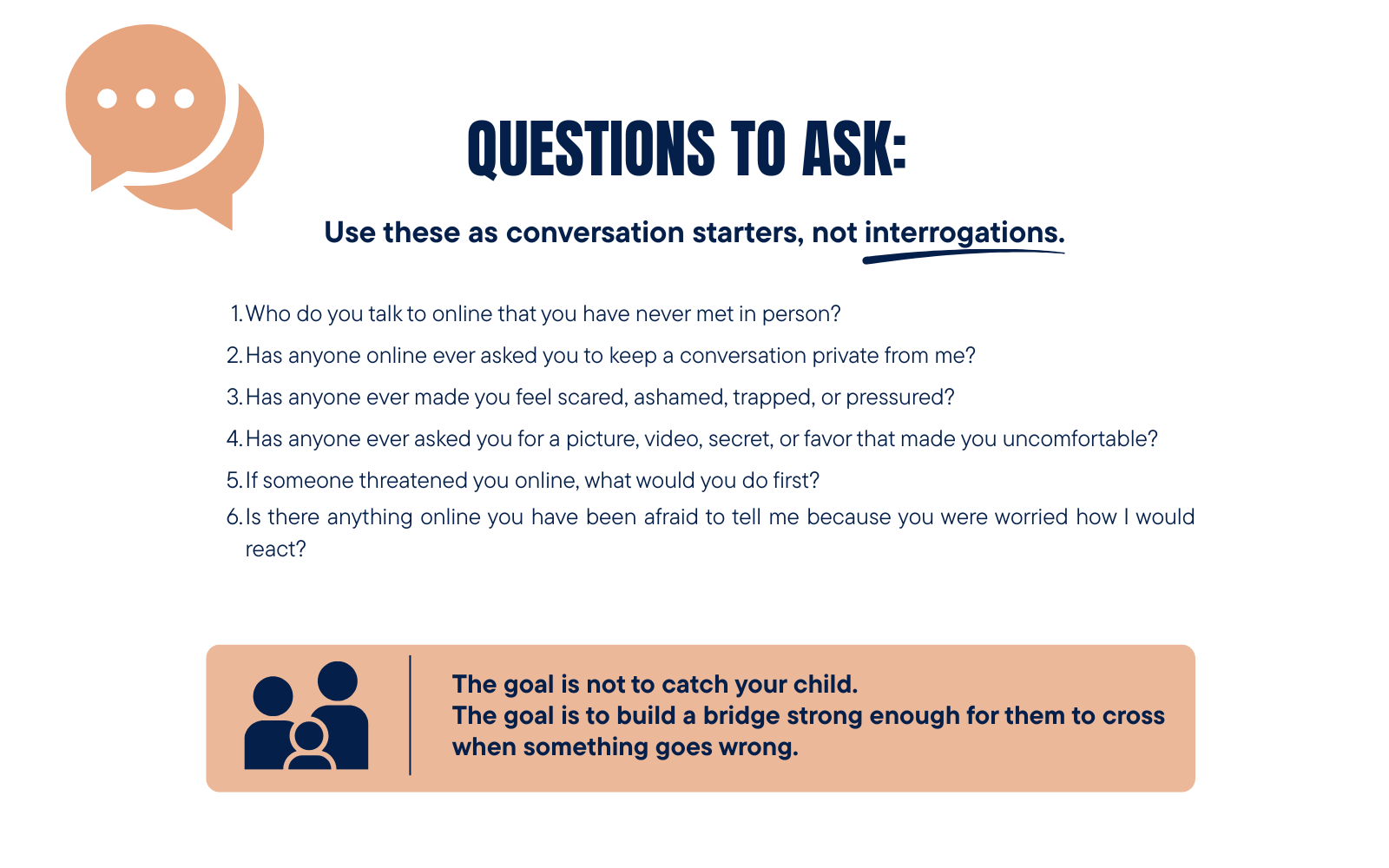
Ask your child to show you the apps, games, chats, and platforms they use most.
Talk about online secrecy. Make sure your child knows that anyone asking them to hide a conversation from you is not a safe person.
Review privacy settings, location sharing, friend lists, messaging permissions, gaming chats, and livestream settings together.
Give your child a rescue phrase they can use if they are scared or embarrassed.
Rescue phrase:
“I need help, and I’m scared to tell you.”
5. Promise a calm first response.
“You can tell me anything. I may need to help you make hard decisions, but I will not shame you. We will handle it together.”
If Something Happens
Stay calm. Your child needs you now more than anything else.
Do Not
Blame or shame your child
Tell them to handle it alone
Pay money or comply with demands
Send more images or content
Delete messages, accounts, usernames, or evidence
Wait and hope it goes away
Do This Instead
Get your child physically safe
Screenshot and save evidence
Save usernames, links, phone numbers, emails, dates, and platform names
Stop communication with the person or group
Report the account to the platform
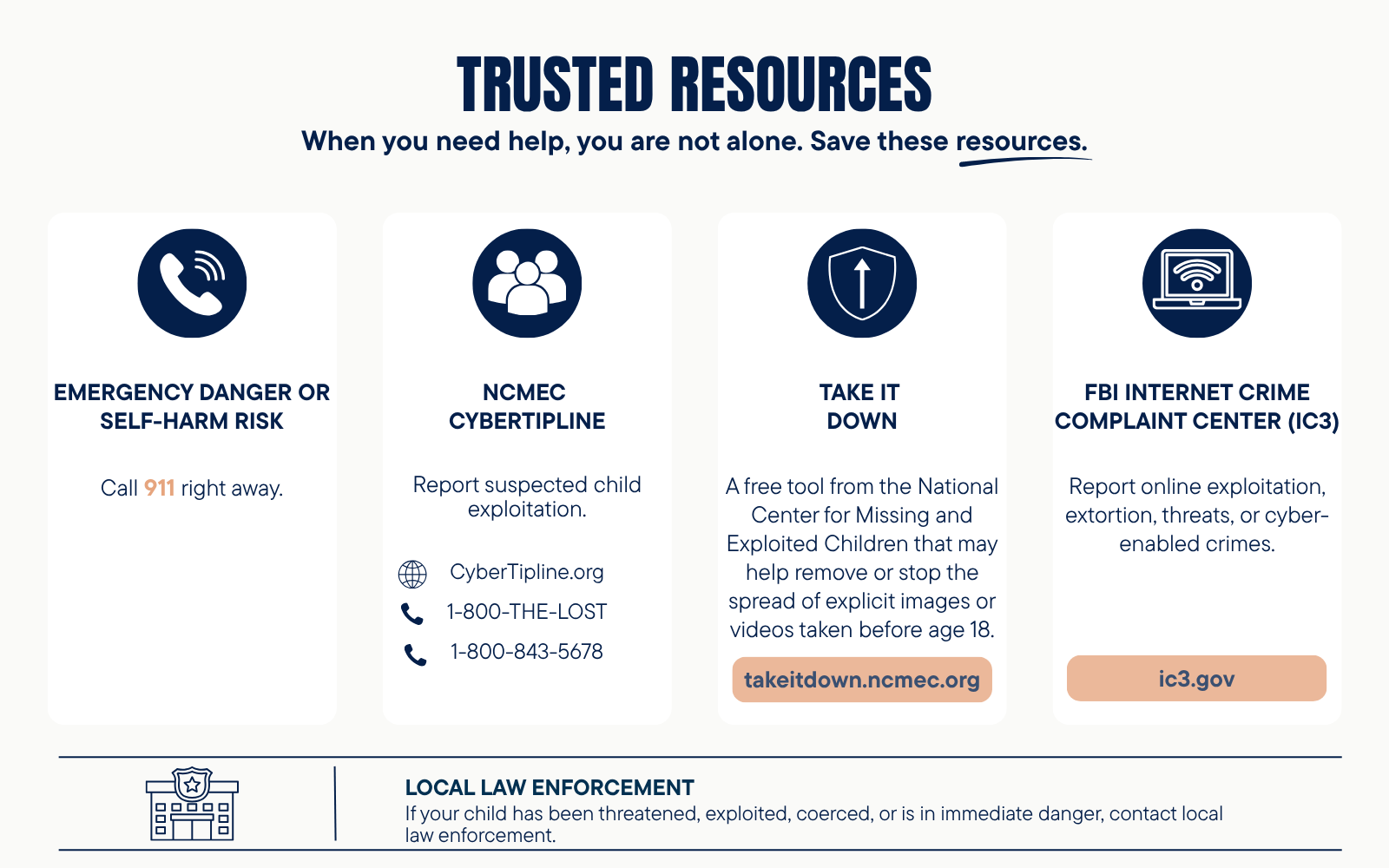
Report suspected exploitation to law enforcement
Call 911 immediately if your child is in danger or at risk of self-harm
Your child is not helped by panic.
Your child is helped by protection, truth, and steady action.
Your Child Needs a Safe Parent
Your child does not need a perfect parent.
Your child needs a safe parent.
A safe parent is calm, clear, watchful, and willing to ask hard questions before there is a crisis.
The goal is not fear.
The goal is wisdom.
The goal is not control.
The goal is protection.
Prepared conversations are easier than panicked ones.
Protecting Kids. Equipping Parents. Strengthening Families.
The JBM Parent Community provides free resources, safety guides, conversation tools, and parent training to help families navigate the risks that children face online and offline.
You do not have to figure this out alone.
If this information helped you, share it with another parent, caregiver, or trusted adult.
Starting one conversation can protect more than one child.