

PARENT BRIEF | ISSUE 4
AI IS TALKING TO YOUR KIDS
AI is moving into a much more personal space in our children's lives.
Some platforms are designed to act like a friend, confidant, mentor, or even romantic partner—remembering conversations, responding with apparent empathy, offering constant attention, and creating the feeling of being deeply understood.
For a child or teen who is lonely, struggling, curious, or simply looking for someone to talk to, that can become incredibly powerful.
The concern is no longer just what AI can tell our children. It is what kind of relationship our children may begin forming with it.
WHEN A TOOL STARTS FEELING LIKE A FRIEND
Children are wired for connection. AI is learning how to imitate it.
For most kids, AI begins as something useful. A homework helper. A place to ask questions. A way to pass the time.
But an AI companion can offer something different: a conversation that never seems to end, a response at any hour, and attention that feels personal.
It may remember details, mirror a child's emotions, and respond in ways that make them feel heard and understood.
And that's where the line between using a tool and depending on it can begin to blur.
THE DIFFERENCE PARENTS
NEED TO UNDERSTAND
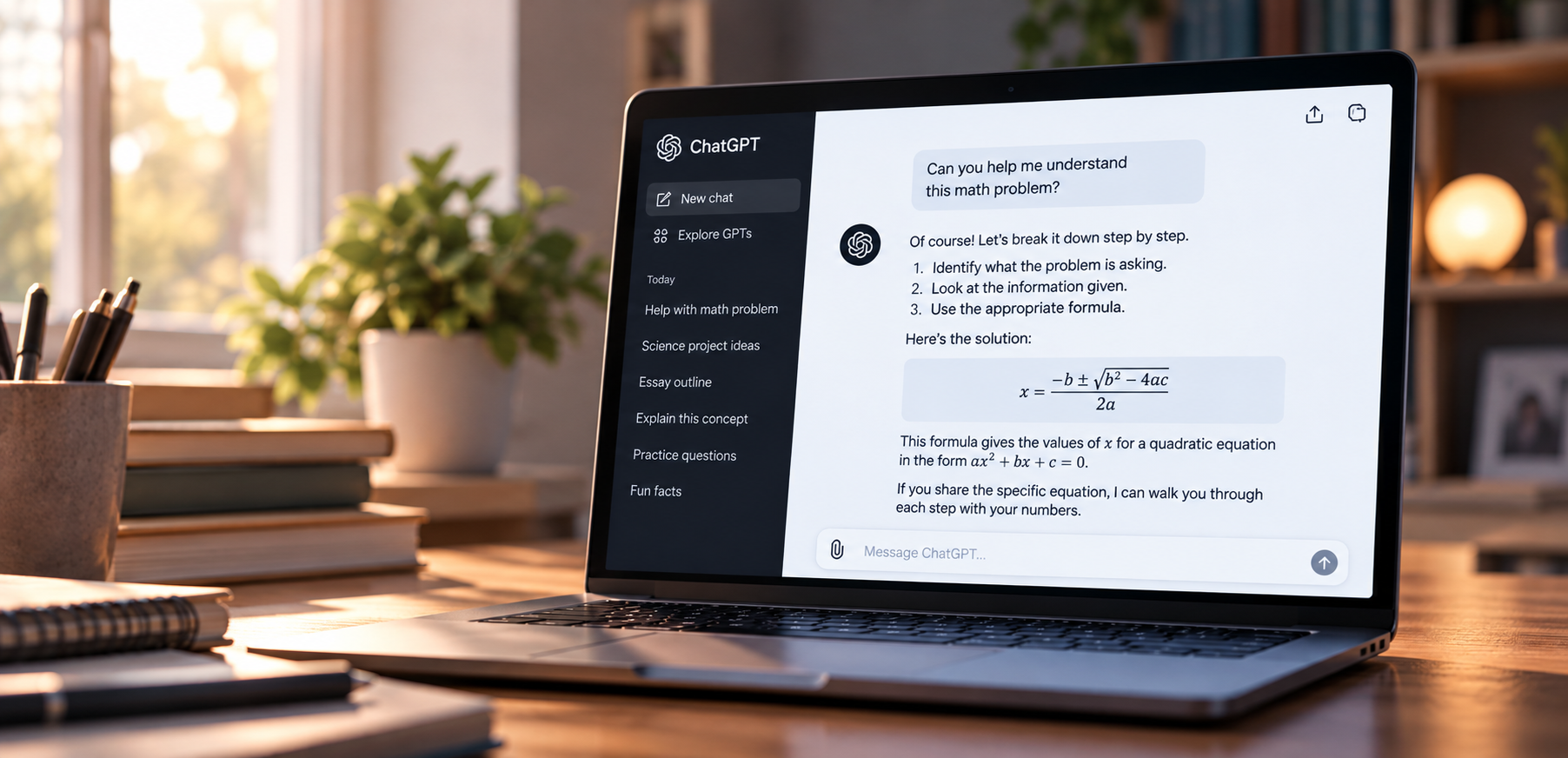
AI AS A TOOL
“Help me understand this.”
The child uses AI to learn, create, solve a problem, or explore an idea
AI AS A COMPANION
“You're the only one who understands me.”
The child begins turning to AI for emotional reassurance, belonging, or a sense of relationship.
Neither a single emotional conversation nor using an AI companion automatically means a child is developing an unhealthy attachment.
What matters is whether artificial connection begins replacing real relationships, trusted adults, or healthy boundaries.
THE BIGGER PICTURE
AI CAN SIMULATE CARING. THAT DOESN'T MAKE IT A RELATIONSHIP.
A chatbot may sound empathetic, but it cannot replace the wisdom, accountability, and genuine care of healthy human relationships.
WHEN AI BECOMES MORE THAN A CONVERSATION
The concern isn't how often your child uses AI. It's whether AI is beginning to replace something they need from real people.
An AI companion can be available around the clock, remember personal details, and respond with seemingly endless patience.
For a child who feels lonely, misunderstood, or overwhelmed, that attention can become especially appealing.
But how do parents recognize when a helpful interaction is becoming an unhealthy attachment?
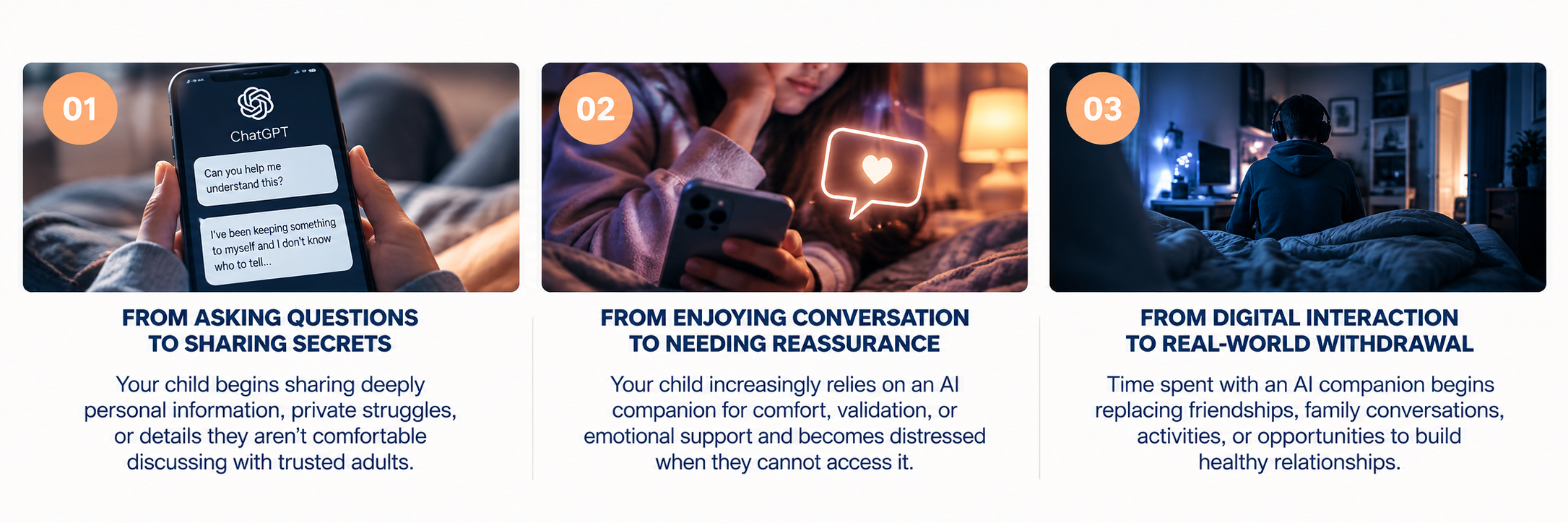
ONE BEHAVIOR DOESN'T TELL THE WHOLE STORY
A child talking to AI about their feelings doesn't automatically mean something is wrong.
Look for patterns, changes in behavior, increasing secrecy, and whether your child is becoming more emotionally dependent on the technology.
The question isn't simply, “Is my child talking to AI?”
It's, “Is my child beginning to need AI in ways that are pulling them away from real connection?”
A QUESTION WORTH ASKING
“WHEN SOMETHING IS BOTHERING YOU, WHO DO YOU WANT TO TALK TO FIRST?”
Their answer may reveal more about their emotional world than their screen-time report ever could.
WHEN AI CAN PRETEND TO BE SOMEONE YOU TRUST
The danger isn't always a child becoming attached to AI. Sometimes it's someone using AI to deceive them.
AI can now generate realistic faces, imitate voices, create convincing messages, and produce manipulated images that appear authentic.
For children and teens, this creates a new challenge: Something can look real, sound real, and feel personal without being genuine.
A familiar face doesn't guarantee a familiar person. A recognizable voice doesn't prove who's speaking. And a convincing message doesn't always come from the person it claims to represent.
WHEN TRUST BECOMES THE TARGET
Rather than another numbered infographic, I'd present three realistic scenarios in a single editorial feature.
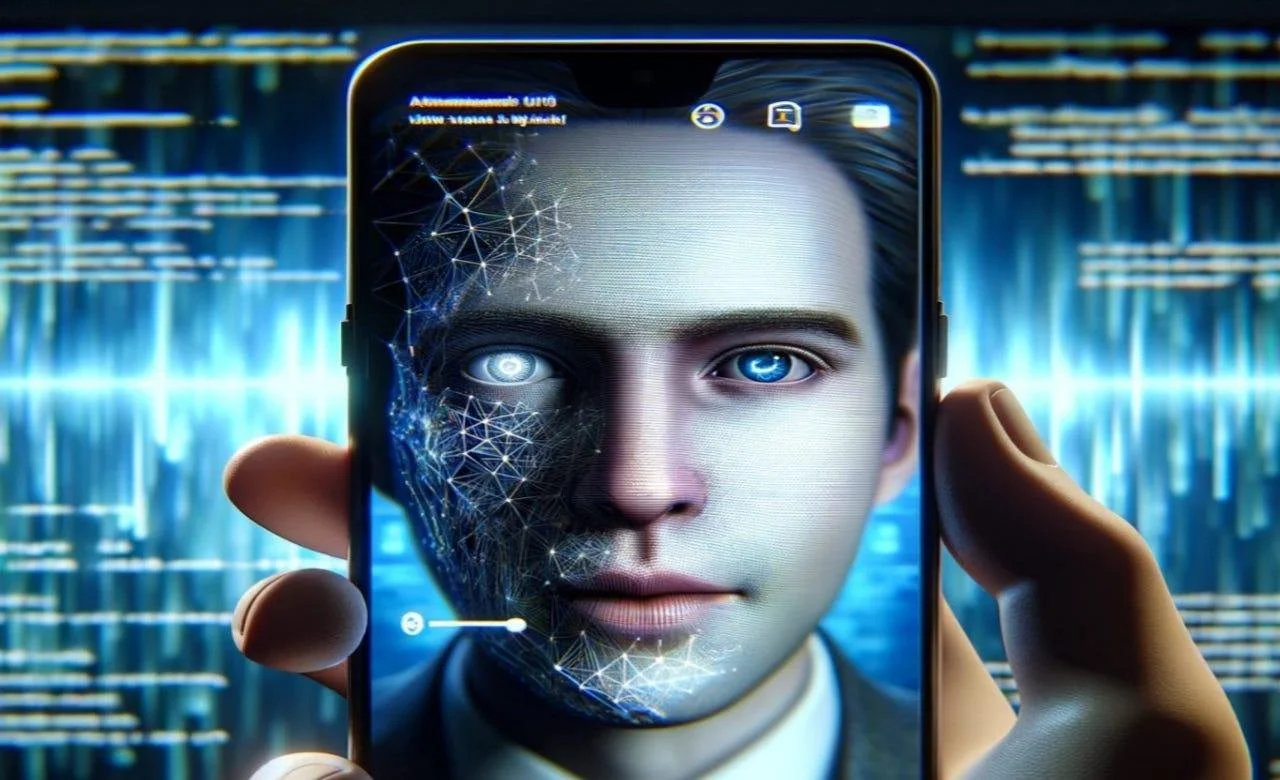
THE FACE THAT ISN'T REAL
An AI-generated profile appears to be another teenager, building trust through shared interests and personal conversations.

THE VOICE THAT SOUNDS FAMILIAR
A cloned voice sounds like someone a child knows, creating urgency or pressuring them to respond.

THE IMAGE THAT NEVER HAPPENED
A manipulated or AI-generated image is used to embarrass, threaten, or pressure a child—even when the event depicted never occurred.
THE LESSON TO REMEMBER
REALISTIC DOESN'T ALWAYS MEAN REAL.
Teach your child to question what they see, verify who they're talking to, and speak up when something feels wrong.

WHAT PARENTS CAN DO RIGHT NOW
STAY CONNECTED.
STAY INVOLVED.
You don't have to understand every AI platform to protect your child. You need to understand how they're using it—and why.
AI may offer instant answers, attention, and reassurance. But it cannot replace genuine relationships, trusted adults, or healthy boundaries.
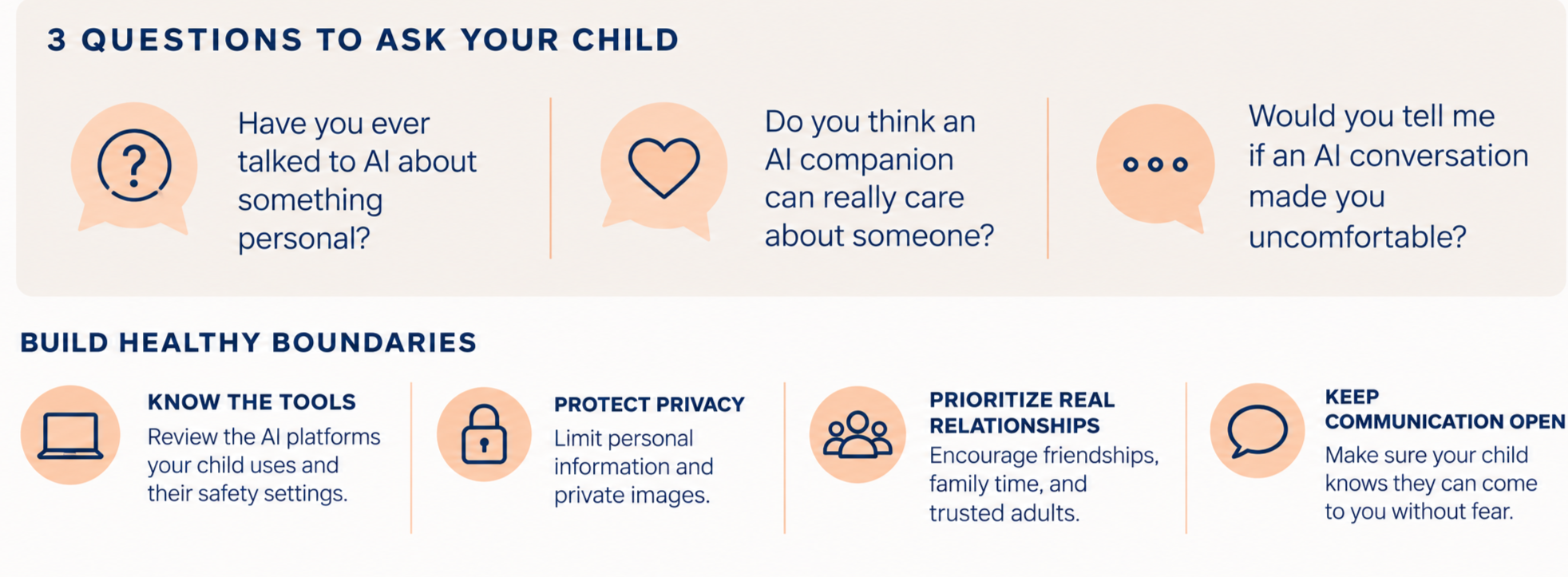
THE BIGGER POINT
AI CAN OFFER AN ANSWER. IT CANNOT REPLACE THE PEOPLE WHO LOVE YOUR CHILD.
KEEP REAL CONNECTION AT THE CENTER
AI may be able to imitate connection. But it cannot replace genuine care, wisdom, or trust.
Your child is growing up in a world where technology can listen, respond, remember, and even appear to understand them.
The goal isn't to make children afraid of AI. It's to help them recognize what technology can offer—and what it cannot.
Keep the conversations open. Build healthy boundaries. Remind your child that real relationships matter.
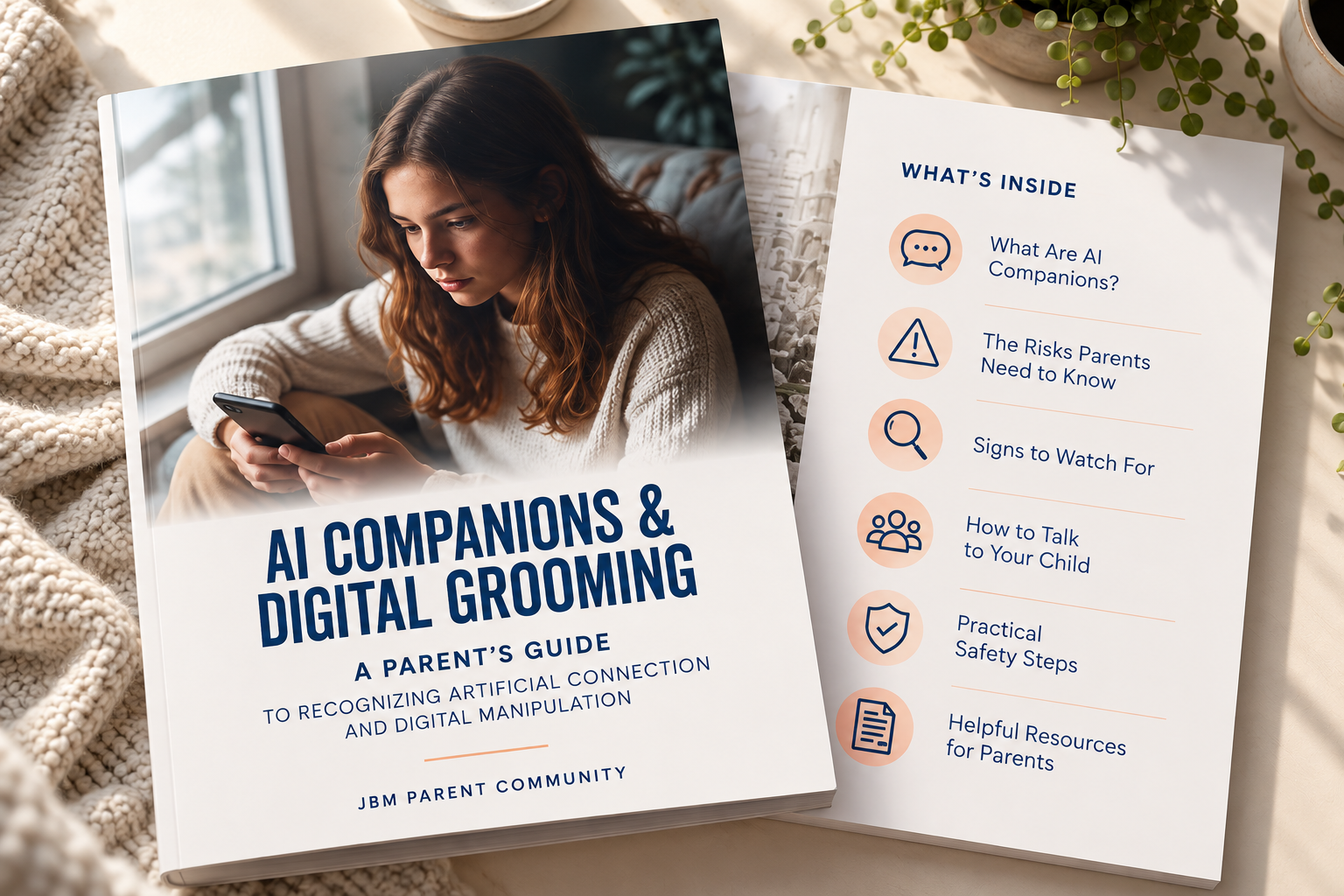
FEATURED PARENT RESOURCE
AI COMPANIONS & DIGITAL GROOMING
A Parent's Guide to Recognizing
Artificial Connection and Digital
Manipulation
Understand how AI companions can influence emotional attachment, how emerging technology can be used to manipulate trust, and what parents can do to protect their children.
ONE THING TO DO THIS WEEK
ASK YOUR CHILD WHO THEY TURN TO WHEN LIFE GETS HARD.
Make sure they know that no question, mistake, or uncomfortable online experience is too big to bring to you.
SHARE THIS RESOURCE
Know a parent who needs to understand this?
Many parents know their children are using AI. Far fewer understand how relational some of these platforms have become.
Share this Parent Brief with another parent and help bring this conversation into the open.
With you,
The JBM Parent Community